



As Iran’s opposition landscape grows increasingly fragmented, the defining divide is no longer between monarchy and republic alone, but between forces rooted in sacrifice and accountability and those built on symbolism, ambiguity, and inherited narratives.
In an era where the boundary between truth and manufactured narratives grows increasingly blurred, one fundamental question remains unavoidable: who has the right to speak of leadership and Iran’s future? Those who have stood firm and paid the price, or those who have remained in safe political distance while riding the wave of public discontent?
This is not merely a political dispute. It is an ethical, historical, and structural question — one whose answer may determine whether a movement matures into a democratic force or becomes another vehicle for recycled authoritarianism.
Political legitimacy cannot be separated from cost and accountability. Those who, over decades, have sacrificed their freedom, security, families, and lives in defense of public rights have accumulated a form of moral capital that cannot simply be dismissed or erased through media narratives or political branding. This cost is not abstract. It is visible in executions, imprisonment, torture, and the systematic elimination of dissidents by the Iranian regime.
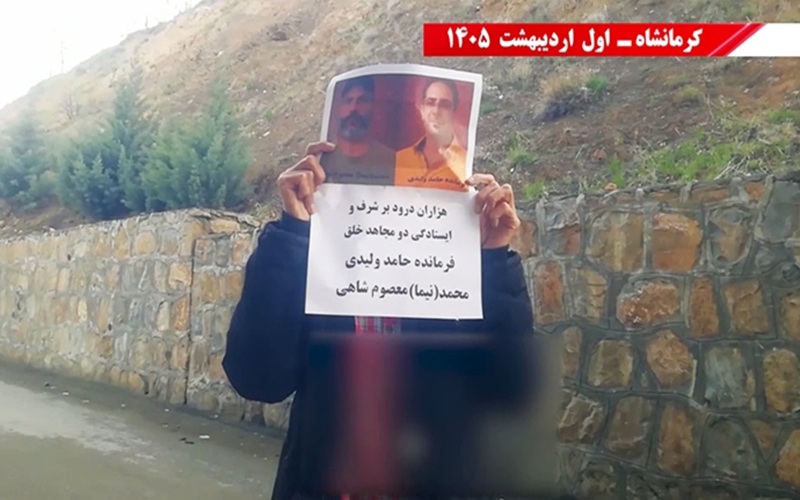
Among those who have paid the heaviest price are supporters and members of the People’s Mojahedin Organization of Iran, many of whom have faced execution solely for their political affiliation or support for organized resistance. The continued persecution of these individuals demonstrates a reality that many prefer to overlook: resistance in Iran is not symbolic theater. It remains a living and ongoing confrontation whose price is still being paid in blood.
Yet sacrifice alone is not sufficient to guarantee a democratic future. History repeatedly demonstrates that suffering, without commitment to pluralism, human rights, and institutional limits on power, can itself evolve into another form of authoritarianism. The central issue, therefore, is not simply who has suffered more, but which political vision genuinely prevents the reproduction of dictatorship.
It is within this framework that the Ten-Point Plan proposed by Maryam Rajavi gains political significance. The program explicitly advocates popular sovereignty, separation of religion and state, gender equality, abolition of the death penalty, and, critically, rejection of monopolized political power. Whether one agrees with every aspect of the platform or not, it attempts to address one of the deepest structural problems in modern Iranian history: the cyclical reproduction of authoritarian rule under different ideological forms.
Iran’s contemporary history has repeatedly demonstrated that dictatorship changes appearance more easily than structure. The transition from crown to turban did not eliminate authoritarianism; it merely altered its language and symbols. The danger today is that some opposition currents risk reproducing the same logic under modern branding and populist rhetoric.
This concern becomes particularly relevant when examining monarchist currents advocating the restoration of the monarchy under Reza Pahlavi. Despite efforts to repackage monarchism in democratic language, the historical and structural foundation of hereditary monarchy remains inseparable from concentrated power. The problem is therefore not merely nostalgic symbolism; it is the absence of clear institutional guarantees preventing the return of centralized authority.
The distinction between democratic alternatives is ultimately not found in slogans, media popularity, or international visibility. It is measured by practical commitment to decentralization of power, institutional accountability, democratic rotation of authority, and genuine political pluralism.
From this perspective, one of the major weaknesses in the transition proposals associated with Reza Pahlavi is the absence of detailed, transparent, and binding mechanisms capable of limiting executive authority during a transitional phase. The proposed framework repeatedly emphasizes the necessity of a “transition period,” yet leaves critical questions unanswered: who exercises power during that transition, under what institutional oversight, for how long, and under which enforceable constitutional constraints?
This ambiguity is not a secondary technical issue. It lies at the core of democratic legitimacy itself.
Any political structure that centralizes authority in an individual during a vaguely defined “transitional” phase, without precise institutional safeguards, risks transforming temporary authority into permanent dominance. Without transparent timelines, enforceable checks and balances, and mechanisms of public accountability, transition can easily become an elastic concept — one capable of justifying indefinite concentration of power.
For this reason, the issue transcends ordinary political disagreement. It concerns the architecture of power itself. Any political project lacking clear separation of powers, institutional oversight, and enforceable limitations on individual authority — even when presented under the language of liberation or transition — contains within it the potential seeds of future authoritarianism.
The central criterion for evaluating any opposition alternative should therefore not be charisma, media influence, or inherited symbolism, but democratic structure. Does the proposed system genuinely prevent monopolization of power? Does it institutionalize accountability? Does it protect pluralism even against those who temporarily hold authority?
Without such guarantees, no transitional project — regardless of its declared intentions — can credibly promise democratic transformation.
At the same time, public political consciousness remains decisive. A society capable of distinguishing between genuine sacrifice and borrowed legitimacy becomes far more resistant to political appropriation and manipulation. This distinction is not about exclusion; it is about political clarification. It is about strengthening the ethical and democratic foundations of collective struggle.
Ultimately, the divide is between those who stand in the line of fire and those who attempt to lead from a safe distance. One derives legitimacy from sacrifice and accountability; the other from symbolism and carefully constructed narratives.
Legitimacy cannot be inherited. Nor can it be manufactured through branding campaigns, nostalgic narratives, or carefully curated political imagery. Genuine legitimacy emerges where sacrifice, honesty, and accountability intersect — where political actors are prepared to answer not only for what they promise, but for what they have done and what structures they seek to create.
And that cost is still being paid today: in the faces of young protesters standing in Iran’s streets, in the voices silenced by repression, and in the fate of those imprisoned or executed simply for resisting authoritarian rule.
That reality matters because history’s decisive moments are rarely shaped by those who lean on movements from a safe distance. They are shaped by those willing to stand, endure, and bear the consequences of resistance itself.