


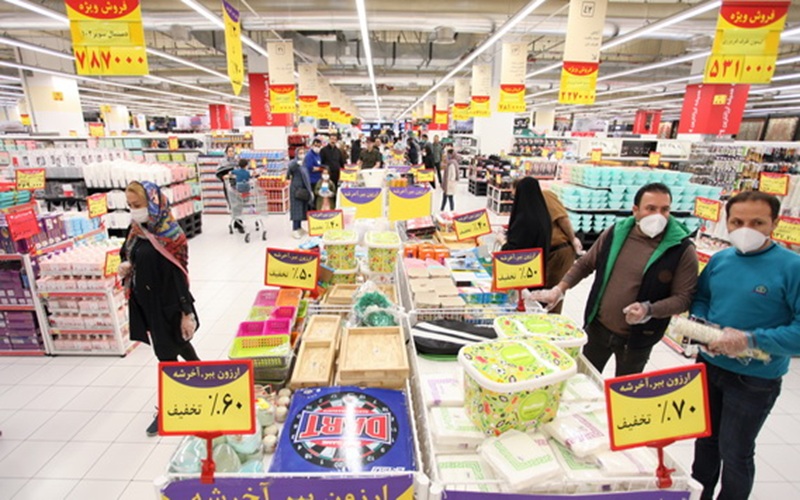

As soaring prices, economic stagnation, and declining purchasing power push essential foods beyond the reach of millions, Iran faces a growing food security crisis rooted not merely in economic mismanagement but in the structural failures of a regime that has prioritized survival over public welfare.
History has repeatedly shown that famine does not always begin when warehouses are empty. Often, it starts much earlier—when ordinary people can no longer afford the food that remains abundantly available in the marketplace. The shelves may still be stocked, but when family tables are left bare, society enters a far more dangerous stage of economic decline.
This reality has become increasingly relevant in Iran today. The country is not facing an absolute shortage of food supplies, yet a growing share of the population is losing the economic ability to purchase basic necessities. Dairy products, meat, poultry, fruits, and other essential food items have gradually disappeared from the consumption baskets of many low-income households. What was once considered a temporary hardship has evolved into a structural threat to national food security.
The consequences of inflation and recession in Iran are now visible in the daily lives of millions. Labor organizations and economic observers report a dramatic decline in per capita dairy consumption, which has fallen to a fraction of the global average. This is not a matter of changing dietary preferences. Rather, it reflects the inability of families to meet even their most basic nutritional needs.
When the price of raw milk triples within a relatively short period and dairy products experience price increases exceeding one hundred percent, the first victims are working-class families, pensioners, and low-income citizens. Essential nutrition gradually becomes a luxury. The economic burden is especially severe for households whose incomes have remained stagnant while the cost of living continues to rise relentlessly.
At the same time, economic stagnation has severely limited opportunities for income growth. Small and medium-sized businesses struggle with declining demand, shrinking revenues, and, in many cases, closure. The result is a destructive combination: living costs rise rapidly while earnings fail to keep pace. Millions of Iranians find themselves trapped between soaring prices and declining economic opportunity.
This phenomenon has been studied extensively by Nobel Prize-winning economist Amartya Sen, whose research demonstrated that many of history’s worst famines occurred not because food was unavailable, but because large segments of the population lost the ability to access it. Food existed, but purchasing power vanished.
Iran’s current trajectory increasingly resembles this pattern. Markets remain active and goods continue to be supplied, yet the gap between income and expenses grows wider each year. As households are forced to reduce consumption of dairy products, meat, fruits, and other necessities, food insecurity expands throughout society.
The warning signs are already apparent. Rising malnutrition, deteriorating dietary quality, and worsening public health indicators are becoming more visible. The long-term costs will extend beyond household budgets. Malnutrition-related illnesses, reduced workforce productivity, and increased healthcare expenditures will place additional pressure on an already strained society.
The deeper concern is that inflation and recession in Iran are no longer temporary economic disruptions. They have become chronic features of the country’s economic landscape. Inflation rates exceeding 40 and even 50 percent, once considered exceptional, have increasingly become normalized. Persistent inflation has transformed from an economic anomaly into a defining characteristic of the system.
The roots of this crisis extend far beyond sanctions or external pressures. While international factors have undoubtedly affected Iran’s economy, they cannot fully explain decades of recurring instability. The primary drivers lie within the country’s political and economic structure: systemic corruption, concentration of economic power, chronic inefficiency, lack of accountability, and policy instability.
Under such conditions, the costs of failure are routinely transferred to ordinary citizens. Inflation functions as a mechanism through which the consequences of mismanagement are imposed on society, while those with the least resources bear the greatest burden. Workers, retirees, teachers, and low-income families pay the price for decisions over which they have little influence.
One of the most alarming consequences is the widening class divide. Lower-income households spend a far greater share of their earnings on food and housing than wealthier groups. Every increase in the cost of these essentials therefore translates directly into a decline in living standards. Meanwhile, those with greater access to assets and financial resources are often better positioned to shield themselves from inflation’s effects.
The result is a steady erosion of the middle class—the social group traditionally associated with economic stability, civic participation, and long-term development. As the middle class weakens, inequality deepens and social mobility declines.
The broader social consequences are already emerging. Rising emigration, declining marriage rates, deteriorating educational opportunities, growing child poverty, and reduced investment in future generations all reflect the pressures created by prolonged economic hardship. A society focused primarily on survival loses much of its capacity for innovation, development, and sustainable growth.
Some analysts have described Iran’s current condition as a “survival economy,” a system in which the primary objective is no longer development or prosperity but merely preventing complete economic collapse. Yet maintaining such a model imposes enormous costs on society. It preserves the appearance of stability while steadily eroding the foundations of long-term progress.
If current trends continue, Iran risks moving deeper into a cycle of food insecurity, malnutrition, poverty, and social instability. While the country may not yet be experiencing famine in its classical form, many indicators suggest a dangerous trajectory toward broader nutritional deprivation and economic exclusion.
Ultimately, the crisis confronting Iran is not merely economic. It is the product of a political and institutional system that has systematically blocked meaningful reform while diverting national resources away from public welfare and economic development. Decades of mismanagement have left millions struggling to secure basic necessities despite the country’s vast human and natural potential.
The central question facing Iran today is therefore not whether inflation will continue, but whether the structures responsible for producing chronic poverty, inequality, and economic decline can remain unchanged. Without fundamental political and economic transformation, the country’s current path points not toward stability, but toward deeper social erosion, wider inequality, and an increasingly precarious future for millions of Iranians.