



For four decades, Iran regime’s rulers have portrayed the PMOI as the initiator of violence in 1981. Yet historical documents, eyewitness accounts, and admissions by former regime insiders suggest that systematic repression preceded armed resistance and helped make confrontation unavoidable.
For more than four decades, the Mullahs’ regime has relied on a single narrative to explain the events of June 20, 1981: that the People’s Mojahedin Organization of Iran (PMOI/MEK) abruptly abandoned politics and launched an armed uprising against the state. This account has been repeated through state media, school textbooks, official speeches, and regime-sponsored films, becoming a central pillar of the regime’s historical propaganda.
Yet a closer examination of historical documents, eyewitness testimonies, and even statements made by former regime officials paints a very different picture. Rather than demonstrating that the PMOI initiated violence, the historical record suggests that armed resistance emerged only after years of systematic repression, political exclusion, and state-sponsored violence had effectively eliminated all peaceful avenues of opposition.
The Political Phase: 28 Months of Peaceful Activity
Between February 1979 and June 1981, a period commonly referred to by supporters of the Iranian Resistance as the “political phase,” the PMOI pursued a strategy based on peaceful political participation. The organization took part in elections, published newspapers and political analyses, organized public meetings, and sought to operate within the political framework that emerged after the fall of the Shah.
During this period, however, the newly established clerical regime increasingly moved to monopolize power. Political pluralism was gradually suppressed, independent voices were marginalized, and opposition organizations faced growing restrictions.
According to numerous historical accounts, by the late 1970s and early 1980s dozens of PMOI members and supporters had already been killed in attacks by security forces and pro-regime vigilante groups. Thousands more were arrested, assaulted, or injured while selling publications, participating in meetings, or engaging in political activities.
Despite these attacks, the PMOI maintained a policy of avoiding armed confrontation. Its leadership repeatedly sought to preserve political space and prevent a descent into civil conflict.
Admissions That Contradict the Official Narrative
One of the most striking challenges to the regime’s version of events comes from individuals who were themselves associated with the Islamic Republic.
In a televised program broadcast by state television in June 2017, political commentator and former security figure Sadegh Koushki acknowledged that the PMOI had not officially taken up arms before the critical events of 1981.
That admission directly contradicts decades of official claims portraying the organization as having launched a preemptive armed campaign before the state crackdown.
Even more revealing was a statement by Mehdi Khazali, a former insider of the ruling establishment. Khazali alleged that senior figures within the Islamic Republic Party discussed provoking the PMOI into armed action in order to justify a comprehensive crackdown.
If accurate, such claims suggest that violence was not an unexpected reaction by the state but part of a deliberate strategy to create the conditions for eliminating a powerful political rival.
Additional remarks by former officials have shed light on the atmosphere prevailing within sections of the ruling establishment at the time. Hassan Ghafourifard, a former minister, recalled that some regime figures privately argued that eliminating PMOI members one by one would solve the country’s political problems. Similarly, former government spokesman Behzad Nabavi described discussions in which PMOI members were casually spoken of as targets for elimination.
Taken together, these statements depict a political culture focused less on competition and debate than on exclusion and suppression.
June 20, 1981: A Turning Point
Against this backdrop, June 20, 1981 became a defining moment in modern Iranian history.
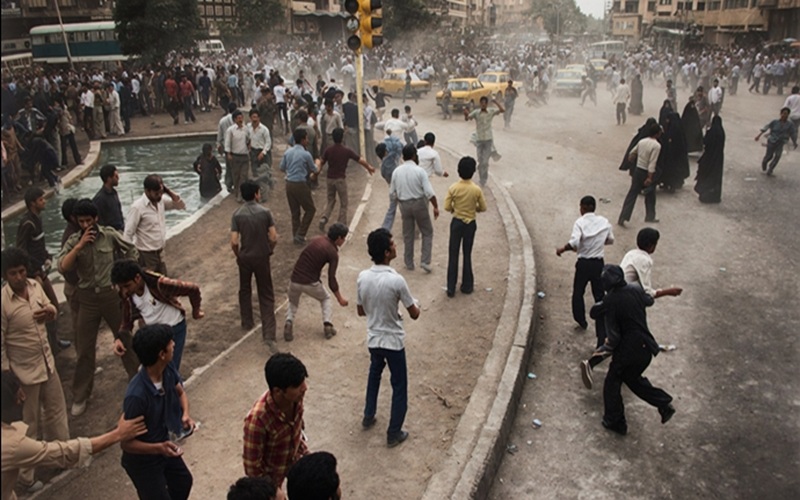
The PMOI called for a mass demonstration in Tehran to protest growing repression and demand the preservation of political freedoms. According to participants and eyewitnesses, hundreds of thousands of people joined the gathering.
What followed remains one of the most controversial episodes of the post-revolutionary era.
Security forces moved against the demonstrators, opening fire on crowds and launching a sweeping crackdown. Numerous protesters were killed, wounded, or arrested. In the weeks and months that followed, mass arrests, executions, and political repression intensified dramatically.
Supporters of the regime have long argued that these actions were necessary to confront an armed threat. Critics counter that the demonstrators were largely unarmed and that the crackdown itself marked the decisive escalation that pushed the country into a cycle of violence.
The debate remains politically charged, but what is increasingly difficult to dismiss is the evidence showing that systematic repression preceded the outbreak of armed resistance.
Cause or Consequence?
The central question is not whether armed resistance emerged after June 1981—it clearly did. The real question is whether that resistance was the cause of the regime’s violence or a consequence of it.
The official narrative insists that the PMOI chose violence first, forcing the regime to respond. Yet historical evidence suggests a different sequence: years of political suppression, attacks on opposition supporters, restrictions on free expression, and the violent dispersal of peaceful demonstrations created conditions in which many opponents concluded that peaceful political activity was no longer possible.
Viewed through this lens, the armed resistance that followed was not the opening chapter of the conflict but its result.
Why Historical Truth Matters
The struggle over the history of June 1981 is about more than competing interpretations of the past. It is also about understanding how authoritarian systems consolidate power and how political narratives are constructed.
For decades, the Mullahs’ regime has sought to portray itself as the victim of unprovoked violence while presenting its opponents as the sole architects of conflict. However, historical documents, eyewitness testimony, and admissions from former regime insiders increasingly challenge that portrayal.
The evidence suggests that the road to confrontation was paved not by a sudden decision of the opposition to take up arms, but by a sustained campaign of repression that steadily closed every peaceful avenue for dissent.
As a new generation of Iranians seeks to understand the events that shaped their country’s modern history, the historical record deserves to be examined free from propaganda and political mythology. The facts, and the testimonies of those who participated in those events, continue to raise questions that the regime’s official narrative has never adequately answered.