


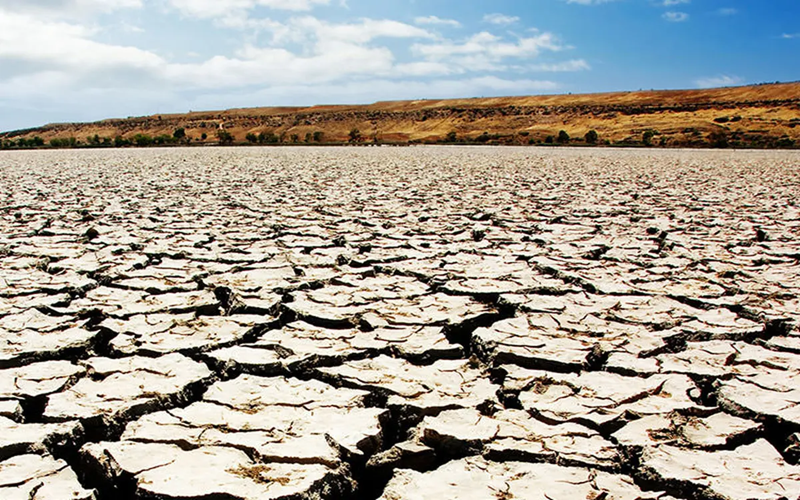

As water shortages spread across 58 cities, millions of Iranians face failing infrastructure, contaminated drinking water, and growing unrest—revealing a crisis rooted not in nature alone, but in decades of regime mismanagement.
For years, Iranian regime authorities have attributed the country’s worsening water shortages to drought and climate change. While changing weather patterns have undoubtedly intensified pressure on water resources, the latest developments demonstrate that Iran’s water crisis is fundamentally a political and governance crisis. Decades of environmental mismanagement, unsustainable policies, corruption, and neglected infrastructure have transformed a natural challenge into a nationwide humanitarian emergency.
The latest official figures illustrate the scale of the disaster. Hashem Amini, chairman of the National Water and Wastewater Engineering Company’s board, recently acknowledged that 58 cities across 23 provinces are experiencing severe water stress. Even though rainfall improved in some regions during the current water year, Tehran, Markazi, Hamedan Province, and the city of Mashhad remain under acute pressure.
His admission comes after six consecutive years of drought, yet the persistence of water shortages despite occasional improvements in precipitation underscores a deeper reality: rainfall alone cannot solve a crisis created by decades of poor governance.
Across Iran, aging water infrastructure loses enormous quantities of treated water before it ever reaches consumers. Excessive groundwater extraction has depleted aquifers beyond sustainable limits, while the regime has repeatedly prioritized politically motivated megaprojects over scientifically sound water management. Instead of implementing comprehensive conservation policies, authorities have continued to rely on emergency measures that merely postpone collapse.
The consequences are now visible in virtually every corner of the country.
Reports from citizens describe prolonged water and electricity outages, while many communities no longer have reliable access to drinking water. Residents of Malayer have reported being without potable water since early May, with emergency tanker deliveries arriving only after lengthy delays.
In South Khorasan Province, the situation reflects the cumulative damage of more than a quarter-century of environmental decline. After 26 consecutive years of drought, official data show that approximately 4.2 billion cubic meters of groundwater have been overexploited during the past three decades. Today, nine cities and 27 water supply complexes face severe shortages.
Cities including Birjand, Qaen, Nehbandan , Tabas, Khusf, Shusef, Asadiyeh, Sarayan, and Sarbisheh have officially entered water stress conditions, with Birjand among the hardest hit. Only around 30 percent of Birjand’s reservoir capacity remains available, while many villages experience recurring interruptions in water service.
Meanwhile, the crisis has taken an even more alarming turn in Khuzestan Province.
Residents of Ahvaz once again report muddy, contaminated tap water, forcing many families to purchase clean drinking water from private tanker trucks simply to meet their daily needs. The much-publicized water supply project inaugurated during the presidency of Ebrahim Raisi has failed to deliver its promised improvements. In several rural communities, residents continue to obtain water from agricultural irrigation canals or directly from the Karun River—an extraordinary situation in a country with extensive water infrastructure on paper.
Citizens have also complained about temporary water outages and foul-smelling tap water in several neighborhoods of Ahvaz, raising serious public health concerns.
As living conditions deteriorate, public frustration is increasingly spilling into the streets.
In Semnan Province, farmers, livestock breeders, and local residents recently gathered near Boneh-Kuh Road to demand enforcement of existing water rights and protection of the Hablerud River’s historical water allocation. The demonstration was their second in less than two weeks after previous government promises produced no meaningful action.
Such protests highlight an important shift. Water scarcity is no longer viewed solely as an environmental issue; it has become a symbol of the regime’s broader inability to provide even the most basic public services. Access to clean drinking water—one of the most fundamental responsibilities of any government—has become uncertain for millions of Iranians.
The crisis also exposes the enormous gap between official rhetoric and everyday reality. While authorities continue to announce ambitious infrastructure plans and blame external factors, ordinary citizens are confronting soaring utility bills, repeated blackouts, dry taps, and unsafe drinking water during the very first weeks of summer.
These failures extend beyond domestic governance. Water insecurity contributes directly to economic decline, agricultural collapse, internal displacement, and social instability. As environmental pressures mount, the regime’s inability to address structural problems increases the likelihood of wider unrest while further weakening Iran’s long-term resilience.
The international community should recognize that Iran’s environmental crisis cannot be separated from its political system. Policies focused solely on technical cooperation or sanctions relief cannot resolve problems rooted in systemic corruption, lack of accountability, and the absence of transparent governance.
For decades, the ruling regime has diverted national resources toward military expansion, regional proxy networks, and ideological priorities while neglecting essential public infrastructure. The result is visible today in dry reservoirs, depleted aquifers, contaminated water supplies, and growing public anger.
A sustainable solution requires far more than emergency water transfers or temporary conservation campaigns. It demands accountable governance, transparent environmental management, and institutions that serve citizens rather than preserve authoritarian power.
As long as those structural conditions remain absent, Iran’s water crisis will continue to deepen. Supporting the Iranian people’s demand for democratic change and their right to resist authoritarian rule offers a more durable path toward addressing both the country’s environmental collapse and its broader governance crisis than either military confrontation or continued appeasement of the regime.