


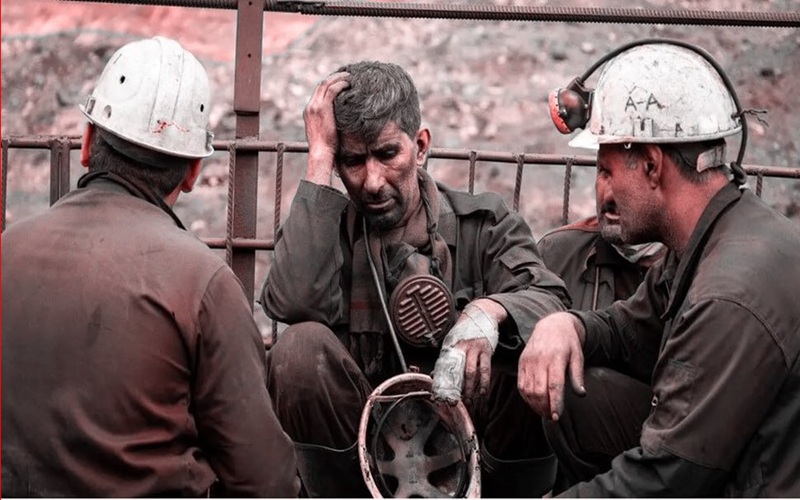

Delayed wages, mass layoffs, insecure contracts, and soaring inflation have pushed Iranian workers into a deepening social crisis. Their growing protests reveal not isolated labor disputes, but the structural failure of an economy built to preserve the regime rather than protect its people.
Across Iran, labor protests are no longer isolated workplace disputes. They have become one of the clearest indicators of a country sinking deeper into economic and political crisis.
From factory workers in northern Iran to municipal employees in the country’s eastern provinces, thousands are demanding something remarkably modest: payment of wages already earned, enforcement of existing labor laws, and the basic dignity that should accompany honest work.
The persistence of these protests demonstrates that the crisis confronting Iran’s working class extends far beyond delayed salaries. It reflects the structural failure of an economic system in which workers bear the costs of corruption, political priorities, and decades of mismanagement.
Workers Are Demanding Rights, Not Privileges
Recent demonstrations across multiple provinces reveal a remarkably consistent pattern of grievances.
Workers report months of unpaid wages, missing insurance contributions, insecure employment contracts, arbitrary dismissals, and employers’ refusal to implement legally mandated wage increases. Many also fear changes to retirement regulations that could further weaken already fragile social protections.
What makes these protests particularly significant is that workers are generally not demanding new benefits or extraordinary concessions.
Instead, they are calling for the enforcement of rights that already exist under Iran’s own labor and social security laws.
The fact that these basic legal protections are routinely ignored speaks volumes about the growing gap between legislation and reality.
A Crisis Spreading Across Every Sector
The latest protests illustrate how widespread the problem has become.
Workers at Iran Barak, a textile factory in Rasht, recently continued demonstrations for nearly a week over unpaid wages, insurance disputes, and uncertainty surrounding their employment. Their prolonged protest suggests that repeated attempts to resolve these issues through official channels have failed.
Meanwhile, municipal service workers in Sarakhs reported delays of several months in receiving salaries, overtime pay, severance benefits, and other legally required compensation. For families already struggling with inflation, even a few weeks without income can create severe hardship.
Such cases are no longer exceptional.
Delayed wage payments have become a chronic feature of Iran’s labor market.
Wage Delays Have Become an Interest-Free Loan for Employers
One of the most damaging aspects of the current system is the normalization of delayed wage payments.
Many employers—whether public, private, or semi-state entities—routinely postpone salaries for weeks or even months.
In effect, workers are forced to finance their employers.
Instead of paying wages on time, some companies retain those funds for other purposes, using unpaid salaries as an interest-free source of working capital. In some cases, these resources reportedly flow not into productive investment or workplace improvements but into speculative financial activities and other profit-seeking ventures.
The result is a system in which workers absorb the financial risks while employers preserve liquidity at their expense.
War Has Become a Convenient Excuse
Since the recent military conflict involving Iran, some employers have attempted to justify delayed salaries by citing wartime economic conditions.
But this explanation ignores history.
Late wage payments, insecure employment, and deteriorating labor conditions long predated the conflict.
The war did not create these structural problems.
It merely provided another justification for practices that had already become deeply entrenched.
Iran’s labor crisis is rooted in decades of economic dysfunction, chronic inflation, corruption, sanctions, policy failures, and the diversion of national resources toward security and military priorities rather than productive economic development.
Layoffs Are Accelerating the Social Crisis
For many workers, delayed wages are only the beginning.
Layoffs are becoming increasingly common as factories reduce production or suspend operations altogether.
Reports from Saravan, for example, indicate that dozens of municipal day laborers lost their jobs after demanding insurance coverage, employment security, and legally required wage adjustments.
Such dismissals send a powerful message to workers across the country: asserting one’s legal rights may carry the risk of unemployment.
At the same time, many production facilities face serious liquidity shortages, making it difficult to maintain payrolls or continue normal operations.
Factories reduce shifts.
Production lines shut down.
Workers join the ranks of the unemployed—often without adequate unemployment benefits or meaningful social protection.
Inflation Is Erasing Every Wage Increase
Even workers who continue receiving salaries face another relentless challenge: inflation.
The rapid rise in the cost of food, housing, transportation, healthcare, and other essentials means that annual wage adjustments consistently fail to preserve purchasing power.
Every year, nominal salaries increase.
Every year, real incomes decline.
For low-income workers, even a brief delay in receiving wages can make it impossible to pay rent, purchase food, or meet basic household expenses.
When delays extend for several months, many families are pushed into debt, forced to sell possessions, or rely on informal borrowing simply to survive.
This crisis extends well beyond factory workers.
Construction laborers, day workers, service employees, and countless others operating in the informal economy face similar—or even worse—conditions.
Structural Problems Require Structural Solutions
Iran’s labor market suffers from more than economic recession.
It is burdened by structural weaknesses that have accumulated over decades.
Temporary contracts have become the norm in many industries.
Large numbers of workers lack written employment agreements altogether.
Social insurance coverage remains incomplete.
Legal protections are inconsistently enforced.
These conditions make workers extraordinarily vulnerable during periods of economic instability.
When production slows, they are often the first to lose their jobs and the last to receive meaningful assistance.
Will New Revenues Reach Ordinary Workers?
With renewed diplomatic negotiations and the possibility of increased oil revenues or access to previously frozen assets, some have expressed hope that Iran’s economic conditions could improve.
Yet history offers little reason for optimism.
Even when government revenues have increased in the past, the benefits have rarely reached ordinary workers in any meaningful way. Instead, resources have frequently been directed toward expanding the state’s security apparatus, financing regional interventions, sustaining politically connected institutions, or covering fiscal deficits.
Without fundamental changes in governance, transparency, and economic priorities, additional state revenue is unlikely to transform the daily lives of Iranian workers.
The Labor Movement Reflects a Larger Political Crisis
The growing wave of labor protests represents more than economic dissatisfaction.
It reflects a profound crisis of governance.
Workers are not only protesting inflation or unpaid wages; they are protesting the collapse of trust in institutions responsible for enforcing the law. When labor protections exist only on paper, legal guarantees lose their meaning.
For years, the Iranian regime has portrayed itself as the defender of the country’s most vulnerable citizens. Yet the experience of millions of workers tells a different story—one in which economic hardship, insecurity, and shrinking purchasing power have become permanent features of daily life.
As long as political survival continues to take precedence over economic reform, labor rights will remain subordinate to the interests of the state.
The demonstrations spreading across Iran’s factories, municipalities, and workplaces are therefore about far more than wages. They are a warning that a system unable to provide economic security for those who sustain it is steadily losing the confidence of the very people on whose labor the country depends.