


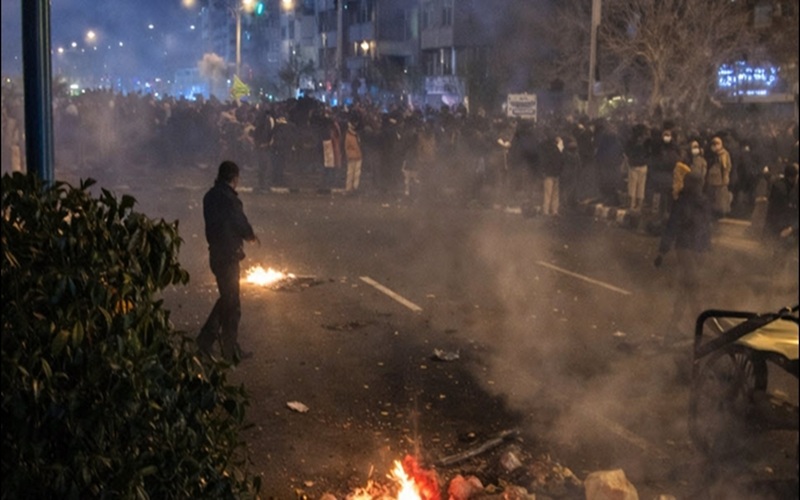

Human rights organization warns that failure to pursue international justice after the January 2026 killings risks encouraging further crimes against protesters as repression intensifies across Iran.
July 8, 2026 – Amnesty International has issued a stark warning on the six-month anniversary of the January 2026 nationwide protest crackdown in Iran, arguing that the international community’s failure to pursue accountability has emboldened the regime and increased the risk of future mass atrocities.
The organization called on the United Nations and governments worldwide to prioritize international justice mechanisms for Iran, stressing that continued impunity is allowing the regime to intensify repression against its own people.
Amnesty: International Inaction Encourages Further Repression
In a statement released on July 8, Amnesty International’s Deputy Regional Director for the Middle East and North Africa, Diana Eltahawy, condemned what she described as the international community’s inadequate response to one of the deadliest crackdowns in Iran’s modern history.
According to Eltahawy, six months after the Iranian regime security forces unlawfully killed thousands of protesters and bystanders over a two-day period in January, survivors and victims’ families remain without justice while those responsible continue to operate with complete impunity.
She warned that the lack of accountability has reinforced a longstanding pattern in which authorities repeatedly use lethal force against peaceful dissent without fear of consequences.
Amnesty argued that ongoing diplomatic efforts surrounding a broader U.S.–Iran agreement should not come at the expense of justice for victims of serious human rights violations.
Call for an International Justice Mechanism
The human rights organization renewed its appeal for the establishment of an independent international justice mechanism to investigate crimes committed in Iran.
Amnesty also urged UN member states to place Iran’s human rights crisis high on the international agenda and called on the UN Security Council to refer the situation in Iran to the International Criminal Court.
The organization stressed that domestic accountability remains impossible because of what it described as a systemic culture of impunity within Iran’s judicial and security institutions.
January 2026 Uprising Triggered by Economic Collapse
The nationwide protests began on December 28, 2025, following a dramatic collapse of the Iranian currency amid soaring inflation, worsening living standards, chronic government mismanagement, and growing shortages of essential services, including access to water.
What initially started as economic demonstrations in Tehran rapidly evolved into a nationwide movement demanding democracy, freedom, human rights, dignity, and an end to the rule of the Iranian regime.
Authorities responded with what Amnesty described as an unprecedented militarized crackdown involving widespread use of live ammunition, excessive force, and a prolonged nationwide internet shutdown designed to suppress information about the violence.
Conflicting Death Tolls Highlight Scale of the Crackdown
Official and independent estimates of those killed differ significantly, underscoring the difficulty of documenting the full scale of the violence.
On January 21, 2026, Iran’s Supreme Council of National Security acknowledged that 3,117 people had been killed during the uprising.
Earlier, on January 16, UN Special Rapporteur on the situation of human rights in Iran Mai Sato stated that more than 5,000 people had been killed by Iranian security forces.
Amnesty International has consistently maintained that the authorities employed unlawful lethal force against protesters on a massive scale while simultaneously restricting independent investigations and access to information.
Families of Victims Face Continued Repression
According to Amnesty, the crackdown did not end with the suppression of street protests.
The organization says authorities have continued a nationwide campaign of repression through arbitrary arrests, enforced disappearances, bans on public gatherings, intimidation of victims’ families, and politically motivated prosecutions.
Human rights groups have documented repeated efforts by security agencies to prevent mourning ceremonies, silence witnesses, and obstruct independent investigations into the killings.
Repression Intensified After the Iran–Israel War
Amnesty also warned that domestic repression has escalated further since the recent Iran–Israel conflict.
The organization said authorities have used what they describe as “wartime conditions” to justify expanded crackdowns on dissent, including an increase in politically motivated executions.
According to Amnesty, at least 44 people have been executed since the conflict, with many additional prisoners reportedly facing imminent execution.
The organization expressed concern that the June 18, 2026 memorandum of understanding signed between the United States and Iran to end hostilities failed to place human rights, accountability, justice, or reparations at the center of the negotiations.
Amnesty Warns Cycle of Violence Will Continue Without Accountability
Amnesty International concluded that meaningful international action has become increasingly urgent.
The organization argues that unless those responsible for the January 2026 killings are held accountable through independent international mechanisms, Iran’s authorities will continue to believe they can suppress public dissent through deadly force without consequence.
For the families of thousands of victims, Amnesty says, justice remains elusive. Without sustained international pressure, the organization warns, the cycle of repression that has characterized Iran for decades is likely to deepen further rather than come to an end.