


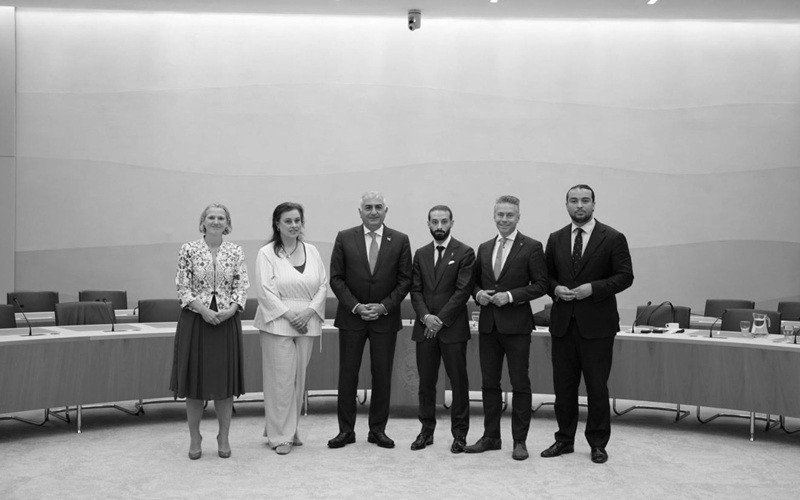

The collapse of Reza Pahlavi’s visit to the Netherlands exposed more than the limits of monarchist influence. It highlighted how a movement built on nostalgia, polarization, and attacks on democratic opposition risks becoming an obstacle to the unified resistance Iran needs.
Every authoritarian regime understands a simple political truth: a fragmented opposition is easier to defeat than a united one.
That is precisely why the recent collapse of Reza Pahlavi’s highly publicized visit to the Netherlands deserves attention beyond its immediate embarrassment. The controversy was not merely a diplomatic setback for the son of Iran’s last monarch. It illustrated a broader political reality: an opposition current that claims to champion unity while consistently deepening divisions ultimately strengthens the very regime it says it seeks to overthrow.
For Tehran, no opposition is more useful than one that redirects public energy away from organized resistance and toward endless infighting.
A Visit That Unraveled
The visit was promoted by monarchist supporters as an opportunity to present Reza Pahlavi as a credible political alternative for Iran’s future. Organizers reportedly expected meetings with Dutch political figures, media engagement, and discussions about democratic change.
Instead, the event became engulfed in controversy.
Following widespread objections from Iranian activists, human rights advocates, and members of the Iranian diaspora, several planned engagements lost political support. Dutch politicians became increasingly reluctant to participate in an event associated with the heir to a monarchy whose record remains deeply contested.
Rather than generating momentum, the trip became a political liability.
The Shadow of the Pahlavi Dictatorship
Dutch media did not ignore the historical context.
Public broadcaster Nieuwsuur questioned Reza Pahlavi about the legacy of his father, Mohammad Reza Pahlavi, whose government relied on censorship, political repression, arbitrary detention, and the notorious SAVAK intelligence service.
Instead of acknowledging those abuses, Reza Pahlavi reportedly defended his father’s historical record and expressed pride in his political legacy.
That response reinforced a criticism that has followed him for years: he continues to seek political legitimacy without clearly distancing himself from the authoritarian practices of the monarchy he hopes many Iranians will embrace once again.
Dutch newspaper de Volkskrant likewise noted that many Iranian expatriates viewed his visit not as a symbol of democratic renewal but as a reminder of a dictatorship they or their families had fled.
For many Iranians, the debate is not monarchy versus the current regime. It is dictatorship versus democracy.
Borrowing the Regime’s Language
Perhaps the most revealing aspect of the controversy came not from Dutch journalists but from Reza Pahlavi’s own supporters.
As criticism mounted, several monarchist activists blamed the People’s Mojahedin Organization of Iran (PMOI/MEK) for the failed visit. More strikingly, they revived the regime’s preferred derogatory label—”Monafeqin” (“hypocrites”)—a term the Iranian authorities have used for decades to justify persecution, imprisonment, and executions of PMOI members and supporters.
This was more than heated political rhetoric.
When self-described democratic activists adopt the vocabulary of the regime against fellow opponents of the clerical establishment, they blur the distinction between democratic pluralism and authoritarian exclusion.
Political disagreement is inevitable within any opposition. Repeating the language of state repression is a different matter altogether.
The Politics of Division
Iran’s opposition encompasses diverse political traditions, including republicans, constitutional monarchists, secular democrats, ethnic minority activists, labor organizations, and organized resistance movements.
Healthy political competition is not the problem.
The problem arises when one current seeks to delegitimize every other opposition force instead of competing through ideas, policies, and democratic credibility.
For years, Reza Pahlavi has presented himself internationally as a unifying figure capable of bringing together Iran’s democratic forces.
Yet his political strategy has repeatedly produced the opposite effect.
Rather than building broad consensus around democratic principles, it has often revolved around personality politics, historical nostalgia, and efforts to marginalize organized movements that possess independent structures, networks, and constituencies.
The result is predictable: division replaces cooperation, suspicion replaces trust, and collective action becomes increasingly difficult.
Who Benefits?
This question is unavoidable.
Every week spent fighting over personalities instead of confronting the regime is a week that benefits Tehran.
Every campaign devoted to discrediting fellow opposition groups rather than exposing the regime’s human rights abuses diverts political attention from the real source of Iran’s crisis.
Every attempt to monopolize representation of the Iranian people weakens the emergence of a genuinely broad democratic coalition.
Whether intentional or not, the political consequence remains the same.
An opposition trapped in internal conflict is far less capable of supporting nationwide protests, coordinating international advocacy, or presenting a credible democratic alternative.
That serves the interests of the ruling establishment—not those of the Iranian people.
Democracy Cannot Be Built on Historical Amnesia
The Netherlands controversy also underscored another fundamental challenge.
Democratic legitimacy requires accountability.
No political leader seeking to shape Iran’s future can simply celebrate an authoritarian past while asking citizens to trust promises of democratic governance.
Millions of Iranians rejected one dictatorship in 1979 only to find themselves under another.
Many have no desire to exchange one form of authoritarian rule for a different version wrapped in royal symbolism.
The future they seek is neither the return of the Shah nor the continuation of the mullahs’ rule, but a democratic republic founded on popular sovereignty, political pluralism, and respect for human rights.
The Opposition Iran Needs
The failure of Reza Pahlavi’s Netherlands visit was not simply a public relations setback.
It exposed the limits of a political project that claims to represent national unity while deepening polarization within the opposition.
Iran’s democratic movement does not need another personality cult or another faction seeking exclusive legitimacy. It needs cooperation among forces committed to democracy, accountability, and the right of the Iranian people to determine their own future.
History has repeatedly shown that authoritarian systems survive not only through repression but also through the fragmentation of their opponents.
Any political current that consistently redirects energy away from organized resistance, fuels internal confrontation, and weakens the prospect of coordinated action—regardless of its rhetoric—ultimately helps prolong the life of the regime it claims to oppose.