The death of Ali Khamenei does not resolve Iran’s political crisis. It exposes a deeper question: can the regime survive if it abandons the very policies that sustained its rule, and can it survive if it refuses?
The burial of Ali Khamenei marks the end of an era, but it does not mark the end of the crisis that has consumed Iran for decades. If anything, it has stripped away the central figure who held together competing power centers while leaving behind the political, economic, and ideological structures responsible for the country’s decline.
For the regime’s new leadership, the challenge is no longer simply succession. It is whether the system built around absolute clerical rule can answer the demands of a society that has repeatedly rejected it.
The question confronting Tehran is therefore straightforward: can the regime reform itself without dismantling the very foundations on which it has depended for nearly half a century?
The evidence suggests it cannot.
A Population That Wants Results, Not Propaganda
For years, the regime invested enormous resources in controlling narratives, manipulating statistics, and dominating state media. Yet propaganda cannot substitute for functioning institutions or economic stability.
A comparison often made about the collapse of the Soviet Union remains instructive. While the Soviet state excelled at projecting ideological strength, it ultimately failed to provide ordinary citizens with basic prosperity. The famous contrast between “television and the refrigerator” captured this reality: propaganda could not compensate for empty shelves.
Many Iranians see today’s regime through the same lens. Official declarations celebrate resilience and economic success while millions struggle with inflation, unemployment, and declining living standards.
The next leadership will inherit not merely an economy in crisis but a society that increasingly judges the government by tangible outcomes rather than ideological slogans.
Can the Regime Abandon Social Control?
One of the deepest grievances among Iranians extends beyond economics.
For decades, state institutions—including the security forces, judiciary, intelligence services, and religious authorities—have exercised extensive control over private and public life. Personal freedoms, cultural expression, academic independence, and even individual lifestyle choices have all been subjected to political oversight.
Removing Khamenei from the equation does not automatically remove this machinery.
If these policies continue unchanged, public resentment will almost certainly deepen. But if the leadership genuinely relaxes political and social controls, it risks weakening one of the principal mechanisms through which the regime has maintained power.
This is the paradox confronting Khamenei’s successors.
An Ideological State Facing Its Own Contradictions
Since 1979, ideological loyalty has often taken precedence over professional competence.
Political vetting has shaped university admissions, public-sector employment, judicial appointments, and senior administrative positions. Many Iranians argue that this system has damaged education, discouraged expertise, and accelerated the country’s brain drain.
A leadership committed to reform would have to dismantle these ideological barriers.
Yet doing so would fundamentally alter the identity of the regime itself, raising questions about whether an ideological state can survive after abandoning ideology as the primary criterion for governance.
The Grip of the IRGC Over Iran’s Economy
Another structural obstacle lies in the enormous economic influence of the Islamic Revolutionary Guard Corps (IRGC).
Over the years, the IRGC has expanded far beyond its military role, establishing dominance across construction, energy, telecommunications, banking, transportation, mining, and numerous strategic industries. Many Iranians view this concentration of economic power as a major source of corruption, monopolization, and inefficiency.
Reducing the IRGC’s economic dominance could create opportunities for competition and private investment.
However, it would also undermine one of the regime’s most influential power centers, making meaningful reform politically dangerous for those now attempting to preserve the existing order.
The Unanswered Question of Repression
Perhaps the greatest political test concerns how the regime responds to future public protests.
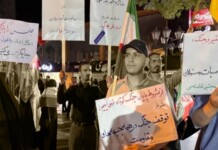
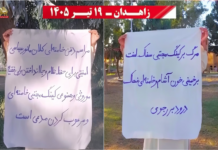
Iranians have witnessed repeated nationwide uprisings over the past two decades, each met with escalating repression. Thousands have been arrested, while many protesters have been killed during crackdowns carried out by the regime’s security forces.
Khamenei consistently endorsed a strategy of overwhelming force.
Whether his successors continue that policy—or attempt a different approach—may determine the regime’s future. Continued repression risks provoking even greater public anger, while restraint could embolden a society that has repeatedly demonstrated its willingness to challenge authoritarian rule.
Neither option offers the leadership an easy path.
The Cost of External Priorities
For many Iranians, another central grievance concerns national priorities.
For decades, vast state resources have been directed toward military expansion, missile programs, regional proxy networks, and the security apparatus. Meanwhile, ordinary citizens have borne the costs through declining purchasing power, deteriorating public services, unemployment, and widespread poverty.
If the regime maintains these priorities, economic deterioration is likely to continue.
If it abandons them, it will weaken one of the pillars of its regional strategy and internal security doctrine.
Again, the leadership confronts a choice in which every path carries significant political costs.
Khamenei’s Death Solved Nothing
The passing of Ali Khamenei closed one chapter in Iran’s modern history, but it answered none of the questions that have driven years of nationwide unrest.
The structural crises he left behind—economic decline, political repression, ideological governance, institutional corruption, and public distrust—remain firmly in place.
His successors have inherited more than authority; they have inherited a system burdened by its own contradictions.
For Iran’s people, the central demand has remained remarkably consistent: accountable government, economic opportunity, political freedom, and respect for fundamental rights.
Whether the regime attempts reform or continues along its existing course, it now faces the same reality that confronted many authoritarian systems before it: a political structure that increasingly appears incapable of meeting the aspirations of the society it seeks to govern.