


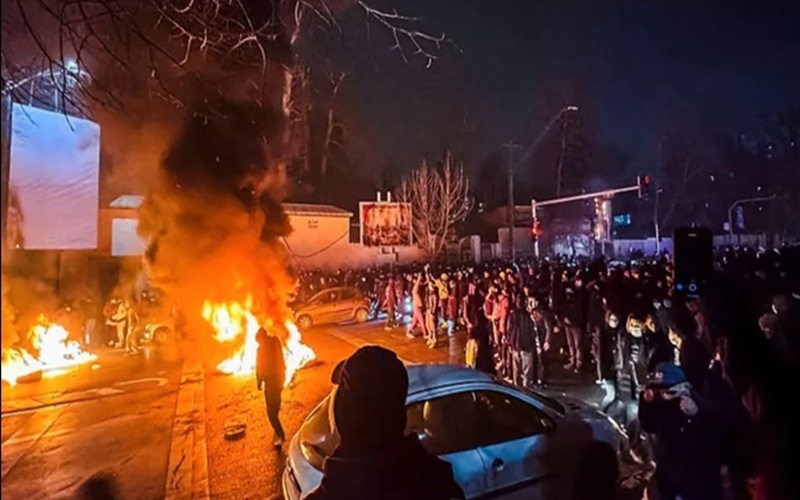

As the regime faces unprecedented internal and external pressure, Iran’s future will depend not on foreign intervention but on the ability of its people to shape the country’s next chapter.
Rarely has Iran stood at a political crossroads as consequential as the one it faces today.
The balance of power surrounding the Iranian regime has shifted noticeably over recent months. Mounting international pressure, deepening internal divisions, and an increasingly fragile economy have combined to create one of the most uncertain periods in the history of the ruling establishment.
Yet amid this uncertainty, one lesson has become increasingly clear: the future of Iran cannot be determined by foreign governments or military confrontation. Sustainable political change will ultimately depend on the Iranian people themselves.
The Limits of Foreign Pressure
For years, Western governments pursued policies that alternated between engagement, economic pressure, and diplomatic negotiations with the Iranian regime. Critics argued that this approach often underestimated the regime’s willingness to preserve its power through repression at home and confrontation abroad.
Recent regional tensions have exposed the limitations of relying solely on external pressure to alter the regime’s behavior. While military confrontations and diplomatic crises may weaken state institutions or reshape regional calculations, they do not automatically produce democratic outcomes.
For Iranians, this reality reinforces an important distinction: external developments may influence the political environment, but they cannot substitute for domestic political transformation.
History offers few examples where foreign conflict alone has produced stable democracy. Durable political change requires broad public participation, organized civil society, and institutions capable of replacing authoritarian governance.
A Regime Under Growing Strain
The Iranian regime is confronting multiple pressures simultaneously.
Years of economic decline, persistent inflation, corruption, international isolation, and widespread public dissatisfaction have significantly eroded public confidence. At the same time, repeated nationwide protests over the past decade have demonstrated that dissatisfaction extends well beyond economic grievances to broader demands for political accountability and fundamental change.
Leadership transitions and intensified factional rivalries have further complicated the regime’s efforts to project stability. As competing centers of power seek to preserve their influence, internal divisions appear increasingly difficult to contain.
Political systems built primarily on coercion often become more vulnerable when they simultaneously face economic crises, legitimacy deficits, and leadership uncertainty.
Unresolved Demands Continue to Shape Iran’s Future
Despite changing political circumstances, the underlying grievances driving public discontent remain unresolved.
Families continue to seek accountability for decades of political repression and violence. Workers, retirees, teachers, nurses, and other social groups continue to protest deteriorating living standards. Young Iranians increasingly demand greater political freedoms, economic opportunity, and meaningful participation in determining their country’s future.
Economic hardship remains central to these demands.
Persistent inflation, declining purchasing power, unemployment, housing costs, and widening inequality continue to affect millions of households. These challenges cannot be separated from broader questions of governance, transparency, and public accountability.
Without addressing both political and economic grievances, lasting stability is likely to remain elusive.
Change Requires More Than Leadership Transitions
Authoritarian systems often seek to preserve themselves through changes in leadership while leaving the underlying structures of power intact.
Such transitions may temporarily reduce political tensions, but they rarely resolve the structural problems that generated the crisis in the first place.
Iran’s experience over the past four decades suggests that meaningful reform requires more than replacing individual officials. It requires institutions that are accountable to citizens, governed by the rule of law, respectful of human rights, and capable of ensuring political pluralism and peaceful transfers of power.
Without those foundations, political change risks becoming little more than a reshuffling of existing power structures.
The Responsibility for Iran’s Future
The uncertainty surrounding Iran’s political future inevitably raises difficult questions.
How can a society move beyond decades of authoritarian rule? What institutions are needed to rebuild public trust? How can accountability be achieved while ensuring stability during a democratic transition?
These questions cannot be answered through military conflict or international diplomacy alone.
The experience of recent decades suggests that Iran’s future will ultimately be shaped by the resilience of its own citizens, the continued growth of civil society, and the emergence of democratic institutions capable of replacing authoritarian governance.
The challenges remain immense, and no transition is without risk. Yet one conclusion has become increasingly difficult to dispute: a stable, democratic, and prosperous Iran will require change driven by the Iranian people themselves.
The international community can support that aspiration by defending human rights, holding the regime accountable for its abuses, and recognizing the Iranian people’s legitimate demand for democratic self-determination. Lasting peace and stability, however, will depend on the establishment of a government that derives its legitimacy from the consent of its citizens rather than from repression or perpetual confrontation.