


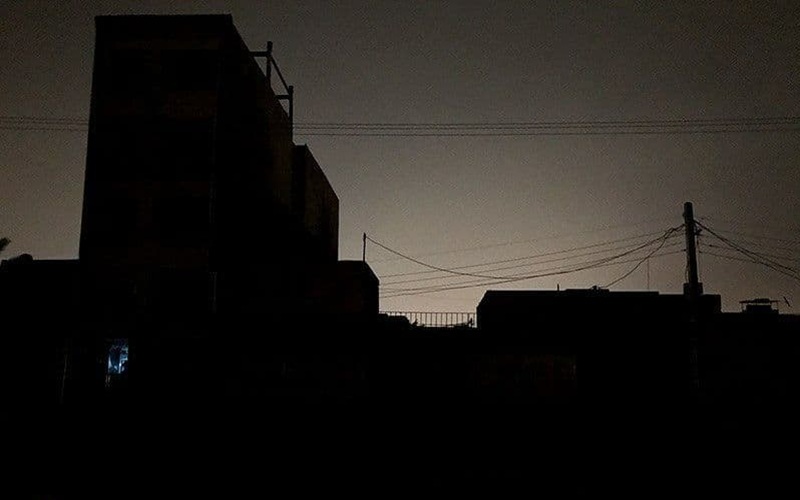

New figures reveal soaring losses from electricity shortages, exposing years of failed energy policies that are crippling production, investment, and employment across Iran.
Iran’s worsening electricity crisis is inflicting unprecedented damage on the country’s industrial sector, with new government figures showing that production losses have reached staggering levels. As rolling blackouts continue across the country, manufacturers are warning of declining output, rising unemployment, and growing pressure on an economy already burdened by inflation and chronic mismanagement.
The latest estimates underscore how years of poor planning, underinvestment, and distorted energy policies have transformed electricity shortages from a seasonal inconvenience into one of the regime’s most serious economic failures.
Industrial Losses Climb to Record Levels
Ezzatollah Zarei, spokesperson for the Ministry of Industry, Mine and Trade, announced that industrial revenue lost because of power outages increased from approximately 300 trillion tomans in 2024 to nearly 400 trillion tomans in 2025.
According to remarks reported by ILNA, the energy crisis has affected manufacturing sectors unevenly, with industries that rely on continuous production suffering the greatest losses. Facilities such as steel, petrochemical, cement, and other heavy industries cannot simply restart production after unexpected power interruptions without incurring significant operational and financial costs.
Zarei acknowledged that factories located in industrial parks are currently experiencing an average of two days of electricity outages every week, disrupting production schedules and reducing output across numerous sectors.
He stressed the need for special measures to ensure electricity supplies for these industries, arguing that uninterrupted production is essential for maintaining market stability and preventing shortages of essential goods.
Blackouts Threaten Jobs and Economic Growth
Warnings about the broader economic consequences are becoming increasingly urgent.
The daily newspaper Ettelaat described electricity cuts to industrial facilities as “anti-production,” arguing that the burden of the energy crisis should not fall almost exclusively on manufacturers. Instead, it called for electricity restrictions to be distributed more evenly among residential, commercial, service, and industrial consumers.
The newspaper cautioned that continued disruptions to industrial production could significantly increase unemployment while further weakening Iran’s already fragile economy.
Mohammad Masoud Samiei-Nejad, deputy minister of industry and head of IMIDRO, also criticized current energy policies, noting that industries in Iran pay electricity prices approximately 15 times higher than residential consumers.
He warned that forcing industrial companies to finance and build their own power plants places additional financial burdens on manufacturers, undermining production capacity, employment, and international competitiveness.
Structural Failures Behind the Crisis
Energy experts argue that the electricity shortages are not simply the result of increased summer demand but reflect years of structural policy failures.
Mahmoud Hakimi, a member of the Electricity Market and Energy Exchange Commission of Iran’s Electricity Industry Syndicate, identified state-controlled pricing, unrealistic electricity tariffs, and weak investment incentives as the primary causes of the crisis.
According to Hakimi, development plans had called for adding approximately 5,000 megawatts of new generating capacity each year, yet those targets have consistently been missed.
He also criticized the regime’s fuel allocation policies, noting that many aging power plants with efficiencies of only around 30 percent continue receiving subsidized natural gas instead of being modernized or replaced with more efficient combined-cycle facilities.
Hakimi further pointed to illegal cryptocurrency mining powered by heavily subsidized electricity as another factor worsening supply shortages. The profitability of illicit mining operations, he said, has encouraged operators to continue despite the risk of legal consequences.
Above all, he warned that rolling blackouts do not solve the underlying problem—they merely redistribute electricity shortages among consumers.
A Crisis Felt Across Society
The impact of the electricity crisis extends well beyond factories.
Frequent and often unannounced electricity and water outages during the peak of the summer heat have disrupted daily life for millions of Iranians. Businesses struggle to plan operations, small enterprises lose income, hospitals and public services face additional strain, and households cope with prolonged interruptions during periods of extreme temperatures.
The uncertainty created by unpredictable blackouts has become another obstacle to economic activity, discouraging investment while increasing production costs throughout the economy.
The Price of Years of Mismanagement
The sharp rise in industrial losses reflects more than temporary supply shortages—it illustrates the cumulative consequences of years of inadequate investment, inefficient planning, and distorted economic policies.
As electricity shortages intensify, manufacturers face declining output, higher operating costs, and shrinking competitiveness. At the same time, workers confront growing risks of layoffs, while consumers ultimately bear the burden through higher prices and reduced availability of goods.