


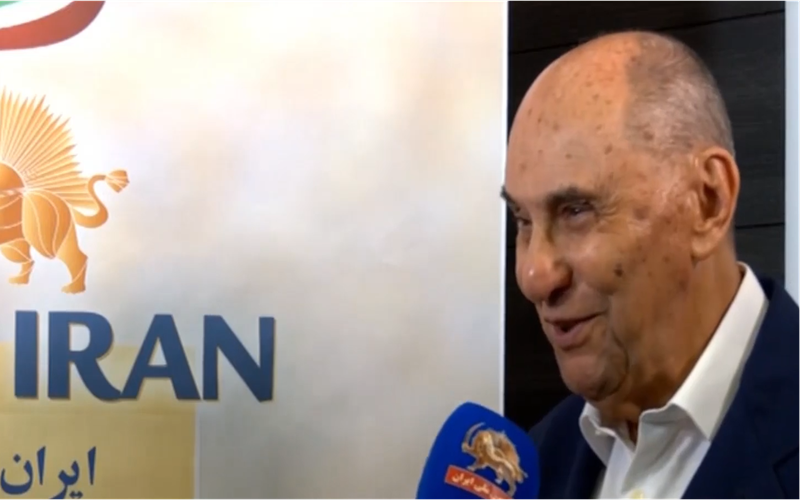

Former European Parliament Vice President Alejo Vidal-Quadras calls for an end to appeasement, full political support for the NCRI, and continued mass resistance by the Iranian people.
For decades, Western governments have pursued a policy of engagement and appeasement toward Iran’s ruling regime. Negotiations, dialogue, and diplomatic concessions have repeatedly failed to change its behavior, while repression at home and destabilizing activities abroad have continued.
According to Alejo Vidal-Quadras, former Vice President of the European Parliament and President of the International Committee in Search of Justice, the failure of this approach has become undeniable. In an interview with Simay-e Azadi, he argued that neither appeasement nor military action provides a sustainable solution. Instead, he called for a strategy based on maximum political, financial, and diplomatic pressure on the regime, combined with full political support for the Iranian people and the National Council of Resistance of Iran (NCRI).
Vidal-Quadras has been involved with the Iranian resistance for more than two decades. He said his commitment began after meeting Maryam Rajavi approximately 25 years ago and has continued despite the assassination attempt against him that nearly cost him his life.
For Vidal-Quadras, the sacrifices made by Iranian resistance activists over decades place the risks taken by their international supporters in perspective.
“The cause of establishing democracy and freedom for the Iranian people and overthrowing this criminal regime is one of the most important things we can do today,” he said, arguing that the Iranian regime represents a major component of the global threats facing the international community.
Decades of Appeasement Have Failed
Vidal-Quadras sharply criticized the Western policy of dealing with the regime through negotiations, dialogue, and engagement.
For more than four decades, he argued, Western governments have repeatedly attempted to modify the regime’s behavior through diplomatic engagement. The result, he said, has been a “disastrous failure.”
Military action, in his assessment, is not a substitute for an effective political strategy either. Pointing to the two recent wars in the region, he argued that military pressure alone has not eliminated the regime’s ability to repress its population or maintain its power.
The missing strategy, according to Vidal-Quadras, is a combination of maximum pressure on the regime and maximum support for the Iranian people and their organized resistance.
This means isolating the regime diplomatically, imposing financial pressure, confronting its human rights violations, and making the continuation of repression increasingly costly on the international stage.
At the same time, he argued, Western governments should recognize the NCRI politically as a principal force representing the organized alternative to the current regime.
His proposed approach can therefore be summarized in two simultaneous tracks: politically and financially isolate the regime while politically and morally supporting the Iranian resistance and people.
Vidal-Quadras described this as the “third solution”—an approach he believes has never been properly implemented.
Rejecting Both Dictatorships
Vidal-Quadras also rejected the idea that Iran’s future should involve a return to monarchical rule.
Replacing one dictatorship with another, he argued, would not constitute democratic change. He dismissed the notion of the Shah as a viable alternative and characterized support for hereditary rule as fundamentally incompatible with Iran’s democratic aspirations.
In contrast, he argued that a transition led by the NCRI could result in an Iran that is democratic, independent, non-nuclear, and capable of maintaining constructive relations with Western countries and the international community.
His argument reflects a broader insistence that the future political system of Iran should be determined by the Iranian people rather than imposed or managed from outside.
From Political Support to a Personal Bond
Vidal-Quadras also spoke about his longstanding relationship with members of the Iranian resistance, particularly those who lived in Camp Ashraf in Iraq and later settled in Albania.
He distinguished between ordinary political supporters of the Iranian resistance and a smaller group of international supporters who, in his words, have become part of the resistance’s broader community through years of shared experiences.
His relationship with the PMOI and NCRI, he explained, has developed through years of working alongside them, sharing their difficulties, and witnessing their sacrifices.
He described this relationship as extending beyond political support or friendship—a profound personal and spiritual bond created through years of common struggle.
For Vidal-Quadras, the ultimate objective remains the same: that these decades of sacrifice and perseverance eventually produce the “fruit” of freedom for the people of Iran.
A Message to the Iranian People: Keep Hope Alive
Asked about his message to Iranians following another year of political developments and his visits to Berlin, Washington, and London, Vidal-Quadras offered a direct appeal: do not lose hope.
He urged Iranians to remain mobilized, active, and determined.
He acknowledged that such a message is easier to deliver from outside Iran, where activists do not face the same immediate risks. But he argued that there is no alternative to continued popular resistance.
Only a massive uprising by the Iranian people, he said, can ultimately defeat the dictatorship.
“Keep your hope, keep your determination, and fight,” was his central message.
The emphasis on a mass uprising reflects his view that external pressure alone cannot bring about fundamental political change. International pressure must be accompanied by an empowered Iranian population willing to challenge the regime from within.
Executions as a Tool of Repression
The interview also addressed the escalating wave of executions in Iran, including the executions of PMOI members and the death sentences facing political prisoners and protesters.
Vidal-Quadras focused particularly on six political prisoners who, according to the interview, sang together shortly before their executions in Qezel Hesar Prison.
Rather than viewing their final moments solely through the lens of tragedy, he described their conduct as an extraordinary demonstration of courage and commitment.
The fact that prisoners could sing together while facing imminent execution, he argued, revealed the depth of their determination.
He described the six prisoners as martyrs and heroes whose courage provides an example for others involved in the struggle for freedom.
For him, their final act demonstrated that repression cannot necessarily extinguish resistance. Instead, extreme repression can become another source of determination for those who remain committed to challenging the regime.
The Human Cost of Dictatorship—and the Resolve to Continue
The testimony of Vidal-Quadras comes against the backdrop of decades of executions, imprisonment, repression, and political violence in Iran.
His own experience—including surviving an assassination attempt—has reinforced his determination to continue supporting the Iranian resistance. Yet he repeatedly emphasized that the sacrifices made by Iranians themselves are on an entirely different scale.
For him, the courage of political prisoners facing execution and the persistence of Iranian activists provide the strongest reason for international supporters to continue their efforts.
The strategy he advocates is therefore not simply a call for stronger sanctions or greater diplomatic pressure. It is a broader political approach: end the failed policy of appeasement, isolate the regime internationally, confront its human rights abuses, and recognize and support the organized democratic alternative represented by the NCRI.
At the same time, he argues that the decisive force for change must ultimately come from the Iranian people themselves.
After decades of repression and failed engagement, Vidal-Quadras’s message is unequivocal: the international community should stop treating the regime as an indispensable partner, while the Iranian people should not surrender their hope or their determination to achieve freedom.
For those who have spent decades resisting dictatorship, the struggle continues. And for their international supporters, Vidal-Quadras argues, the responsibility is to stand with them until that struggle produces its ultimate result: a free and democratic Iran.