Surging Snapp and Tapsi fares, fuel shortages, and GPS disruptions are making daily commuting increasingly unaffordable as inflation erodes household incomes.
The cost of simply getting to work is becoming another burden for millions of Iranians as sharply higher fares for internet-based taxis coincide with fuel shortages, widespread GPS disruptions, and a decline in the number of active drivers.
Reports from Tehran and several other cities indicate that fares on Snapp and Tapsi have risen substantially in recent days, particularly during peak hours. A journey that cost around 300,000 tomans only a few weeks ago can now exceed 700,000 tomans at certain times.
For workers whose wages have not risen accordingly, the increase has quickly become unsustainable.
“Wages have not doubled, but commuting costs have more than doubled overnight,” one Tehran resident told local media. “If the daily round trip costs 500,000 to 600,000 tomans, a large part of the monthly salary goes simply toward getting to work.”
Public transportation offers little relief for many commuters because buses and the metro do not adequately cover every neighborhood and workplace.
The companies operating the two major ride-hailing platforms, Snapp and Tapsi, confirmed the fare increases on Thursday, August 27. They attributed the disruption to a combination of declining numbers of active drivers, GPS problems, and overcrowding at fuel stations—factors that have upset the balance between supply and demand.
GPS disruptions have not only increased the time required for drivers to reach passengers but have also contributed to more canceled trips.
Fuel shortages deepen the pressure
The transportation crisis is also being aggravated by worsening fuel shortages.
Videos circulating from Tehran and Karaj during the night of August 26 and the early hours of August 27 showed long lines of vehicles outside fuel stations. Several stations have reportedly been closed in recent days, while internet-taxi drivers say that hours spent waiting for gasoline are making it increasingly difficult to maintain their daily work.
One driver summarized the situation bluntly: “The gas stations are crowded, GPS doesn’t work, and you can’t properly work with Snapp. Fares have increased, so naturally the number of passengers has fallen. We are left without money and without gasoline.”
For drivers, the crisis means fewer productive hours, higher operating difficulties, and potentially fewer passengers as fares rise. For passengers, it means that even reaching work is becoming a significant financial expense.
But the transportation crisis is only the latest manifestation of a much broader economic breakdown.
Inflation is consuming household incomes
On August 27, the regime’s Central Bank reported that year-on-year inflation had reached 84.4 percent in Mordad, while annual inflation stood at approximately 65 percent. Price growth for goods was even more severe, with year-on-year inflation in the goods price index exceeding 120 percent.
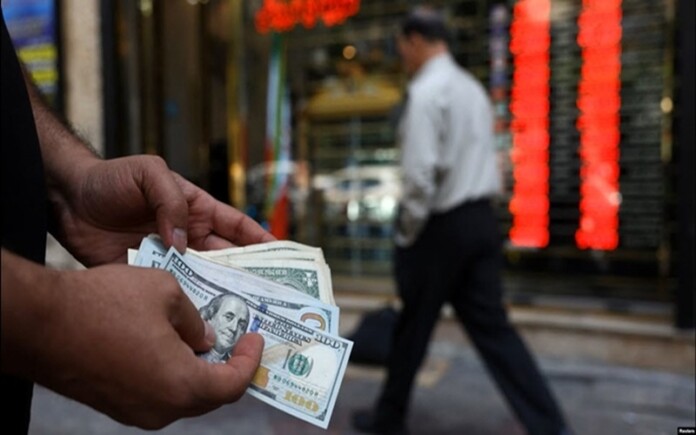
At the same time, the U.S. dollar was trading above 205,000 tomans in Tehran’s open market, increasing the likelihood of further rises in the cost of imported goods, raw materials, and consumer products.
The consequences are increasingly visible in the way Iranian families purchase basic necessities.
A recent report by the Etemad newspaper described the spread of installment purchasing beyond durable goods into supermarkets and even everyday food items. Families are increasingly buying food today while committing future income to paying for it. The newspaper aptly described the phenomenon as the “installmentization of poverty.”
Reports of the return of the traditional “notebook account”—buying groceries, meat, or fruit on credit and paying later—point to the same reality. For many families, purchasing food on credit is no longer a temporary method of managing household finances. It has become a means of making it to the end of the month.
Poverty is reaching food and healthcare
The economic squeeze is also affecting children’s nutrition and access to healthcare.
The regime’s Welfare Ministry has identified approximately 262,000 children suffering from malnutrition, while doctors working in deprived areas report that some families cannot even afford basic ingredients recommended to improve children’s diets.
Healthcare costs are following the same trajectory. Professional reports point to sharp increases in medicine prices, growing insurance debts to pharmacies, and greater difficulty obtaining some medications. As a result, some households are postponing visits to doctors and dentists or cutting back on nutritional supplements.
The regime itself appears reluctant to disclose the full scale of the problem.
Government spokesperson Fatemeh Mohajerani said on August 26 that the publication of some poverty statistics was restricted because of “security considerations” and that releasing such figures required authorization from the Supreme National Security Council.
Previous estimates have suggested that at least 60 million Iranians live below the poverty line, while the cost of meeting the basic needs of a working-class household has risen far beyond the monthly minimum wage.
Against this backdrop, the surge in Snapp and Tapsi fares cannot be dismissed as merely a temporary consequence of GPS failures or crowded fuel stations. For a household already buying food on credit, postponing medical treatment, and watching its income fall further behind inflation, the rising cost of traveling from home to work is simply another layer of the same crisis.
Food, medicine, fuel, and transportation are all consuming an expanding share of household income.
The result is an economy in which even the cost of earning a living is becoming increasingly unaffordable.