


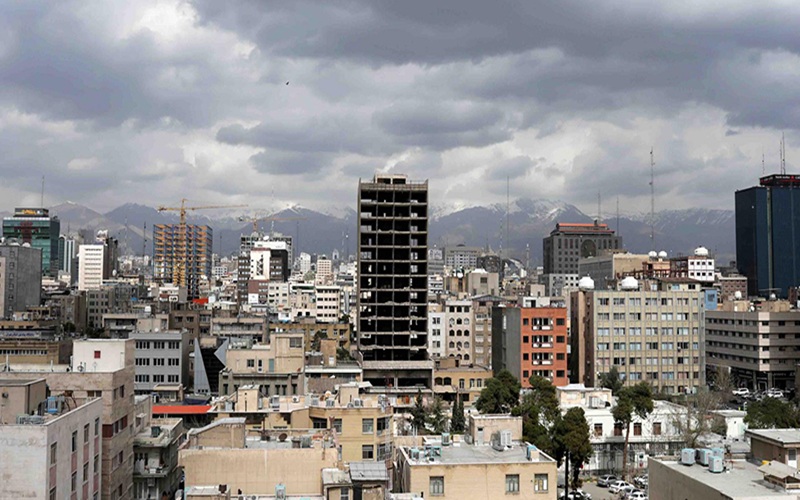

From meat and housing to childbirth and basic services, soaring prices are forcing Iranian families to abandon ordinary standards of living as wages fall further behind.
Iran’s economic crisis is no longer measured simply by how much prices have increased. Its deeper impact can be seen in what Iranian families are no longer able to buy.
Meat is disappearing from household diets. Purchases of dairy products, sweets, legumes, vegetables, and other basic foods are declining. Homeownership has become unattainable for millions of wage earners, while the cost of preparing for the birth of a child can reach hundreds of millions of tomans.
At the same time, the Iranian currency continues to lose value. The U.S. dollar recently surpassed 237,000 tomans, adding another layer of pressure to an economy heavily dependent on imported raw materials and consumer goods.
The result is a widening gap between income and the actual cost of living. Workers may still have jobs, but increasing numbers are becoming working poor—people who earn a wage yet cannot afford what was once considered a normal standard of living.
Families Are Eating Less
One of the clearest indicators of declining purchasing power is the fall in demand for food that was once a routine part of Iranian diets.
Mansour Pourian, head of Iran’s Livestock Meat Suppliers Council, recently acknowledged that household meat consumption has declined because families can no longer afford it. Significantly, he attributed the decline not to a shortage of meat but to falling demand.
According to his assessment, domestic supplies remain available, while exports have also been constrained by the current wartime circumstances. The problem, therefore, is increasingly one of purchasing power: food is on the market, but consumers cannot afford it.
The same pattern is visible in other sectors.
Ali Bahramand, head of Tehran’s union of confectionery producers and sellers, said sweets now account for less than 5 percent of household purchases. Rising costs of housing, food, transportation, and other necessities are forcing families to eliminate products they consider nonessential.
The confectionery industry is itself being squeezed from both sides. Raw materials have become substantially more expensive, with walnut kernels reportedly costing 2–3 million tomans per kilogram and pistachio kernels around 4.5 million tomans. Between 60 and 70 percent of the industry’s raw materials are reportedly imported.
Higher production costs combined with falling consumer demand are consequently threatening businesses as well as households.
This is the characteristic cycle of Iran’s inflationary crisis: prices rise, purchasing power falls, consumption contracts, and businesses then face declining sales while their own costs continue to increase.
Working Does Not Mean Escaping Poverty
The scale of the problem becomes clearer when wages are compared with the cost of maintaining a family.
Mohammad-Hassan Mousivand, executive secretary of the Workers’ House in Lorestan, has estimated that the living-cost basket for a four-person household has exceeded 100 million tomans per month. By comparison, the minimum monthly income for workers is reportedly between approximately 17 million and 25 million tomans.
For retirees, the gap can be even wider. Mousivand has said that retirees’ incomes cover only around 20 to 30 percent of their actual living expenses.
The arithmetic is devastating. Even if two parents each manage to earn 25 million tomans a month, their combined income of 50 million tomans would cover only about half of a 100-million-toman household budget—and that assumes both adults have stable employment.
Many do not.
Mousivand has warned that financial pressure is forcing retirees back into the labor market, sometimes seeking second or even third jobs after decades of employment.
The problem is compounded by inflation itself. Even when wages are increased in nominal terms, rapidly rising prices can erase those gains within months.
Thus, the issue is no longer simply low wages. It is the systematic destruction of the purchasing power of wages.
Homeownership Has Become a Distant Dream
Housing provides perhaps the starkest illustration of this transformation.
In District 20 of Tehran, among the capital’s less expensive areas, apartment prices in the 13 Aban neighborhood have reportedly reached around 72 million tomans per square meter. A 70-square-meter apartment would therefore cost approximately 5.04 billion tomans.
A married worker with one child earning around 24 million tomans a month would theoretically need roughly 17½ years to purchase such a home if every toman of his salary could be saved.
Of course, that calculation is purely hypothetical. A family cannot survive without food, rent, healthcare, clothing, transportation, and education. In reality, the worker cannot save anything close to his entire salary.
Nor does moving to a smaller city necessarily solve the problem. Although housing may be cheaper outside Tehran, wages are often lower as well. Some workers in smaller cities reportedly earn only 12–18 million tomans per month.
The result is an increasingly entrenched divide between property owners and wage earners.
For millions of Iranians, owning a home has shifted from being a realistic long-term objective to an aspiration beyond their economic reach.
Even Having a Child Is Becoming a Luxury
The erosion of purchasing power is also changing decisions about family formation.
Estimates for 1405 (2026) put the cost of a basic but functional baby package at approximately 150–220 million tomans. Families choosing imported products may face costs exceeding 250–300 million tomans.
Individual items illustrate the scale of the increase. A baby’s bedroom set can begin at around 35 million tomans, with some models reportedly reaching 180 million. Strollers range from roughly 8 million to 150 million tomans, while child car seats can cost between 4 million and 35 million.
For a household whose monthly income is measured in tens of millions of tomans, preparing for a newborn can therefore consume many months of earnings.
The crisis does not stop at major purchases. Even routine services are becoming more expensive. Telecommunication costs have risen alongside food, housing, transport, and construction materials. The price of two-millimeter steel box sections and profiles has reportedly reached 141,000–145,000 tomans per kilogram before tax in some markets, further increasing construction costs and reducing any prospect of cheaper housing.
A Society Forced to Give Up the Ordinary
Taken individually, each of these developments might appear to be another example of inflation. Together, they reveal something much more serious.
Families are not merely paying more for the same life. They are living differently because they can no longer afford the same life.
A family that once bought meat regularly now reduces or eliminates it. Sweets become an occasional luxury. Dairy products and other foods are purchased less frequently. Retirees return to work. Younger workers find homeownership increasingly impossible. Couples face enormous costs even before a child is born.
This is the social consequence of the widening gap between wages and living expenses.
The crossing of the 237,000-toman threshold by the dollar adds further pressure because exchange-rate depreciation raises the cost of imported goods and raw materials and feeds into domestic prices.
Iran’s economic crisis has therefore moved beyond inflation as a statistical phenomenon. It is reshaping household decisions, consumption patterns, employment, housing, and family life.
The growing population of working poor is perhaps its clearest expression. Millions of Iranians continue to work, receive salaries, and contribute to the economy—yet each month they are forced to surrender another part of what once constituted an ordinary life.
The crisis is not simply making life more expensive. It is making a normal life increasingly unaffordable.