


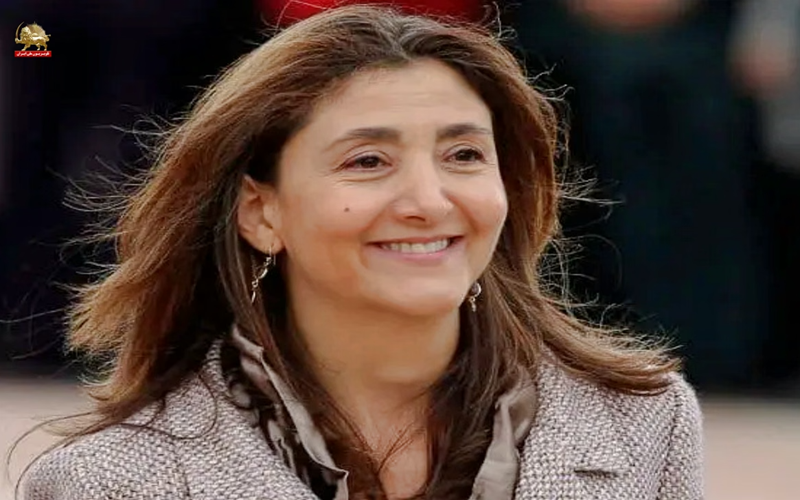

The former Colombian presidential candidate urged international action to protect political prisoners, investigate past crimes, and support a democratic republic in Iran, rejecting both clerical rule and a return to monarchy.
Ingrid Betancourt Calls for an Iran Without Executions
Ingrid Betancourt, former Colombian presidential candidate and a longtime advocate for a democratic alternative in Iran, called for urgent international action against executions and political repression during a conference marking the October 10 World Day Against the Death Penalty. She stressed that a free Iran must be a country without executions and urged governments to support the Iranian people’s right to determine their political future.
Opening with the human consequences of capital punishment, Betancourt asked the audience to imagine a condemned prisoner waiting alone in a cell, a mother fearing a devastating phone call, and a 26-year-old law graduate sentenced to death because the authorities fear what he represents.
Drawing on her own experience of captivity, she emphasized the importance of hope and international solidarity for people facing imprisonment and persecution.
“Knowing that someone outside remembers your name can be the difference between despair and endurance,” she said, describing how the voices of her family, friends, and thousands of people she had never met helped sustain her during her ordeal. She added that the international community must now serve as that voice for thousands of Iranians at risk.
Betancourt cited figures presented at the conference indicating that, since March 19, 44 political executions had been reported, including nine members of the People’s Mojahedin Organization of Iran (PMOI/MEK). She identified Mehdi Khanki, a 26-year-old law graduate, as the latest case discussed at the event and warned that more than 100 protesters remained at risk of execution.
She argued that the regime uses capital punishment to spread fear, but that the repression also reveals its concern about people who speak out, organize, and imagine a different future for their country.
Disinformation Against Iran’s Organized Resistance
Betancourt also addressed efforts to discredit the Iranian opposition through accusations and political labeling. She said that after publicly supporting the Iranian Resistance several years ago, she encountered a wave of accusations against the PMOI.
Rather than weakening her support, she said, the experience strengthened her determination after she concluded that the accusations she encountered were false.
Betancourt acknowledged that any political movement should be subject to scrutiny, but insisted that assessments must be based on evidence rather than repeated accusations that eventually become accepted as facts.
She warned that the Iranian regime’s propaganda should not turn the international community against the Iranian people and their democratic aspirations. Nor, she argued, should Iranians be forced to choose between two authoritarian systems simply because either might offer Western governments a negotiating partner.
Neither continued clerical rule nor a return to the shah’s dictatorship, she said, would provide the democratic future Iranians deserve.
Betancourt further argued that family lineage cannot substitute for democratic legitimacy and that no new government can credibly promise freedom while retaining the Islamic Revolutionary Guard Corps (IRGC), which she identified as the regime’s machinery of repression.
Ten-Point Plan Offers a Democratic Alternative
Betancourt expressed support for the vision of a democratic republic presented by the Iranian Resistance, emphasizing that replacing the current regime requires a concrete political program and a coherent roadmap rather than slogans alone.
She pointed to Maryam Rajavi’s Ten-Point Plan as a framework encompassing free elections, gender equality, freedom of religion, minority rights, and the abolition of the death penalty.
She also highlighted Rajavi’s commitment to holding elections within six months, arguing that this would place the final decision about Iran’s political future where it belongs: in the hands of the Iranian people.
For Betancourt, international support must extend beyond declarations. She called on governments to recognize the PMOI as a legitimate partner, demand international access to prisoners, and support independent investigations and accountability for crimes committed in Iran, including the 1988 massacre of political prisoners.
She stressed that diplomacy cannot be separated from human rights and that the international community must not ignore those representing the Iranian people’s aspirations for freedom.
No Impunity for Past or Present Crimes
Concluding her address, Betancourt called for sustained international efforts to end executions, political persecution, and impunity in Iran.
Governments, she argued, must ensure that past crimes are not erased and that those responsible are not shielded from accountability. The pursuit of diplomatic agreements, she maintained, must not come at the expense of the rights of Iranian prisoners and the broader population.
“Regimes can imprison bodies, censor newspapers, build walls, and erect gallows, but they can never execute freedom,” Betancourt declared.
She called for a future in which no mother fears a final phone call, no young Iranian faces prison for daring to imagine a different future, and executions no longer serve as an instrument of state policy.
A genuinely free Iran, she concluded, would mean more than a change of government. It would mean a new life of dignity for the Iranian people—free from executions, political persecution, impunity, and fear.