


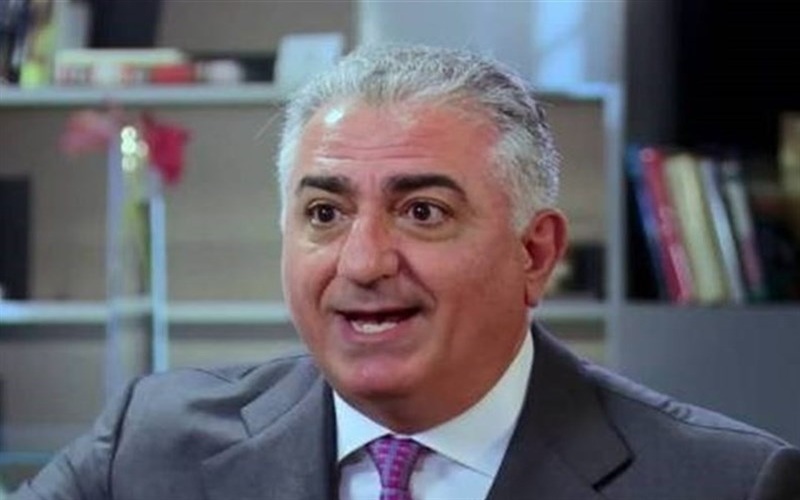

The decision to entrust Reza Pahlavi with an award officially dedicated to the Iranian people has sparked concerns over political representation, transparency, financial connections, and the future of democratic pluralism in Iran.
On November 7, 2026, the Friedrich Naumann Foundation is scheduled to present its 2026 Freedom Prize to the people of Iran at Frankfurt’s historic St. Paul’s Church. Yet the foundation has entrusted Reza Pahlavi with receiving the award on their behalf, describing him in its official announcement as the “leader of the opposition.”
This decision raises a fundamental question: who authorized a foreign political foundation to designate an individual as the representative of the Iranian people?
The issue extends beyond a ceremonial award. By selecting a particular political figure to receive a prize intended for an entire nation, the foundation risks lending institutional legitimacy to a political option without any democratic mandate from the people it purports to honor.
Freedom Cannot Be Conferred on a Nation Through One Individual
St. Paul’s Church holds a special place in German history as the site of the 1848 National Assembly, a landmark in the struggle for constitutional government and political representation. Choosing this venue for a freedom award makes the question of democratic legitimacy especially relevant.
The Iranian people have struggled for more than a century against authoritarian rule, seeking constitutional government, political freedoms, and the right to determine their own future. Their history encompasses constitutionalists, republicans, workers, students, women, intellectuals, ethnic and religious minorities, and generations of political prisoners and victims of repression.
No individual or dynasty owns this struggle. Nor can an external institution confer a democratic mandate that Iranian voters have never granted.
The distinction matters because international recognition can shape perceptions of who represents a country, particularly when its population has been denied free elections and the opportunity to choose its political future. Media visibility, financial resources, and access to foreign political circles are not substitutes for popular consent.
The Unresolved Legacy of the Pahlavi Monarchy
The selection also raises questions about Reza Pahlavi’s relationship with his father’s rule. Mohammad Reza Shah’s government pursued modernization while maintaining an authoritarian political system notorious for suppressing opponents. The SAVAK intelligence service became associated with surveillance, arbitrary detention, torture, and the persecution of political dissidents.
The issue is not the transfer of criminal responsibility from father to son. It is whether a political figure presenting himself as a democratic alternative has adequately confronted the authoritarian legacy of the monarchy.
A credible commitment to democracy requires more than promises about the future. It requires an honest assessment of past repression, respect for its victims, and clear guarantees against the restoration of authoritarian practices.
The public display of symbols associated with SAVAK at gatherings involving some Pahlavi supporters in Germany has intensified these concerns. At a February 2026 gathering in Munich, the reported slogan “One Flag, One Nation, One Leader” also raised questions about attitudes toward political pluralism. Such expressions do not establish the views of every supporter, but they warrant scrutiny when a movement seeks recognition as a democratic alternative.
German Critics Demand Reconsideration
Opposition to the foundation’s decision has extended beyond Iranian political disagreements. According to published reports in Germany, 71 political, legal, and civil society figures signed an open letter urging the foundation to reconsider entrusting Pahlavi with the award.
The initiative was organized by former UN Human Rights Council president Joachim Rücker. Signatories included former Bundestag president Wolfgang Thierse and former German federal and international criminal court judge Wolfgang Schomburg. Former Bundestag member Martin Patzelt has also criticized the decision.
Their intervention highlights a broader principle: the controversy concerns not simply the monarchy-versus-republic debate, but the right of a people to determine their political representation.
The political affiliations of figures associated with the Free Democratic Party (FDP) have added another dimension. Bijan Djir-Sarai, who had publicly supported Pahlavi’s political role before the award announcement, is scheduled to deliver the ceremony’s laudatory address. FDP politician Agnes Strack-Zimmermann also met Pahlavi during his visit to Berlin, although the German federal government had announced no meeting with him.
These individual contacts should not be confused with an official endorsement by the German government or the FDP as a whole. Nevertheless, they reinforce the need to understand how the foundation arrived at its decision and what criteria it applied.
Questions have also arisen over the foundation’s board, whose new composition began work in March 2026, approximately six months before the previous board’s usual term would have ended. This timing does not establish wrongdoing, but it adds to the case for transparency.
Political Recognition, Financial Connections, and Energy Interests
Financial relationships warrant similar scrutiny. Reuters reported in July 2026 that fewer than ten Iranian-American donors had contributed more than $3 million in total to Pahlavi’s political activities. Uber chief executive Dara Khosrowshahi was among the reported supporters.
Roland Werner, treasurer of the Friedrich Naumann Foundation, has professional responsibilities in government affairs and policy at Uber and has been associated with representing the company’s interests in Germany.
These connections do not prove that donor relationships influenced the foundation’s decision. They do, however, justify questions about whether potential conflicts of interest were examined and whether appropriate safeguards were applied.
The foundation should explain whether relevant professional relationships and reported political contributions were considered during the selection process. Publishing the decision-making criteria and relevant records would help establish whether the award was determined independently and transparently.
Pahlavi’s calls for Western countries to pursue investment opportunities in a future Iran, including its oil and gas sectors, raise an additional question. International economic cooperation can benefit a democratic Iran, but its terms must be determined through accountable institutions and in the national interest. Natural resources belong to the Iranian people, not to any political faction seeking foreign backing.
The foundation’s wider international record also deserves examination. Its activities and political relationships in Honduras following the 2009 coup, Brazil amid the rise of Jair Bolsonaro, and Peru in connection with right-wing political forces have attracted controversy. These episodes do not, by themselves, establish legal misconduct. They nevertheless make scrutiny of the foundation’s political judgment and standards appropriate.
Press Freedom and the Treatment of Critics
Concerns about democratic pluralism also extend to the conduct of some Pahlavi supporters toward journalists and political opponents.
In April 2026, German journalist Pauline Jäckels of taz reportedly faced online insults and threats after asking Pahlavi a critical question at a Berlin press conference. On May 28, German public broadcaster ARD’s Kontraste investigative program examined intimidation directed at journalists and critics, including reports of sexualized threats.
On October 13, Pahlavi supporters announced a protest outside the offices of Frankfurter Journal, which had published the open letter opposing the foundation’s decision. Demonstrating against a newspaper is a legitimate exercise of freedom of expression; attempting to silence or intimidate journalists for publishing criticism is not.
A separate case in Vancouver has raised further concerns. Two individuals identified in reports as Pahlavi supporters and organizers of pro-Pahlavi demonstrations were arrested and charged in connection with the killing of Masoud Masjoudi, a critic of Pahlavi. The case remains a matter for the courts. The charges must be assessed through due process, and they do not establish criminal responsibility on the part of Pahlavi or other supporters. The allegations nevertheless underscore the importance of an independent investigation and protection for political critics.
Democratic credentials are measured by the treatment of dissent, not by claims to leadership or international recognition.
The Iranian People Must Decide
The cumulative questions surrounding the award—political representation, historical accountability, financial transparency, professional connections, and the treatment of critics—make it more than a ceremonial gesture.
The greatest danger is that external recognition could help establish one individual as a predetermined option for Iran’s future, marginalizing other democratic forces before Iranians have had a free opportunity to choose. Such an approach risks deepening divisions among opponents of Iran’s regime and weakening the prospects for a genuinely pluralistic alternative. Those divisions ultimately benefit the regime by allowing it to exploit disagreements among its opponents.
The Friedrich Naumann Foundation should publicly explain why Pahlavi was selected to receive the award on behalf of the Iranian people, who made the decision, what standards were applied, and whether potential conflicts of interest were independently reviewed. It should also clarify the basis for describing him as the “leader of the opposition.”
Iran does not need a new political guardian appointed from abroad. It needs free elections, freedom of political organization, an independent press, protection for dissent, and institutions that prevent any individual or faction from monopolizing power.
The question facing the foundation is therefore straightforward: does this award advance the Iranian people’s right to determine their own future, or does it confer political legitimacy on one individual without their consent?
Until the selection process is made transparent, that question will remain unanswered. Freedom cannot be awarded to a people in a way that bypasses their right to choose. Iran’s future belongs to Iranians—not foreign political foundations, dynasties, or networks of political and economic influence.