


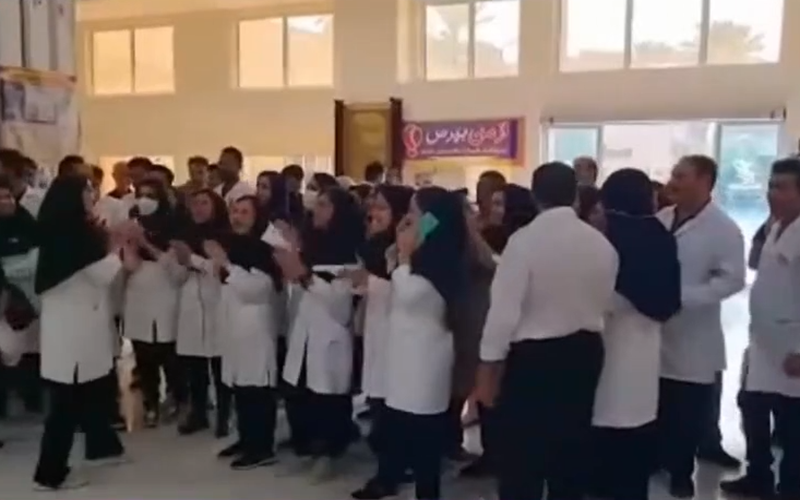

Low wages, soaring clinic costs, and a lack of government support are pushing doctors out of medical practice, with more than 50,000 general practitioners reportedly no longer working in the field.
From Medicine to Driving Taxis
In Iran, where doctors have traditionally belonged to the middle and upper-middle classes, a growing number of general practitioners can no longer make a living from medicine. Some are turning to taxi driving and elderly care to cover their expenses, exposing the mounting financial pressures on the country’s healthcare workforce.
On October 11, the state-run Shargh newspaper published a report titled “From Practicing Medicine to Driving Taxis,” describing how low incomes and rising costs of running medical offices have forced many general practitioners to seek alternative employment.
The figures cited in the report illustrate the scale of the problem. A general practitioner earns approximately 25 million to 30 million tomans a month, while the estimated poverty line for a family stands at around 90 million tomans. Even at the upper end of that salary range, a doctor earns only one-third of the poverty threshold.
At approximately $112 a month, the reported income of a general practitioner in Iran is also strikingly low compared with the figures cited for several neighboring and regional countries.
| Country | Reported monthly income |
|---|---|
| Iran | $112 |
| Iraq | $1,500 |
| Jordan | $1,500 |
| Turkey | $3,000 |
| Kuwait | $6,300 |
| United Arab Emirates | $7,000 |
These figures point to a substantial income gap between Iranian doctors and their counterparts in the countries listed. Although salaries vary according to experience, employment arrangements, and working conditions, the comparison underscores the financial difficulties facing general practitioners in Iran.
More Than 50,000 General Practitioners Outside Medical Practice
The problem extends beyond individual doctors struggling to meet their living expenses. It is also affecting the availability of medical professionals across the country.
According to Laripour, a spokesperson for Iran’s Medical Council, more than 50,000 general practitioners are now effectively outside the medical profession.
The situation is also difficult for doctors undergoing specialist training. An estimated 15,000 to 20,000 medical residents who have completed their general medical education reportedly carry a substantial share of the workload in public healthcare facilities. According to the figures cited in the report, they handle approximately 80 percent of the treatment workload at these centers while receiving monthly payments of only 25 million to 35 million tomans.
The disparity between their responsibilities and their compensation raises concerns about the sustainability of a healthcare system that relies heavily on relatively low-paid medical staff.
Several factors are contributing to doctors leaving clinical practice:
- Inadequate wages: Earnings that fall far below the estimated poverty line make it difficult for doctors to support themselves and their families.
- High operating costs: Rising rents for medical offices and the expense of equipment and diagnostic supplies make private practice increasingly difficult to sustain.
- Insufficient government support: Doctors face mounting financial pressures without adequate support to offset the costs of providing medical services.
- Limited alternatives: Financial constraints can make it difficult for doctors to establish viable practices or pursue opportunities abroad.
For many general practitioners, continuing to work in medicine has become an increasingly difficult financial proposition.
A Long-Standing Crisis With No Effective Remedy
The exodus of doctors from clinical practice is not a new development.
Three years earlier, the state-run Tabnak website published a report quoting the head of Iran’s Medical Council warning that the country was facing a serious problem with the loss of physicians.
The recurrence of these warnings suggests that the underlying problems have persisted. Rather than being resolved, the financial pressures described in earlier reporting have continued to affect doctors’ ability to remain in the profession.
The consequences extend beyond the medical workforce. When doctors leave clinical practice because their earnings cannot cover their living expenses or the costs of maintaining a clinic, patients may face reduced access to medical services. The loss of experienced practitioners also places additional pressure on the doctors who remain, particularly in public healthcare facilities already dependent on medical residents.
The reported figures raise fundamental questions about the affordability and accessibility of healthcare in Iran. A profession requiring years of education and specialized training is becoming financially unsustainable for thousands of practitioners.
What Does This Mean for Ordinary Iranians?
The plight of general practitioners also highlights the broader deterioration in living standards. If doctors, despite their education and professional responsibilities, earn only a fraction of the estimated poverty line, the financial position of workers and other low-income households is even more concerning.
The implications are particularly serious for a healthcare system that depends on retaining trained professionals while keeping medical services accessible to the public. Low wages, high operating costs, and the departure of doctors from clinical practice threaten both sides of that equation.
The central question is no longer simply why doctors are leaving medicine. It is how Iran’s healthcare system can maintain an adequate workforce when the people responsible for treating patients increasingly struggle to earn a living from their profession.
For doctors and patients alike, the crisis reflects a widening gap between the cost of living, the cost of delivering medical care, and the incomes available to sustain both.