
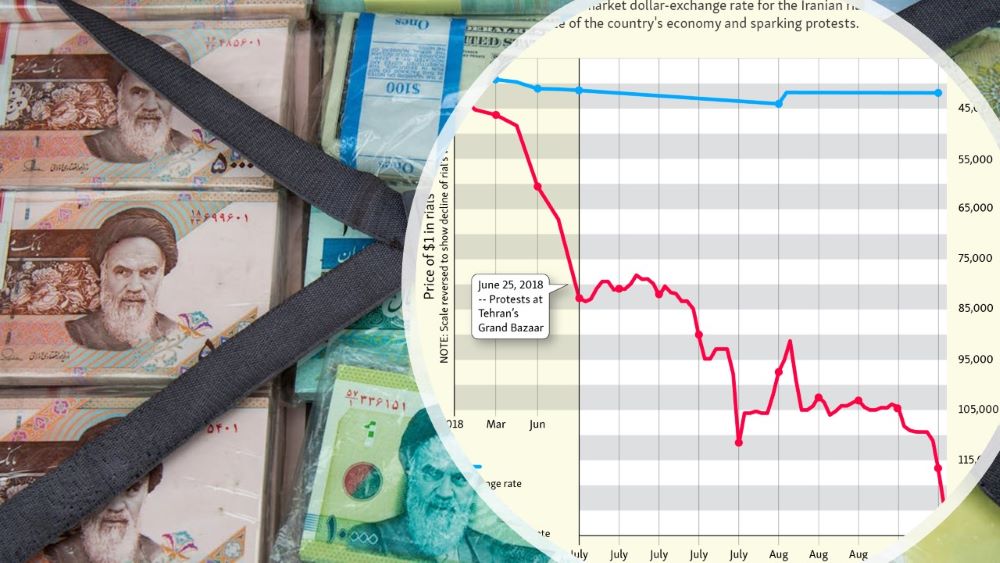
The Iranian rial plummeted to a historic low on Saturday, November 30, with the U.S. dollar trading at over 71,200 tomans on the open market. This marks a sharp increase from 69,950 tomans the previous day, reflecting a 1.57% rise in just 24 hours.
This latest spike follows earlier fluctuations in November, when the dollar briefly crossed the 70,000 toman threshold but later dropped below it. Recent developments, including the International Atomic Energy Agency’s (IAEA) resolution against Iran and fears of the “snapback” sanctions mechanism, have reignited market volatility, pushing the exchange rate higher.
Geopolitical Tensions Impacting the Market
Economic analysts attribute the rial’s decline to ongoing geopolitical tensions, including unprecedented military confrontations between Iran and Israel this year. Notably, the Iranian Revolutionary Guard Corps’ missile and drone strikes against Israel in April triggered the dollar’s surge past 67,000 tomans. Following a period of relative stability in mid-2023, renewed hostilities, such as Israel’s airstrikes on Iranian military targets in November, contributed to the rial’s sustained weakness.
The announcement of Donald Trump’s victory in the U.S. presidential elections further exacerbated market concerns. The rial surged to 70,000 tomans in mid-November as traders reacted to the anticipated hardline policies of the returning administration.
Economic Hardships Mounting for Iranians
The record-breaking depreciation of the rial highlights the deepening economic crisis in Iran, where inflation is accelerating and the cost of living is becoming untenable for many citizens. Over the past year, prices of essential goods have skyrocketed, with vegetables such as tomatoes experiencing a 79% increase and staples like dairy products rising by an average of 23%. This trend reflects broader inflationary pressures as the economy struggles under the combined weight of international sanctions, geopolitical uncertainty, and domestic mismanagement.
One of the hardest-hit sectors is food, where staples such as rice, meat, and cooking oil have seen consistent price increases. For instance, premium rice prices have risen by 7.1% in the past month alone, while the cost of dairy products like butter and cream has jumped by nearly 15%. These price hikes are squeezing the middle and lower-income classes, who are already struggling to afford basic necessities.
In addition to food prices, housing, transportation, and healthcare costs have surged, pushing millions into poverty. The removal of preferential currency rates for essential imports, including medicine, has exacerbated the crisis. Former Deputy Health Minister Ali Nobakht recently warned that eliminating these subsidies would “crush patients, especially the poor,” leaving many without access to critical treatments.
The strain is not only financial but also psychological. Weekly price increases and unrelenting uncertainty have left many Iranians feeling trapped in a cycle of despair. Protests over inflation and economic mismanagement have become increasingly common, with calls for accountability from both domestic and international policymakers.
Outlook: Continuing Challenges
The rial’s sharp decline and rising inflation are just symptoms of deeper structural issues in Iran’s economy. Decades of sanctions, corruption, and reliance on oil revenues have left the country vulnerable to external shocks. Geopolitical tensions, particularly concerning Iran’s nuclear ambitions and its regional activities, continue to exacerbate the economic crisis by discouraging foreign investment and trade.
Iran’s government faces mounting pressure to stabilize the economy, but its options are limited. Efforts to rein in inflation, such as price controls and subsidies, have proven insufficient, and tensions with the West make a diplomatic resolution unlikely in the near term. Meanwhile, ordinary Iranians bear the brunt of these economic struggles, facing an increasingly uncertain future.