



State-linked economists and media warn that currency policies, massive capital flight, and rising living costs are fueling deep public anger across Iran.
In Iran’s ruling system, critics say corruption has moved beyond covert dealings. Instead of secretive theft carried out behind closed doors, many believe economic decisions are now openly transferring wealth from ordinary citizens to powerful networks—often justified as necessary policy measures.
Authorities frequently attempt to soften the impact of these decisions by announcing subsidy payments or financial aid programs. Yet for millions of Iranians struggling with rising prices and declining purchasing power, such payments appear increasingly insufficient to offset the broader economic pressure.
Currency Policy and Inflation Shock
Recent remarks by a regime-linked economic analyst highlighted the scale of the problem. In an interview with the newspaper Tose’e Irani, the analyst explained that Iran imports roughly $100 billion worth of goods annually. A sudden increase in the exchange rate significantly raised the domestic currency value of those imports, triggering a severe liquidity shock across the economy.
According to the analysis, multiplying the country’s $100 billion import volume by an exchange rate of roughly 700,000 rials per dollar places an enormous financial burden on the domestic market. The result, the analyst warned, is escalating inflation that directly affects household expenses.
The social implications of these figures are stark. The same analysis estimated that the rising cost of goods has effectively increased the monthly living expenses of the average Iranian by around 10 million tomans, while government support payments amount to only about 1 million tomans. In practical terms, critics argue, this means the equivalent of 9 million tomans in purchasing power has been taken from citizens’ pockets each month.
Growing Warnings From Within the System
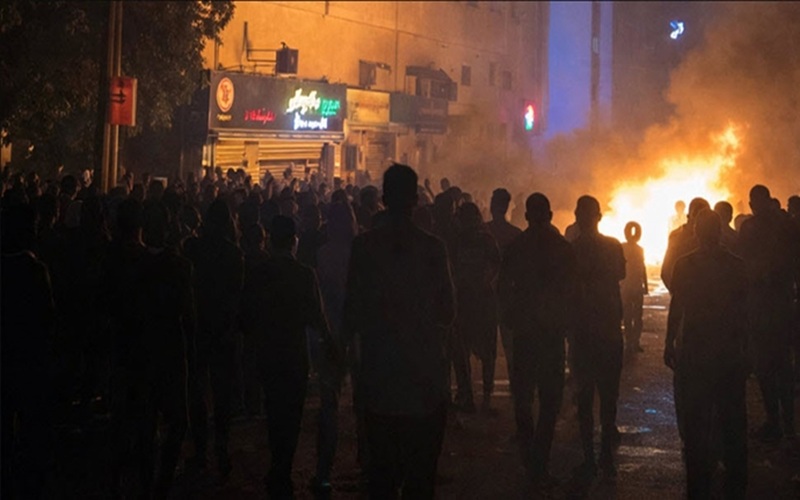
Even some voices within the regime’s media have begun issuing warnings about the broader consequences of economic mismanagement. Commentaries have described public frustration as a “fire of anger hidden beneath the ashes,” noting that the roots of social dissatisfaction are becoming increasingly visible.
Analysts caution that ignoring these grievances—or attempting to justify the violence used against protesters in previous demonstrations—could intensify tensions and lead to larger eruptions of unrest.
Capital Flight and Elite Privilege
At the same time, reports from the official news agency Iranian Students’ News Agency (ISNA) have highlighted significant capital outflows. According to the agency, privileged individuals with close ties to power have transferred around $10 billion abroad to purchase property.
The report also noted that $6.5 billion was spent on automobile imports, enabling roughly 400,000 people to acquire luxury vehicles—a stark contrast to the economic hardships faced by much of the country’s population.
Critics argue that such spending reflects a deep structural imbalance in the economy, where resources that belong to the nation as a whole are perceived to benefit a narrow circle of elites.
A Society Under Pressure
For many observers, the combination of economic hardship, capital flight, and perceived corruption has created a volatile social environment. A society that has endured both political repression and the loss of national wealth is increasingly unwilling to accept the continuation of these conditions.
When voices within the establishment themselves begin speaking about “latent anger” and the possibility of larger social explosions, analysts say it signals that tensions inside the country remain high.
The sense among many Iranians, critics argue, is that economic promises and temporary subsidies can no longer contain the underlying frustration. Whether these pressures translate into broader political consequences remains uncertain—but the warning signs, even within official discourse, are becoming harder to ignore.