


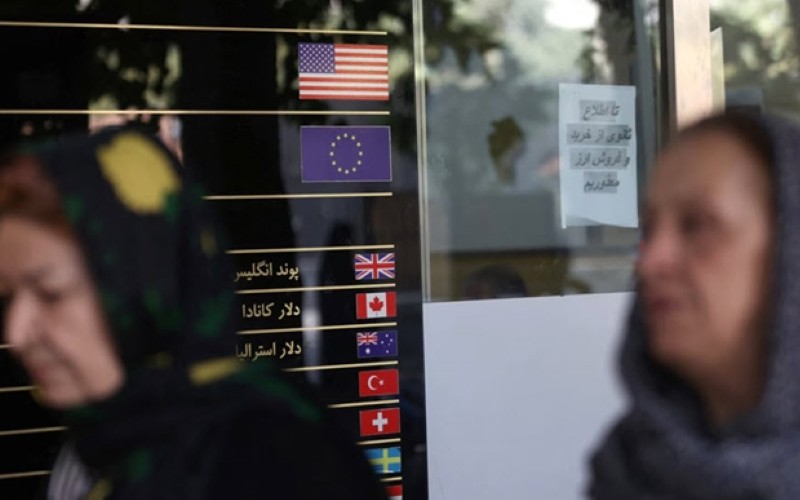

Official data shows point-to-point inflation jumped to 45.3% in September, with food prices soaring and experts warning of stagflation and record-breaking inflation in the months ahead.
Rising Inflation Signals Renewed Economic Instability
According to the Iranian Statistical Center, point-to-point inflation in September 2025 climbed to 45.3%, marking a sharp 2.9-point increase compared with the previous month. This figure is the clearest sign yet of accelerating inflation in the second half of the year.
The Consumer Price Index (CPI) reached 384.6, showing a 3.8% monthly increase. Compared with September 2024, prices rose by 45.3%. Meanwhile, the annual inflation rate hit 37.5%, reflecting sustained pressure on household finances.
Notably, the inflation gap across income groups widened, with the poorest households facing 38.4% inflation compared to 36.8% for the wealthiest, underscoring the growing inequality in the cost of living.
Food Prices Push Families Toward Hunger
The sharpest increases were recorded in essential goods. The miscellaneous goods and services group topped the list with 58.5% inflation, followed closely by food and beverages (57.9%) and tobacco (50.4%).
Within the food category, bread and cereals skyrocketed by 94.3% compared with last year, becoming the single biggest driver of inflation. This has sparked fears of caloric poverty and worsening food insecurity for millions of Iranian families.
Other staples also posted steep rises:
- Fruits and nuts: 77.2%
- Vegetables: 64.9%
- Dairy, eggs, and cheese: 46.2%
- Oils and fats: 48.7%
Public transportation costs also jumped more than 56%, adding another burden to household budgets.
Regional Disparities Highlight Unequal Pressure
While the national average inflation stood at 37.5%, at least 17 provinces recorded higher rates. Provinces such as Semnan (41.9%), Hormozgan (41.6%), and West Azerbaijan (41.3%) were hit hardest, while South Khorasan (33%), Kermanshah (34.2%), and Tehran (35.7%) registered the lowest rates.
This uneven inflation underscores the widening regional divide in Iran’s economic crisis.
Stagflation Emerges as Growth Contracts
Adding to the pressure, Iran’s economy shrank by 1% in the first quarter of 2025, dropping to -4% without oil revenues. The contraction signals the onset of stagflation—a combination of high inflation and economic stagnation.
Key sectors reported negative growth:
- Agriculture: -2.7%
- Industry: -1.7%
- Water and electricity: -11.8%
Although the oil and mining sectors posted modest growth, the broader industrial recession paints a grim picture of structural weakness.
Expert Warnings and Policy Deadlock
Economist Hamid Haj-Esmaeili warned in August that even under optimistic conditions, annual inflation would remain between 38–40%, but could exceed 60% if the currency continues to depreciate and food markets remain unstable.
Similarly, Ali Ghanbari, a macroeconomic analyst, described the simultaneous rise in inflation and negative growth as “a dangerous stage for the Iranian economy,” noting that this was the first time in four years that growth had fallen below zero.
Experts argue that the government’s reliance on unrealistic oil revenue forecasts, combined with deepening sanctions and military tensions with Israel, has blocked any chance of economic recovery.
A Looming Fiscal Disaster
The government faces a projected budget deficit of 800 trillion tomans in 2025. With collapsing tax revenues, unsustainable subsidies, and rising pension fund liabilities, the state is increasingly likely to resort to borrowing and money printing—a move that would push inflation to unprecedented levels.
Planned policies such as unifying the currency exchange rate or attracting foreign investment are no longer viable under renewed international sanctions and political isolation. Instead, the regime may revert to austerity and administrative downsizing, though experts question how this could be achieved amid falling oil revenues and rising social unrest.
Outlook: A Darkening Horizon
The year that officials had promised would bring economic relief is instead turning into a nightmare of deepening recession and runaway inflation. With sanctions tightening, oil income shrinking, and public trust eroding, the final quarter of 2025 could see one of the worst inflationary crises in decades.
For ordinary Iranians, this means a smaller dinner table, heavier transport costs, and a bleaker future—while the regime appears increasingly powerless to control the economic freefall.