



Ali Ansari’s billion-dollar empire, built on fraudulent loans and political protection, exposes the regime’s systemic financial decay
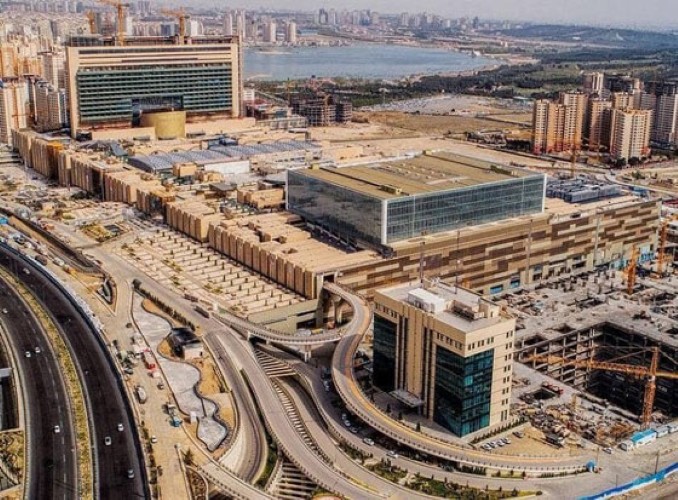
The latest revelations surrounding Bank Ayandeh and the financing of Iran Mall, the country’s largest commercial complex, have once again exposed the entrenched network of financial corruption within the Iranian regime. At the center of this scandal stands Ali Ansari, a powerful businessman whose wealth and influence stem directly from his close connections to the political establishment, particularly to individuals in the circle of Ali Khamenei, the regime’s Supreme Leader.
For years, Ansari has been a key figure in a sprawling network of financial and commercial projects that have thrived under the protection of the ruling elite. His name has repeatedly surfaced in major corruption cases, yet despite numerous allegations of economic misconduct and embezzlement, he has never been subjected to serious judicial investigation or prosecution. The case of Iran Mall offers a clear example of how Iran’s corrupt financial structure operates: through political favoritism, self-dealing, and impunity for those connected to the centers of power.
The Iran Mall project, promoted as a symbol of national pride and economic progress, was in fact built on a foundation of illicit financing and financial manipulation. The project received tens of thousands of billions of tomans in loans from Bank Ayandeh—funds that were approved and allocated under highly irregular circumstances. Between 2015 and 2017 alone, an estimated 35 trillion tomans were channeled from the bank into Ansari’s construction companies, resulting in massive overdrafts from the Central Bank of Iran. These loans were granted not through normal lending procedures but as part of a closed system of corruption, where those with regime ties could access public resources without oversight or accountability.
In 2019, after mounting criticism and growing awareness of the bank’s financial crisis, 98 percent of Iran Mall’s ownership was officially transferred to Bank Ayandeh in an apparent effort to settle outstanding debts. However, investigations later revealed that this was a fictitious transaction—a paper transfer designed to obscure the true ownership of the property. In reality, the assets simply circulated among companies already owned or controlled by Ansari himself. He effectively used a bank under his control to lend massive sums to his own enterprise and then “repaid” those loans by reassigning the same asset to entities within his corporate network.
This elaborate financial maneuvering demonstrates the structural nature of corruption in Iran’s economic system. It is not the result of isolated wrongdoing, but rather a systematic process in which politically connected individuals exploit state institutions for personal enrichment. The absence of judicial action against figures like Ansari further exposes the complicity of the regime’s judiciary and oversight institutions, which remain tools of political control rather than instruments of justice.
Reports circulating in recent years also point to large-scale capital flight by Ansari and his partners, involving the transfer of substantial sums of money out of Iran. These transactions were reportedly linked to the case of Valiollah Seif, the former governor of the Central Bank, whose tenure coincided with widespread mismanagement and corruption across Iran’s financial sector. Despite these revelations, no meaningful investigation or prosecution has taken place, and Ansari continues to operate freely under the protection of regime power brokers.
The Iran Mall scandal reflects a broader pattern in the Iranian regime’s governance: the consolidation of wealth and privilege among a small group of politically loyal businessmen who act as financial arms of the ruling elite. Projects like Iran Mall, which the regime presents as signs of “national development,” are in reality monuments to institutionalized corruption—massive undertakings financed by looted public resources and designed to benefit a narrow circle of insiders.
This case also highlights how the regime’s economic policies have become deeply intertwined with its mechanisms of control. While millions of ordinary Iranians struggle with inflation, unemployment, and economic hardship, the regime’s elite class continues to siphon off national wealth through corrupt banking and investment schemes. The judicial silence surrounding figures like Ali Ansari is not an oversight—it is a deliberate act of protection for those whose financial operations serve the interests of the ruling establishment.
The Iran Mall affair is thus more than a story of one man’s corruption; it is a reflection of the moral and structural decay at the core of Iran’s political system. As long as the regime continues to shield its loyalists from accountability, corruption will remain an essential pillar of its survival—feeding off the nation’s resources while deepening the suffering of its people.