


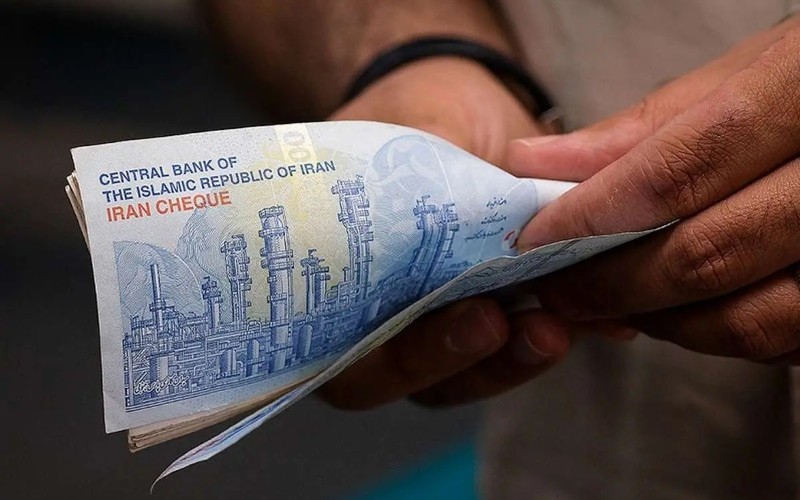

A sweeping redefinition of eligibility is shrinking Iran’s cash-subsidy net and exposing deep fiscal stress.
Iran’s cash subsidy program, launched in 2010 with promises of fairness and economic reform, has reached one of its most turbulent periods. A new round of eliminations at the end of November has removed more than 438,000 people from the subsidy list, pushing the system toward its most restrictive phase in two decades.
The policy began officially in late 2010 under the “Targeted Subsidies Law,” which required major increases in energy and basic-goods prices. Revenues from these price adjustments were meant to support households and production. Although the law focused on targeted assistance, the administration of Mahmoud Ahmadinejad implemented the program as an almost universal monthly cash transfer. This decision created a powerful public expectation, even though no permanent legal right to universal subsidies existed. For many years, nearly the entire population received the fixed monthly payment of 45,500 tomans per person, a figure that rapidly lost value as inflation accelerated.
Beginning in the mid-2010s, governments attempted to contain the enormous financial burden. The first significant removal wave occurred in 2015, when about four million people were cut. Another wave followed in 2019, eliminating roughly one million more. Structural changes in 2021 and 2022 then excluded the entire tenth income decile, amounting to more than eight million people. From March to November 2024, the largest elimination to date took place, removing more than four and a half million people across middle-income deciles. These processes also targeted more than 150,000 Iranians living abroad. The most recent removals at the end of November 2025 have further intensified the trend.
The contrast with the early years is stark. When the program began in 2010, approximately 64 million Iranians received subsidies. Today, despite the country’s population increasing to around 91 million, the number of subsidy recipients has fallen to about 78 million.
A key turning point occurred in 2022, when the regime replaced the original universal payment with a new “livelihood subsidy” of 300,000 to 400,000 tomans per person. Eligibility was tied entirely to means-testing and income decile classification by the Ministry of Welfare. This shift made subsidy access far more conditional and subject to frequent revision.
The 2025 national budget accelerated this trend by obligating the removal of subsidies for upper-income groups and redirecting resources toward low-income households and food voucher programs. Since mid-2025, about one million households representing more than three million people have been removed from the list. The main evaluation criterion has become each household’s monthly per-capita expenditure after deducting housing costs. If this figure exceeds 10 million tomans, the household is automatically classified within the upper income deciles and loses eligibility. Although a formal appeals process exists, reinstatements have become increasingly rare and slow.
The trajectory of Iran’s subsidy system reflects deeper structural weaknesses. Decades of chronic budget deficits have pushed governments to scale back a program they can no longer afford. Persistent inflation has dramatically eroded the value of monthly payments, turning them into nominal support with minimal purchasing power. Political hesitation to remove wealthier groups delayed reforms and compounded fiscal pressures, while abrupt policy shifts—such as the removal of the preferred exchange rate in 2022—transformed the program into a fragmented and inconsistent welfare mechanism.
What was introduced as a project of justice and efficiency has gradually turned into a symbol of economic strain and political mistrust. The ongoing elimination of millions of people from the subsidy rolls underscores a broader reality: Iran regime’s rulers are confronting an economic model that is no longer sustainable, and the cash subsidy system, once a central pillar of state policy, has become a condensed portrait of the country’s continuing financial and governance crisis.