


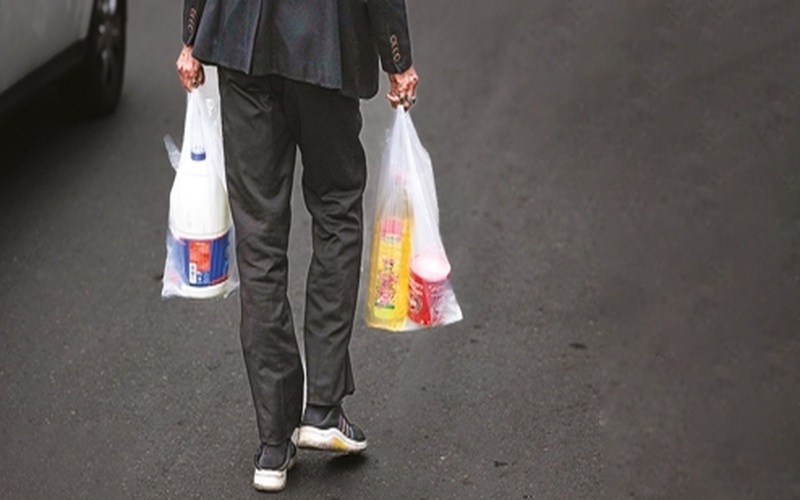

Regime-linked economists warn that Iran is entering an unprecedented phase of structural economic collapse, with soaring inflation, mass unemployment, and nearly half the population at risk of poverty.
As Iran enters the Persian year 1405, even economists and research institutions tied to the regime are warning that the country is moving into an unprecedented phase of economic collapse, chronic inflation, and mass impoverishment. What was once described as a “difficult economy” has now evolved into a structural crisis that touches nearly every aspect of daily life for ordinary Iranians.
At the recent “Iran Economic Outlook 1405” conference, whose findings were published by the Iranian newspaper Donya-e-Eqtesad, government-affiliated economists painted a bleak picture of the country’s future. Their assessments reveal an economy trapped in a dangerous combination of recession, hyperinflation, unemployment, and the continuous erosion of household purchasing power.
Masoud Nili, a former economic adviser to the regime, acknowledged that Iran has moved beyond a phase of “chronic crisis” and entered what he called the “open manifestation of crises.” Referring to official statistics, he warned that inflation in some sectors has exceeded 100 percent. More importantly, he admitted that even if external tensions or military confrontations were to subside, the economy would not return to normal anytime soon.
This admission is significant because it confirms what millions of Iranians already experience every day: the crisis is no longer primarily the result of sanctions or regional tensions. The roots are structural, tied to decades of corruption, institutional dysfunction, economic mismanagement, and the regime’s prioritization of ideological and military ambitions over the welfare of its citizens.
According to Nili, inflation in Iran has entered a phase where conventional monetary and fiscal policies are no longer effective. The country is now trapped in a vicious cycle of inflationary expectations and the continuous devaluation of the national currency. In practical terms, this means that prices rise not only because of shortages or budget deficits, but because society itself has lost confidence in the future value of the rial.
The labor market presents an equally alarming picture. In a country of roughly 87 million people, fewer than one-third are employed. Between 2019 and 2025, despite a substantial increase in the working-age population, net job creation remained virtually stagnant. Meanwhile, more than 5.5 million people were added to the economically inactive population — a staggering figure that reflects widespread despair and the collapse of hope for meaningful employment.
This is not simply unemployment; it is social withdrawal on a massive scale. Millions have effectively given up searching for work because they no longer believe the system offers them any future.
Other economists at the conference issued even darker forecasts. Hojjat Mirzai predicted that Iran’s economic growth in 1405 could shrink by between negative 8.8 and negative 10 percent. Should oil exports decline further, the contraction could become even more severe.
The causes are well known: intensifying sanctions, disruption of foreign trade, currency collapse, import restrictions, chronic budget deficits, rising transportation costs, and internet shutdowns that cripple businesses and commerce. Together, these factors are fueling another wave of inflation and unemployment that directly targets the survival of ordinary families.
Mirzai warned that if current conditions continue, an additional 3.5 to 4.5 million people could fall below the poverty line, pushing Iran’s impoverished population beyond 40 million — nearly half the country.
The evidence of this collapse is already visible across Iran. The relentless rise in food prices, rent, medicine, and healthcare costs has pushed large segments of the middle class toward poverty. In many cities, the rent for a modest apartment now exceeds the average salaries of workers and employees. Families are increasingly forced to spend nearly all their income merely to secure basic necessities.
At the same time, the continuing collapse of the rial and the constant rise in foreign exchange rates are injecting fresh waves of inflation into every market sector. Economists warn that this trend could trigger further factory closures, rising unemployment, and a deeper industrial recession.
Particularly vulnerable are workers in Iran’s vast informal economy. According to figures presented at the conference, approximately 39 percent of Iran’s workforce operates in the informal sector — without insurance, job security, or social protections. These workers are often the first victims of economic shocks and inflationary surges.
Hussein Rajabpour also noted that following the recent 12-day conflict, the labor market’s limited recovery stalled entirely, while the industrial sector suffered the sharpest employment losses.
Taken together, these indicators demonstrate that Iran is no longer facing a temporary downturn or an ordinary recession. The country has entered a phase of systemic economic breakdown whose consequences are visible in the shrinking dinner tables of ordinary citizens, the growing exodus of skilled workers, and the spread of poverty, inequality, and social despair.
For years, the regime attempted to portray economic hardship as a temporary sacrifice imposed by foreign enemies. Today, even voices within the establishment acknowledge a harsher truth: the crisis has become internalized, structural, and self-perpetuating. And as millions of Iranians sink deeper into poverty, the widening gap between the ruling elite and society continues to fuel public anger beneath the surface.
Iran’s economic emergency is no longer a forecast. It is the defining reality of life for nearly half the nation.