



Coordinated Activities Across Tehran and 16 Cities Highlight the Legacy of June 20, 1981 and the Vision of a Democratic Iran
As Iran approaches the anniversary of June 20, 1981—a date regarded by the Iranian Resistance as a turning point in the struggle against dictatorship—Resistance Units and rebellious youth carried out a broad and coordinated campaign of political activities across Tehran and at least sixteen other cities throughout the country.
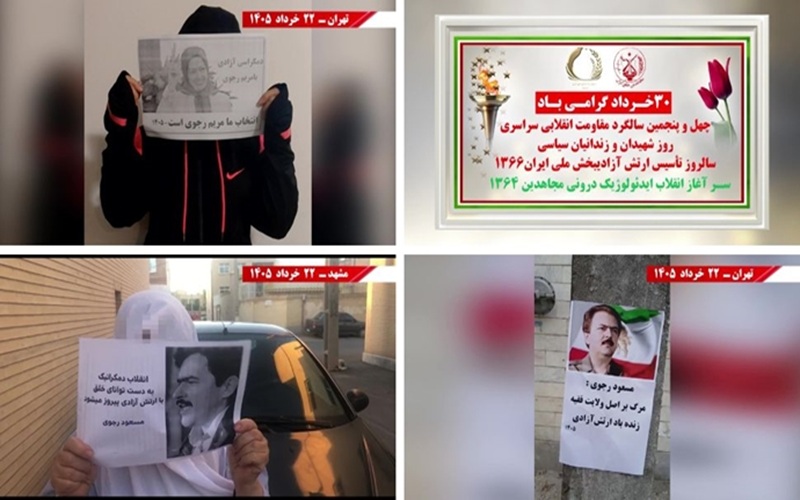
The nationwide initiative, conducted on June 12, included extensive wall-writing operations, poster campaigns, public displays of banners and placards, distribution of leaflets, and installations featuring the images and messages of Massoud Rajavi and Maryam Rajavi. The activities took place in public squares, parks, major streets, highways, and other urban locations, emphasizing themes of resistance, democratic change, and the rejection of both religious and monarchical dictatorship.
Extensive Wall-Writing Campaign in Shiraz
One of the largest actions was reported in Shiraz, where Resistance Units carried out nine separate wall-writing operations across major streets and public areas.
The coordinated campaign featured the slogan:
“Salute to Rajavi – 2026”
The repeated appearance of the slogan across multiple locations reflected the effort to mark the upcoming anniversary of June 20 and draw attention to the Resistance movement’s continued activities inside Iran.
Banners, Placards, and Public Displays Across the Country
Tehran
In the capital, activists displayed large cloth banners and conducted public photo campaigns featuring political messages and images of Resistance leaders.
Among the displayed messages were:
- “June 20: A resistance that has advanced through suffering, struggle, and sacrifice.”
- “Death to the principle of Velayat-e Faqih; Long Live the Liberation Army.”
- “Death to the oppressor, whether Shah or Supreme Leader.”
- “The Liberation Army is the only path to freedom.”
- “Our choice is Maryam Rajavi.”
The campaign also included the display of posters promoting the Ten-Point Plan for a democratic republic.
Karaj
Resistance Units in Karaj displayed images of Maryam Rajavi and distributed leaflets promoting a free Iran and democratic governance.
Banners highlighted support for transferring sovereignty to the Iranian people and establishing a democratic republic based on the Ten-Point Plan. Other displays featured the emblem of the National Liberation Army and messages calling for organized resistance against dictatorship.
Qazvin
In Qazvin, public installations emphasized the themes of democratic revolution, national independence, and the slogan “Neither Shah, Nor Sheikh.”
Messages displayed in the city described the National Liberation Army as a guarantor of peace, freedom, and Iran’s independence while honoring decades of resistance and sacrifice.
Shiraz
Alongside the wall-writing campaign, activists in Shiraz displayed posters commemorating June 20 as a historic milestone in Iran’s resistance movement.
Additional banners promoted the National Liberation Army and highlighted its role in the struggle for freedom and national sovereignty.
Kamyaran
In Kamyaran, Resistance Units installed posters recalling the events of June 20, 1981, describing them as the beginning of one of the most significant resistance movements in modern Iranian history.
Other displays honored the new generation of rebellious youth and featured the emblem of the National Liberation Army.
Shahrekord
Activities in Shahrekord included banners featuring both Resistance leaders and the emblem of the National Liberation Army.
The messages commemorated June 20 as a defining moment in the struggle against dictatorship and expressed support for the return of the Liberation Army as a force for democratic change.
Zahedan
In Zahedan, Resistance Units displayed posters emphasizing that the strategy of overthrowing the ruling clerical regime has remained central to the Resistance movement since June 20, 1981.
The campaign linked the historical anniversary to ongoing efforts for political change in Iran.
Arak
Public displays in Arak focused on resistance against the principle of Velayat-e Faqih and celebrated the emergence of a new generation of activists inspired by those who sacrificed their lives in earlier stages of the struggle.
Mashhad
Resistance Units in Mashhad distributed and displayed posters promoting the vision of a democratic revolution achieved through organized popular resistance.
Urmia
In Urmia, activists displayed the slogan:
“Long Live the National Liberation Army of Iran.”
Khorramabad
A similar campaign in Khorramabad featured public displays supporting the National Liberation Army and highlighting its role within the Resistance movement.
Borujerd
In Borujerd, posters stressed the Resistance movement’s longstanding commitment to the principle of “Neither Shah, Nor Sheikh,” presenting it as a clear rejection of both dictatorship and political dependency.
Additional messages promoted organized resistance as the path toward freedom and democratic change.
Poster and Leaflet Campaigns in Multiple Cities
Beyond the public displays, Resistance Units launched extensive poster and leaflet campaigns throughout the country.
Shiraz
Numerous posters commemorated June 20 as the beginning of a historic resistance for freedom against religious tyranny.
Other materials highlighted themes including:
- The National Liberation Army as a force for freedom.
- The democratic revolution of the Iranian people.
- Resistance as the alternative to dictatorship.
- The principle of “Neither Shah, Nor Sheikh” as the guiding line of the movement.
- Peace, freedom, and national independence.
Tehran
In Tehran, activists installed posters carrying messages such as:
- “Death to the principle of Velayat-e Faqih; Long Live the Liberation Army.”
- “Salute to Rajavi.”
- “The only road to liberation is resistance and overthrow.”
Isfahan
Campaign materials in Isfahan linked the anniversary of June 20 to the broader struggle against dictatorship and promoted the strategy of organized resistance for democratic change.
Bandar Abbas
Posters in Bandar Abbas described June 20 as a symbol of resistance and dignity and emphasized its significance in the continuing struggle for freedom.
Kermanshah
In Kermanshah, Resistance Units commemorated June 20 as a choice of honor and steadfastness in the face of oppression and submission.
Esfarayen
Posters in Esfarayen highlighted the vision of a democratic revolution achieved through the organized power of the Iranian people.
Leaflet Distribution in Isfahan
Resistance Units in Isfahan also distributed leaflets in streets and placed materials on vehicles throughout the city.
The leaflets included slogans supporting the overthrow of the ruling system and expressing support for the National Liberation Army.
Honoring a Historic Turning Point
The nationwide campaign was organized in advance of the anniversary of June 20, 1981, which the Iranian Resistance regards as the beginning of its organized struggle against religious dictatorship.
By carrying out simultaneous activities across Tehran, Shiraz, Karaj, Qazvin, Kamyaran, Shahrekord, Zahedan, Arak, Mashhad, Urmia, Khorramabad, Borujerd, Isfahan, Bandar Abbas, Kermanshah, Esfarayen, and other cities, Resistance Units sought to connect the legacy of June 20 with current demands for freedom, democracy, and popular sovereignty.
The campaign concluded with renewed calls for the establishment of a democratic republic and the continued rejection of both clerical rule and any return to monarchical dictatorship, reflecting the Resistance movement’s longstanding slogan: “Neither Shah, Nor Mullah.”