



As power outages worsen, Tehran promotes solar projects as a quick fix—despite technical, financial, and environmental barriers that make real solutions unlikely.
Escalating Blackouts, Hollow Promises
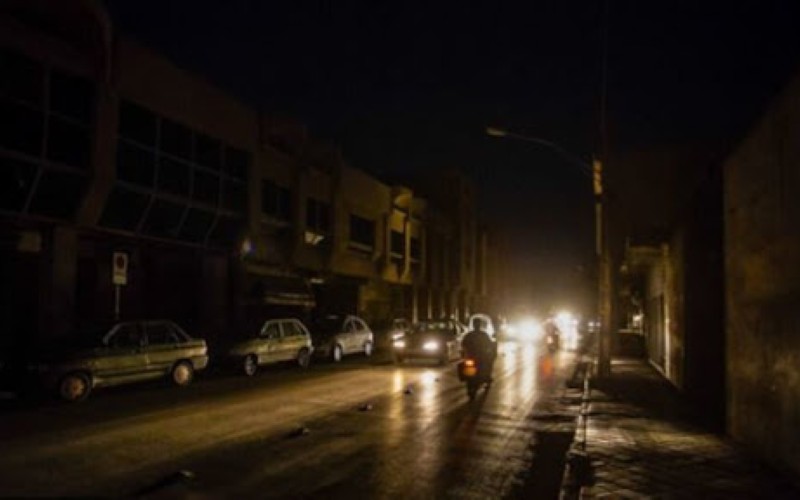
Iran is experiencing an intensifying electricity crisis, with rolling blackouts hitting many cities several times a day. Instead of addressing systemic issues in the energy sector, the regime has turned solar energy into a central propaganda theme—portraying it as a short-term solution to the country’s growing power deficit.
During his September 7 visit to China, regime president Masoud Pezeshkian instructed his scientific deputy to prioritize building solar power plants in urban areas. His comments echoed previous claims from government officials that solar development could ease the electricity shortage in just a few months.
Energy experts, however, dismiss these assurances as unrealistic. They argue that while solar power fits Iran’s climate potential, it cannot meet the country’s immediate and massive demand.
A Propaganda Policy
Pezeshkian has repeatedly presented solar initiatives as milestones. In August, he touted the launch of 130 megawatts of solar capacity and the construction of an additional 295 megawatts by the private sector as “first steps” toward solving the shortage. Around the same time, Energy Minister Abbas Aliabadi inaugurated a 500 megawatt project in Zanjan, claiming that nearly 800 megawatts of solar capacity had already been connected to the grid.
Yet these numbers pale in comparison to Iran’s staggering electricity deficit, officially estimated between 20,000 and 25,000 megawatts. Experts stress that even in the most optimistic scenarios, covering this shortfall would take at least three years of large-scale construction—making Pezeshkian’s short-term promises a political narrative rather than a technical reality.
Obstacles Beyond Climate Potential
Despite Iran’s favorable sun exposure, serious obstacles limit solar energy’s role as a crisis solution:
- High Costs Under Sanctions: Building and maintaining solar plants requires expensive imported equipment. Sanctions have inflated costs and blocked investment, making large-scale projects unrealistic.
- Declining Panel Efficiency: Solar panels lose capacity annually. In desert regions, dust and sandstorms accelerate efficiency decline, reducing useful life and raising long-term costs.
- Urban Barriers: In crowded cities like Tehran, land prices far exceed the value of electricity produced. Even state incentives for selling excess energy cannot offset the economic imbalance.
- Maintenance Challenges: Pollution and high temperatures cut efficiency by up to 30 percent. Frequent cleaning and replacement needs create an additional financial burden.
The head of Tehran’s Chamber of Commerce recently estimated that $30–35 billion is needed to address the electricity shortfall. Given sanctions and economic instability, such investment is highly unlikely.
Ignoring Structural Failures
Experts argue the regime’s solar push is a diversion from addressing deeper structural problems: outdated power plants, inefficient distribution networks, and massive energy waste. Instead of repairing and modernizing existing infrastructure, Tehran is channeling scarce resources into projects that will take years to yield modest returns.
This approach mirrors past failed development initiatives—grand announcements followed by costly, unfinished projects abandoned due to inefficiency.
A Partial Fix, Not a National Solution
While renewable energy could play a supporting role in Iran’s future energy mix, experts stress that solar panels cannot resolve the crisis in the short or even medium term. At best, they may cover limited local demand if private industries and households invest in small-scale installations.
For now, the regime’s insistence on solar energy reflects political necessity more than technical feasibility. It offers the appearance of progress while blackouts continue, masking the lack of a comprehensive national strategy.