


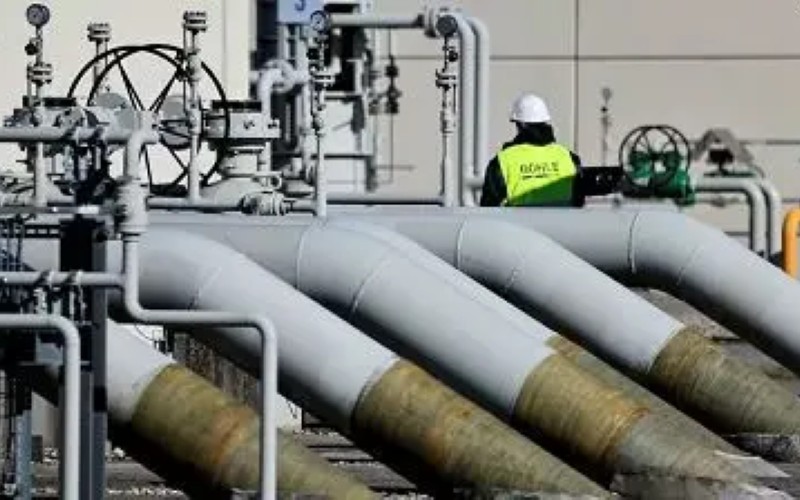

Despite vast natural gas reserves, the regime faces another winter of blackouts, fuel shortages, and deadly air pollution
Alarming Energy Imbalance Ahead of Winter
Forty-five days before the start of winter 2025, warnings over a severe imbalance in Iran’s gas and electricity supplies are once again on the rise. Energy experts caution that, despite possessing the world’s largest oil and gas reserves, the regime faces yet another crippling energy crisis that disrupts daily life and industrial production every year.
Hamidreza Salehi, secretary-general of Iran’s Energy Export Federation, warned that “a significant gas imbalance is not unexpected this year,” noting that around 70% of Iran’s gas is consumed by households. Any shortage, he added, would directly affect daily life and, if prolonged, lead to power plants being cut off from gas supplies.
From Mockery to Misery: The “Hard Winter” Turns on the Regime
Three years ago, Oil Minister Javad Owji mocked European energy sanctions on Russia, declaring, “This year will be a hard winter for the world, especially for energy importers.” At the time, regime media and Basij forces staged propaganda events outside European embassies, boasting of Iran’s energy abundance.
Now, the same phrase—“hard winter”—has turned into a nightmare for the regime itself. Iranian families fear declining gas pressure, industries brace for fuel cuts, and power plants have returned to burning mazut, a highly polluting heavy fuel oil. Once touted as a symbol of Western weakness, “winter hardship” now exposes the regime’s own failures.
Data Show Widening Gap Between Supply and Demand
According to the National Iranian Gas Company, daily gas consumption has soared to 1.8 billion cubic meters in the residential and commercial sectors, while heavy industries and power plants consume 1.2 and 1.7 billion cubic meters, respectively.
With a deteriorating transmission network and storage capacity covering less than 2% of annual demand, the regime is expected to prioritize household supply to prevent unrest—cutting off industries and relying once again on mazut to keep power stations running.
Toxic Smog and Mounting Health Costs
This policy has unleashed a new wave of pollution across major cities. Since late October, air quality indexes in Khuzestan, Isfahan, Tehran, and Mashhad have reached “very unhealthy” levels. Images from power plants in Nowshahr and Neka show thick black plumes of smoke, evidence of widespread mazut burning.
In Khuzestan, more than 700 people were hospitalized in a single day due to air pollution. An Isfahan MP admitted that the city has had only two clean days this year.
Tehran’s Air Quality Control Company reported that the capital has experienced only six “clean” days in 2025 so far. Abbas Shahsavani, a medical professor at Beheshti University, revealed that exposure to polluted air caused more than 53,470 deaths last year—accounting for 15% of annual mortality nationwide.
Regime’s Rhetoric vs. Reality
While the regime’s Supreme Leader declared 2025 as the “Year of Investment for Production,” President Masoud Pezeshkian, like his predecessors, avoided mentioning the structural causes of the crisis. During a visit to Sanandaj, he admitted:
“Countries without oil and gas manage to keep their people secure. We have both, yet we still face problems.”
Experts argue that Iran’s predicament is not due to a lack of natural resources but to decades of destructive policies—prioritizing military and regional agendas over domestic development. Hundreds of billions of dollars have been diverted to missile programs and proxy militias instead of modernizing infrastructure.
A Cycle of Failure
This cycle of mismanagement results in water and electricity outages during the summer, and gas shortages, blackouts, and choking air pollution during the winter. Despite being halfway through autumn, large parts of Tehran are already under water rationing. In 2024 alone, over 7,000 people reportedly died from air pollution in the capital.
Strategic Missteps in Shared Gas Fields
Iran’s gas crisis also stems from strategic failures in exploiting shared reserves. The South Pars field, shared with Qatar, supplies 78% of Iran’s gas. While Qatar has partnered with global energy giants such as Total and ExxonMobil to boost pressure and output, Iran—crippled by sanctions, corruption, and the absence of foreign investment—cannot even install new drilling platforms.
Analysts warn that by 2033, Iran’s gas output could decline by 25%, with falling pressure causing gas migration from Iranian to Qatari reservoirs. This lag has already cost Iran an estimated $120 billion in losses.
Qatar will complete its pressure-boosting facilities within two years, while Iran remains at least five to six years away from similar capabilities.
A Nation Choking on Its Own Resources
Despite the regime’s constant claims of “progress,” the reality is stark: a return to obsolete, polluting fuels; industrial shutdowns due to gas shortages; and rising respiratory illness across urban areas.
Today, Iran—holder of the world’s second-largest natural gas reserves—sacrifices public health just to keep homes warm. Each administration promises an end to mazut burning and cleaner air, yet structural imbalances, nuclear sanctions, and the regime’s obsession with weapons and militias leave no space for genuine reform.