


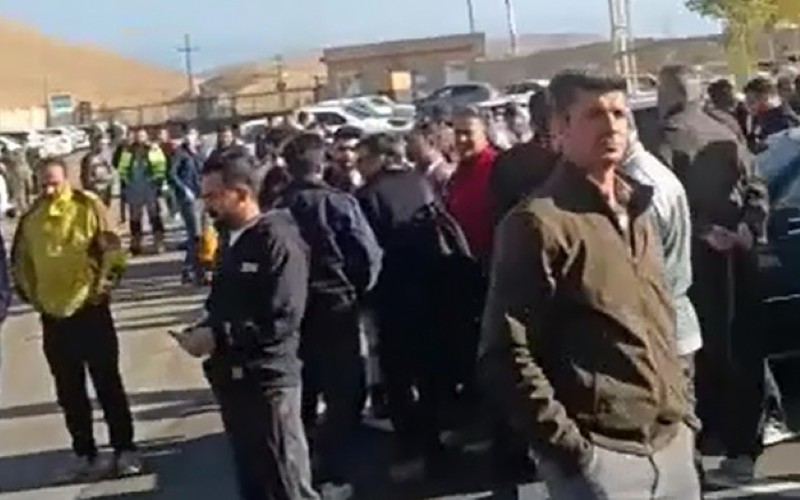

While basic foods become unaffordable and workers lose purchasing power, the regime channels billions into regional militias and missile projects.
Iran continues to face a dramatic surge in the price of essential goods, while the value of the national currency declines sharply. This week alone, the country witnessed yet another wave of price hikes in dairy products — one of the last remaining staples on the tables of low-income families.
According to domestic reports, the price of a 900-gram bottle of low-fat milk jumped 13.3% in a single day, rising from 37,500 tomans to 42,500 tomans. Full-fat milk increased from 48,000 to 52,000 tomans, while the price of a bucket of whole-fat yogurt climbed from 178,000 to 195,000 tomans in just 24 hours. A one-liter industrial milk carton has now surged from 47,500 to 57,500 tomans.
These increases are part of an unprecedented pattern. In the first eight months of 1404, dairy prices have reportedly been raised at least 20 times, marking an historic record.
Meat Prices: A Luxury for the Minority
The meat market has also experienced extraordinary inflation. Mansour Pourian, head of Iran’s Livestock Supply Council, confirmed that even low-quality imported frozen Brazilian beef has risen from 300,000 tomans to 660,000 tomans in eight months. Meanwhile, one kilogram of fresh lamb now costs between 1.6 million and 2 million tomans.
Officials cite the end of preferential currency, shortages of livestock feed, and outbreaks of foot-and-mouth disease as key drivers. Experts warn that with such prices, up to 70% of Iranians will be forced to remove red meat from their diet entirely.
Government Paralysis as Currency Collapses
Despite the worsening situation, the administration of Masoud Pezeshkian continues to avoid presenting any serious plan to curb inflation, citing a lack of financial resources. But U.S. Treasury data reveals that the regime has provided over $1 billion in military and financial support to Hezbollah in the past year alone — contradicting official claims of empty coffers.
At the same time, Iranians are living with rolling crises: soaring prices, joblessness, water shortages, blackouts, and collapsing public services.
The rial’s decline continues as well. On Thursday, the dollar crossed 113,500 tomans, a signal that inflationary pressures are set to intensify in the final months of the year. Economists warn that the government’s expected threefold increase in gasoline prices — which the government spokesman says is “certain” — will unleash a new inflation wave across transportation, basic goods, and services. Past experience shows such price shocks are almost impossible to contain.
Workers and Pensioners at Breaking Point
Field interviews published by ILNA reveal the human cost of Iran’s economic collapse. Ahmad, a Tehran sanitation worker, said:
“Half my teeth have fallen out. I chew most food with my gums. Where can I find 20 or 30 million tomans to fix my teeth?”
With living standards plunging, even traditional celebrations are slipping out of reach. Four months before Nowruz, state media reported that workers’ holiday bonuses will be only 20 million tomans. Yet a minimum-cost Nowruz for a family of four — including dinner, basic cleaning, a simple Haft-Seen table, and modest refreshments — requires around 14 million tomans, with children’s clothing costing another 6 million. In effect, the entire bonus is swallowed by essential expenses, leaving nothing for leisure, travel, or personal purchases.
Across All Sectors, Prices Are Out of Control
Staples like rice have seen extreme inflation. Tarom Hashemi rice has risen 180% in the past year, reaching around 400,000 tomans per kilo. Shiroudi rice has increased more than 135%, now selling for over 235,000 tomans per kilo.
Meanwhile, Fararu reports that household appliance prices have climbed so dramatically that many families repair old equipment instead of buying anything new. Purchasing new appliances has become a “unattainable dream” for most Iranians.
A Crisis Fueled by Four Decades of Failed Policies
Economists attribute the current hardship to the accumulation of four decades of failed policymaking — from poor economic planning and declining production to sanctions triggered by the regime’s nuclear and regional activities.
As the regime spends trillions of tomans on foreign militias, missile programs, and nuclear projects, millions of Iranian families are forced to give up dairy, meat, dental care, and even the joy of Nowruz — simply to stay alive.