


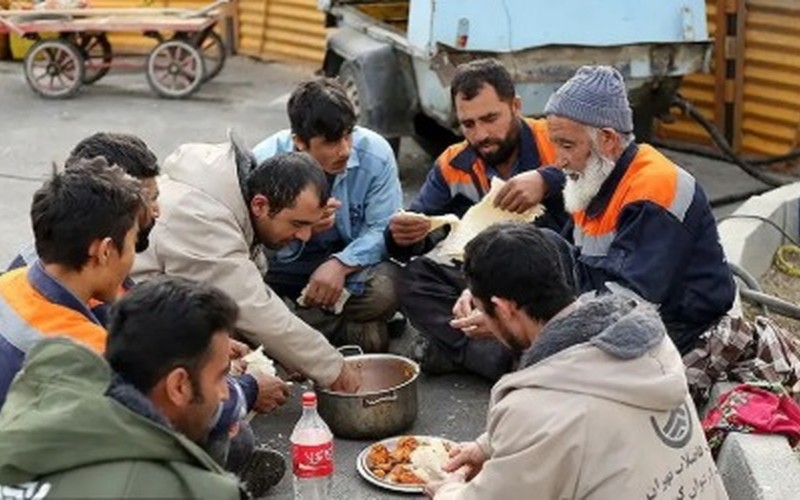

Rising inflation, collapsing purchasing power, and broken promises expose the regime’s inability to secure even a minimal standard of living for Iranians.
For the overwhelming majority of Iranians, the primary demand is no longer political reform or abstract rights—it is survival. Livelihood security and the containment of runaway inflation have become the dominant public concern, far surpassing all other demands. This reality alone exposes the emptiness of claims by regime apologists who point to crowded fast-food shops or weekend traffic on the Tehran–Chalus road as proof of economic “normalcy.” Such narratives collapse under the weight of everyday experience.
This crisis is not new, but in recent years it has entered a far more dangerous phase. Conditions have deteriorated so severely that even a “simple life” has become unattainable for millions of families. In today’s Iran, a simple life no longer means modest comfort; it means cutting out travel, social gatherings, proper clothing, basic healthcare such as dental care, and any aspiration beyond sheer endurance. It means struggling to pay rent for substandard housing and consuming just enough calories to remain alive.
This level of deprivation is neither compatible with human dignity nor acceptable in a country that is widely acknowledged to possess a significant share of the world’s natural resources. What is often dismissed by regime officials as “exaggeration” is, in fact, a delayed acknowledgment of a reality long denied—until denial itself became impossible.
Even regime’s senior officials have been forced into reluctant admissions. The current president has repeatedly stated that “the situation is very bad” and that little can be done. Yet such fatalism from those in power offers no reassurance. Previous administrations also relied on hollow words and reassurances, none of which resolved a single structural problem.
Inflation, Mental Health, and Social Fracture
In most households, monthly incomes no longer cover basic expenses. As families reach the end of each month, they face not only financial shortfalls but also mounting psychological pressure. Depression, anxiety, and emotional strain are spreading rapidly, intensifying social friction and increasing vulnerability across society.
Experts warn that the continuation of these conditions will deepen long-term psychological and social damage—damage that cannot be reversed quickly or cheaply. A society under constant economic stress loses resilience, trust, and cohesion, all of which are essential for stability.
Broken Promises and Manufactured Excuses
The government of Masoud Pezeshkian came to power on promises of controlling inflation and improving livelihoods. None of these core commitments have materialized. The result has been a further erosion of public trust. Without social trust, inflation control is not merely difficult—it is impossible.
When price stabilization and affordability are achievable without slogans, vows, or theatrics, the question becomes unavoidable: why does the regime fail even at this most basic level of governance?
Rather than confronting its own policy failures, the regime continues to attribute every shortcoming to sanctions and foreign pressure. This deflection has become a worn-out tactic—a colorless excuse used by incompetent managers to evade responsibility for years of misguided, unaccountable, and ideologically driven decision-making.
Markets Reflect the Collapse
The crisis is visible in everyday markets. Nut and dried-fruit sellers report dramatic declines in sales despite seasonal demand. Prices have surged far beyond household capacity, forcing customers to either walk away empty-handed or purchase minimal quantities.
In some provinces, prices of nuts have increased by 40 to 80 percent. Even basic fruits have reached levels that make them luxury items for ordinary families. The absence of real market activity underscores a simple truth: inflation is not merely a statistic—it is the disappearance of normal life.
Economic Pressure and the Breakdown of Family Life
The social consequences are severe. Economic hardship has emerged as the leading driver of divorce, with some provinces reporting that one out of every two marriages ends in separation. At the same time, permanent singlehood among women has increased sevenfold.
These realities stand in direct contradiction to the regime’s aggressive campaigns promoting marriage and childbearing. Economic insecurity—created and sustained by state policy—has turned these campaigns into hollow propaganda. While financial stress may not be the sole cause of family breakdown, it is a central factor that falls squarely within the government’s responsibility.
A Society Losing Its Social Capital
As the gap between income and living costs widens, social belonging erodes. Public willingness to cooperate, participate in civic life, or support public policies steadily declines. Ignoring the livelihood demands of vulnerable groups accelerates the collapse of social capital—a resource essential for navigating crises and preserving social cohesion.
The regime’s economic failure is no longer just an economic issue. It is a systemic threat to Iran’s social fabric, mental health, family structure, and collective future. By refusing accountability and persisting in denial, the ruling system is not merely mismanaging the economy—it is actively dismantling the foundations of society itself.