


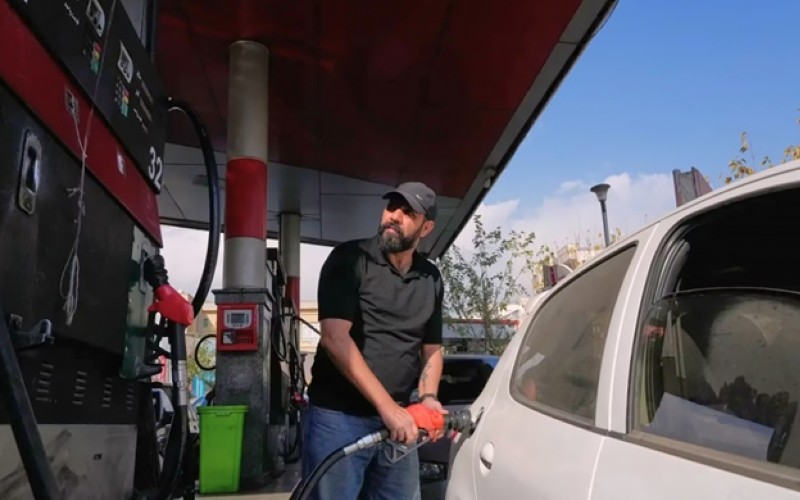

State-run outlets warn that the gasoline price hike is a financial earthquake that will worsen inflation while the regime avoids accountability for its budget crisis.
As the regime prepares another steep increase in gasoline prices, even its own media can no longer conceal the scale of the economic disaster unfolding beneath the surface.
What Tehran presents as a “reform” is being described by insiders as a destabilizing shock that will sweep through every sector of daily life, intensifying hardship for millions already crushed by years of mismanagement, corruption and sanctions driven by the regime’s own behavior.
Bahār News notes that the government’s plan is not a technical adjustment but a wave that will engulf the entire economy. Rising fuel prices will immediately drag up the cost of transportation, goods, services and essential food items, creating a chain reaction that will hammer low-income families and wage earners.
While officials claim that other priorities justify the increase, even regime-friendly analysts dismiss this narrative as absurd, questioning how gasoline hikes could possibly lead to cheaper meat, rice, dairy or fruit in a country where every price rise becomes permanent.
The outlet openly admits that the state is drowning in accumulated budget deficits of its own making. Yet instead of addressing years of corruption, misallocation and spending on repression and foreign adventurism, the authorities again choose the easiest route: emptying the pockets of citizens who have no voice in policy decisions.
A separate report from the same outlet describes the government’s new gasoline structure as nothing short of an “eight-magnitude earthquake.” The decision approved on November 25 reorganizes fuel subsidies in a way that excludes millions from meaningful access to affordable fuel.
By introducing a so-called “third rate,” restricting access to subsidized quotas, removing many vehicle categories from eligibility and engineering the station card into the costliest option, the regime is shifting the financial burden onto households already struggling to survive.
It is a calculated move designed not to manage consumption but to plug the hidden deficits the state refuses to acknowledge. Behind the technical language lies a simple truth: millions of Iranians will pay more so that the regime can avoid confronting the structural failures of its own economic model.
KhabarOnline’s analysis further exposes the contradictions. According to the head of the Energy Commission of Iran’s Chamber of Commerce, raising gasoline to five thousand tomans will neither fix the energy imbalance nor help reduce the budget deficit.
The state’s own data reveals an unsustainable gap between production capacity and actual consumption, which routinely surpasses 130 million liters per day and rises to over 160 million during peak seasons.
Yet the regime responds not with transparency or investment but with another price shock that does nothing to address the root causes. The article notes that previous price increases made sense only because they were aligned with the currency value at the time.
Today, however, the discrepancy has become grotesque: a five-thousand-toman liter of gasoline is meaningless in an economy defined by a dollar worth more than 113,000 tomans. The increase neither encourages efficient consumption nor generates meaningful revenue. It is a gesture of desperation from a state unwilling to confront the deeper collapse of its financial system.
What emerges from these regime-run reports is a portrait of a government stripped of solutions and resorting to blunt extraction from its own citizens.
Each of these outlets, despite their alignment with the ruling establishment, inadvertently exposes a fundamental truth: the regime’s answer to every crisis—budget shortfalls, energy imbalance, inflation—has become the same. It raids the pockets of the people while protecting the interests of its political and security apparatus.
The gasoline hike is not an economic policy. It is a political expression of a bankrupt system that survives by transferring its failures onto the public. And even regime insiders now warn that once the damage is done, reversing it will be as impossible as undoing the censorship disaster that isolated millions from the digital world.
In both cases, the pattern remains unchanged. The regime breaks what it cannot fix, denies responsibility and forces society to bear the cost.