


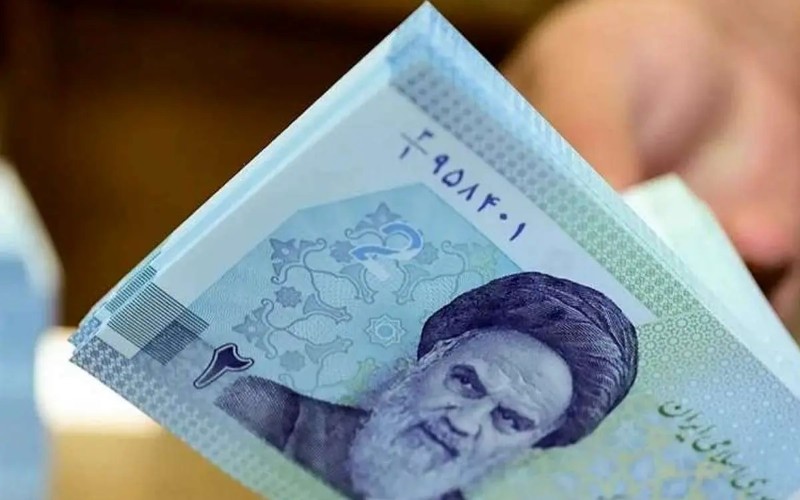

The regime’s subsidy elimination plan has slashed support for low- and middle-income households, fueling public anger and deepening poverty amid soaring inflation.
The Iranian regime has accelerated its controversial subsidy elimination policy, cutting millions of citizens from financial support programs in the name of “targeted reform.” While officials claim this move is necessary to address the government’s ballooning budget deficit, the policy has provoked widespread anger and left many low-income families struggling to survive amid soaring inflation.
New Criteria for Eligibility
The regime’s Organization for Targeted Subsidies recently announced stricter criteria for identifying recipients. According to the new rule, households with an income below 10 million tomans per month—after deducting housing costs—will remain eligible for cash subsidies and commodity vouchers. The regime’s Ministry of Cooperatives, Labor, and Social Welfare said this policy was based on a parliamentary resolution and would rely on banking, income, and asset indicators to determine eligibility.
Previously, Hassan Norouzi, head of the subsidy organization, had stated that under the 2025–2026 budget law, the top three income deciles—about 18 million people—would be removed from the subsidy list by year’s end.
Subsidy Removal Reaches Workers and Low-Income Families
Despite official assurances, recent reports confirm that even workers and low-income households have been unexpectedly removed from the subsidy list. In August, numerous workers told the state-run ILNA news agency that their subsidies had been cut, even though their wages remain far below the inflation-adjusted cost of living.
This contradiction highlights what experts have long criticized: flaws in the decile classification system. Under the current approach, individuals without property may be placed in higher income brackets due to bank account turnover, while property owners with valuable assets remain classified as “low income.”
In 2022, the regime’s then-Minister of Welfare and Social Security Hojatollah Abdol Maleki admitted that property ownership was not included in income assessments, despite promises to reform the system. To this day, asset value is largely ignored, creating deep injustices in subsidy allocation.
A Shrinking Subsidy Population
Official statistics show the steady decline in the number of subsidy recipients over the past decade. In 2019, about 78.2 million Iranians received subsidies. Today, only 46.5 million remain.
The latest payment reached just 46.5 million people across the fourth to ninth deciles, down from nearly 50 million in the previous month. Analysts warn that as many as 15 million more individuals may soon lose access, reducing the recipient population to roughly 30 million—just one-third of Iran’s population.
Currently, 27.8 million people in the first three deciles still receive subsidies, while the government is gradually phasing out support for the middle-income brackets.
Savings Too Small to Matter
The regime justifies the cuts as necessary to reduce the financial burden of subsidies. Yet the numbers tell a different story. In July, 14,890 billion tomans in subsidies were paid; by August, this had fallen to 13,970 billion tomans—a savings of only 920 billion tomans.
Even if another 15 million people are removed, experts estimate the savings will reach only 4,600 billion tomans—insignificant compared to the regime’s massive budget deficit. This raises doubts over whether the cuts are truly about fiscal responsibility or part of a broader plan to reduce state obligations at the expense of the poor.
Subsidies as a Lifeline Amid Inflation
Although cash payments of 300,000 to 400,000 tomans per person are modest, they remain a vital lifeline for millions of families struggling with uncontrolled inflation and stagnant wages. Experts argue that cutting these subsidies without broader economic reforms will only worsen poverty, inequality, and social unrest.
The government has experimented with replacing cash payments with vouchers, but public resistance has been strong. For most households, cash remains essential to covering daily expenses in a rapidly deteriorating economy.
Experts Warn of Growing Inequality
Economic experts consistently warn that eliminating subsidies without tackling inflation and raising real wages is a recipe for disaster. Instead of reducing hardship, these policies are pushing more families into poverty and leaving vulnerable groups without even minimal state support.
With inflation climbing, unemployment widespread, and living costs far outpacing wages, the removal of subsidies represents yet another blow to Iran’s struggling population. Critics emphasize that the regime’s policies have less to do with “fairness” and more with transferring the cost of its budget crisis onto the shoulders of ordinary citizens.