


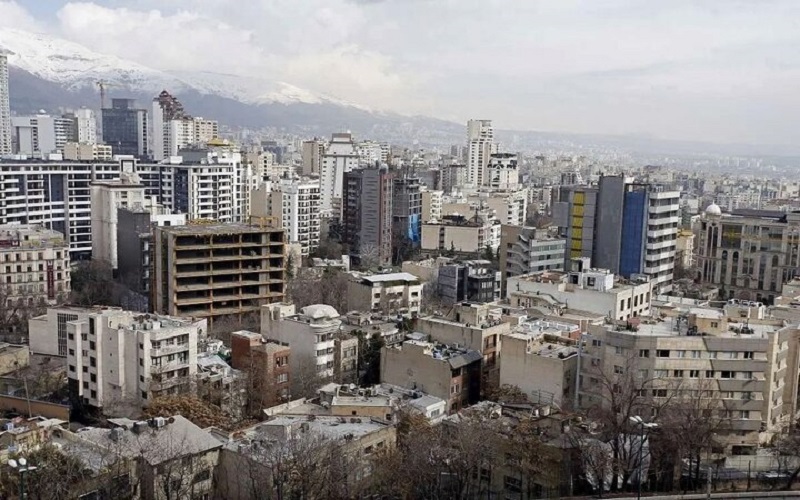

The inability to afford housing has become one of the most pressing challenges for Iranian households in recent years. While some policymakers attribute the crisis to a physical shortage of housing units, the core issue lies in the declining purchasing power of Iranian citizens.
A Misdiagnosed Crisis: Supply vs. Affordability
A group of housing policymakers argues that the imbalance in the housing market stems from a supply shortage, estimating a deficit of approximately five million housing units. However, economic data suggest that affordability, not supply, is the real problem.
Since 2011, investment in housing construction has experienced an average annual decline of 4%. Between 2019 and mid-2024, capital formation in the construction sector also recorded a negative growth rate of 5%. These figures indicate a prolonged downturn in housing investment, primarily driven by macroeconomic imbalances rather than a lack of physical housing units.
The Persistent Recession in Housing Production
Since 2014, Iran’s housing sector has remained in recession, with annual construction rates failing to meet the minimum supply required to stabilize the market. Estimates suggest a nationwide housing shortage of approximately 2.6 million units. However, three key factors challenge the notion that a physical shortage is the root cause of the crisis.
First, proponents of mass housing construction often reference the household density index, estimating an urban housing shortage of 1.5 million units. However, economic instability and high inflation have led to a surge in vacant properties. In 2016, for instance, while there were 18.1 million urban households, only 17.4 million housing units were occupied. Despite an apparent deficit of one million units, nearly five million properties remained vacant or were used as secondary vacation homes.
The Paradox of Empty Homes and Rising Homelessness
An analysis of housing market trends reveals that Iran faced an oversupply rather than a shortage in 2016 when both occupied and vacant units were considered. In recent years, a significant portion of existing housing stock has remained outside the consumer market. If these units were made available, a substantial part of the imbalance could be resolved.
Physical housing shortages would be a valid concern if economic conditions allowed for effective distribution. However, economic instability prevents this. The experience of the “Mehr Housing” project in 2007 exemplifies this reality. Even after seven years, 15% of the 2.3 million units built under the program remained unoccupied. Similarly, the “National Housing” project over the past three years has demonstrated that many eligible households cannot afford even the initial down payment. Out of five million registered applicants, only one million were able to meet the financial requirements.
Speculative Investment and Wealth Concentration
The dominance of speculative investment in Iran’s real estate market further exacerbates the crisis. Between 2011 and 2023, approximately 5.5 million new housing units were constructed. However, rather than addressing housing shortages, a significant portion of these properties ended up in the hands of existing property owners. Over this period, the number of urban households grew by six million, while 5.5 million new units were built. Despite this, the number of renters increased from 4.5 million to six million, and property ownership expanded from 9.4 million to 13.6 million households. These figures confirm that economic imbalance, particularly declining household purchasing power, is the real driver of the housing crisis.
Currently, 1.5 million urban tenants live in absolute poverty—a figure that has increased 1.5 times since 2011. Additionally, more than four million households in both urban and rural areas lack access to adequate housing. Today, half of Iranian households allocate more than the recommended portion of their income to housing costs, highlighting the depth of the economic imbalance.
The Economic Roots of the Housing Crisis
For housing production to increase, developers must be able to sell or rent their units. However, as long as economic hardship persists, demand will remain weak, and housing production will not recover. High inflation and sluggish economic growth have significantly increased the cost of living, making it difficult for households to meet basic needs such as food, medicine, and clothing—let alone afford housing. As a result, demand for homeownership and rentals has declined, further deepening the recession in the housing sector.
Sustainable economic solutions are essential to improving Iran’s housing market. Until inflation is controlled and household incomes increase, neither the construction sector will flourish nor the housing imbalance be resolved. Policymakers must prioritize economic stability and wage growth to ensure that housing supply translates into accessible housing for citizens.
Hidden Wealth: The Role of State-Owned Entities
Beyond economic mismanagement, Iran’s housing crisis is also fueled by the hoarding of properties by powerful entities. Many state-affiliated organizations and financial institutions have exploited the housing market for profit. Investigations have revealed that over two million vacant homes in Tehran alone are owned by state-owned banks, which evade taxation on these properties. This phenomenon underscores the need for systemic reforms that address not only economic imbalances but also the structural inefficiencies and corruption that prevent housing from being accessible to ordinary citizens.
Conclusion
Iran’s housing crisis is not merely a matter of supply but fundamentally an issue of affordability. While some policymakers advocate for large-scale construction projects, the data suggest that economic hardship and speculative investment are the real barriers to housing accessibility. Without comprehensive economic reforms—including inflation control, income growth, and regulations to curb speculative investment—housing production alone will not solve the crisis. The government must take decisive action to ensure that housing serves as a fundamental right for all citizens rather than a vehicle for wealth accumulation by powerful institutions.