

U.S. Secretary of State Highlights Human Rights Abuses, Sanctions, and Tehran’s Use of Proxy Forces
U.S. Secretary of State Marco Rubio has sharply criticized Iran’s ruling regime, stating that no other country demonstrates such a profound divide between those in power and the population they govern. His remarks emphasized human rights violations, regional interference, and Tehran’s continued support for authoritarian allies and armed proxy groups.
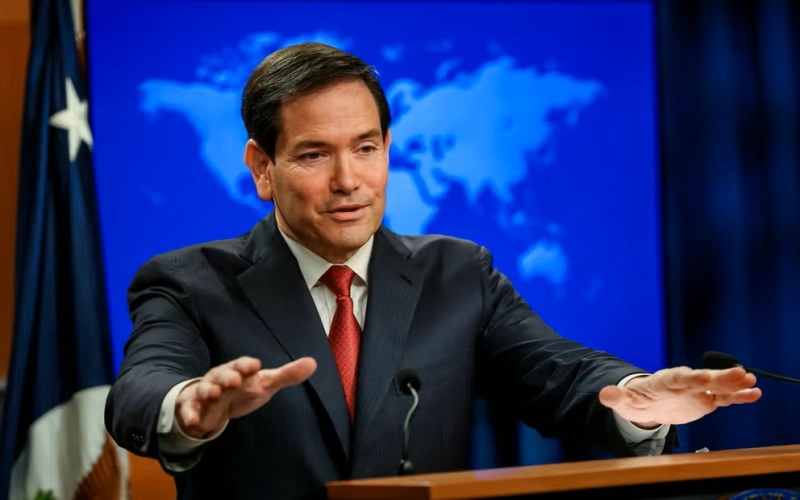
Speaking at a press briefing on Friday, December 19, Rubio underscored that Iran represents a unique case in global politics, where the governing regime bears little resemblance to the nation’s people. He stressed that the Iranian regime does not reflect the identity, aspirations, or historical legacy of Iranians, whom he described as heirs to a rich civilization and a long, distinguished cultural history.
Rubio argued that the Iran regime has systematically diverted national wealth away from public welfare. According to him, state resources have not been invested in improving living standards, infrastructure, or basic services such as water and electricity. Instead, he said, those funds have been channeled into activities that undermine regional and international security.
He further accused Tehran of allocating substantial financial resources to militant organizations across the Middle East and beyond, reinforcing Washington’s position that the regime’s priorities lie outside the well-being of its own citizens. Rubio made clear that the United States intends to continue drawing attention to these policies at every opportunity.
Sanctions and Escalating Repression
In the Iran-focused portion of his remarks, Rubio defended the ongoing U.S. sanctions campaign against the Iranian regime, linking it directly to persistent human rights violations and aggressive foreign conduct.
He characterized Washington’s disagreements with Tehran as deep and structural, noting that Iran ranks among the most heavily sanctioned countries in the world. Rubio highlighted that new sanctions targeting Iran-linked individuals and entities are imposed on a regular basis, signaling that the U.S. government has maintained a consistently confrontational stance toward the regime.
Rubio also pointed to an escalation in domestic repression, including executions, particularly following the recent 12-day conflict. He emphasized that the United States tracks these developments closely through annual human rights reporting and sustained diplomatic messaging, leaving no ambiguity about Washington’s assessment of the regime’s conduct.
According to Rubio, the U.S. dispute with Iran is not limited to concerns over nuclear ambitions or support for terrorism, although both remain central issues. He stressed that the regime’s treatment of its own population is itself a core reason for U.S. opposition.
Hezbollah as a Proxy of the Iran Regime
Addressing regional security, Rubio described Hezbollah as a direct instrument of the Iran regime’s influence in the Middle East. He noted that widespread concern exists among regional governments regarding the group’s military capabilities and political role.
Rubio stated that officials across the region, including in Syria, view Hezbollah as a destabilizing force and a mechanism through which Tehran projects power beyond its borders. While he said he had no specific information regarding the formation of a military coalition to disarm Hezbollah in Lebanon, he emphasized a shared regional objective.
According to Rubio, leaders throughout the Middle East broadly agree that Hezbollah must no longer be allowed to function as it has in the past—whether as a direct threat to Israel or as a proxy advancing the Iran regime’s strategic interests across the region.