



Escalating executions and regime rhetoric spark global concern over potential crimes against humanity
In a powerful joint statement released on July 23, 2025, 301 legal scholars, human rights experts, and former UN officials have urged the international community to take urgent action to prevent a repeat of the 1988 massacre of political prisoners in Iran. The group warns that the current surge in executions and state-sanctioned incitement is laying the groundwork for another atrocity on a similar scale.
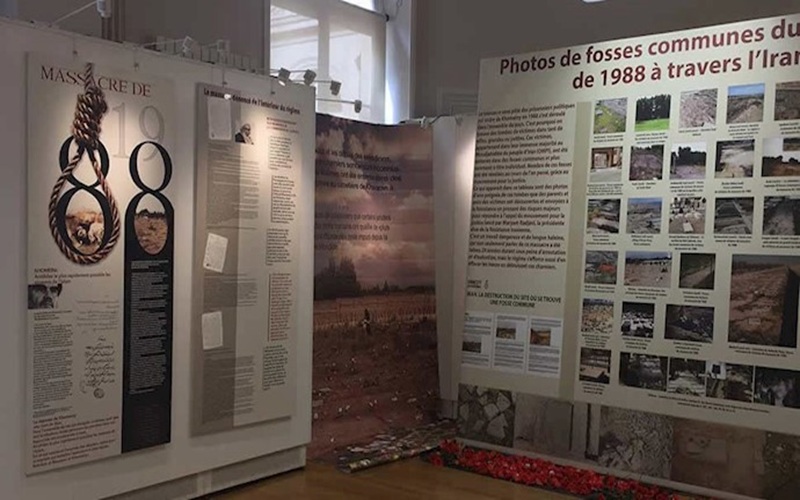
The warning comes amid alarming developments within the Iranian regime, including the promotion of mass executions as a legitimate state response to political dissent. On July 7, Fars News Agency—an outlet affiliated with the Islamic Revolutionary Guard Corps (IRGC)—published an editorial titled “Why the 1988 Executions Should Be Repeated”. The piece described the mass killing of more than 30,000 political prisoners in 1988 as a “successful historical experience” and advocated the same treatment for current detainees, branding dissent as a national security threat.
This rhetoric, the signatories argue, is more than dangerous revisionism—it is a call to action that echoes the crimes committed under a fatwa issued by former Supreme Leader Ruhollah Khomeini, which led to the systematic execution of political prisoners, particularly supporters of the People’s Mojahedin Organization of Iran (PMOI/MEK).
Joint statement by international experts, Nobel laureates and political leaders urging immediate UN action to save the lives of Iranian political prisoners & to prevent a repeat of Iran's #1988Massacre
CC: @drmaisato @volker_turk #StopExecutionsInIran pic.twitter.com/1jfSFQpPiX
— Justice for the Victims of 1988 Massacre in Iran (@jvmifoundation) July 23, 2025
Political Executions on the Rise
The statement highlights several recent cases that underscore the regime’s renewed campaign of repression. On July 12, 2025, three opposition activists—Farshad Etemadi-Far, Masoud Jamei, and Alireza Mardasi—were sentenced to death by the Ahvaz Revolutionary Court after enduring two years of torture. They were convicted of “waging war on God” (moharebeh) solely for their support of the PMOI.
Dozens more political prisoners remain on death row, including Behrouz Ehsani and Mehdi Hassani, whose final appeal for judicial review was rejected by Iran’s Supreme Court this month. These cases reflect a broader pattern of arbitrary sentencing, torture, and extrajudicial punishment.
Since regime ppresident Masoud Pezeshkian took office, the number of executions has dramatically escalated. More than 1,300 executions have been carried out under his administration, with over 650 in 2025 alone—marking one of the deadliest periods in Iran’s recent history.
Echoes of 1988: “A Crime Is in Progress”
Human rights observers say these developments are not isolated but are part of a deliberate state policy. A July 2024 report by the UN Special Rapporteur on Iran previously described the 1988 massacre as an ongoing crime against humanity and genocide. In early July 2025, ten UN Special Procedures issued a joint statement raising alarms over the Iranian regime’s intensified crackdown following the outbreak of hostilities on June 13 and the subsequent ceasefire.
The UN experts specifically cited state media rhetoric that calls for “surveillance” and “killings,” comparing it directly to the atmosphere preceding the 1988 executions.
Further confirmation of these fears came in a smuggled letter from political prisoner Saeed Masouri, a longtime advocate within the “No to Executions Tuesdays” campaign. Detained in Qezel Hesar Prison, Masouri described a failed attempt to transfer him forcibly and warned that the move was part of preparations to carry out further executions. “Just like in 1988,” he wrote, “a crime is in progress.”
International Inaction Then—and Now?
The statement from the 301 experts is a direct appeal to international bodies and governments not to repeat the mistakes of the past. In 1988, the international community largely remained silent as thousands were murdered in Iranian prisons. This failure to act, they argue, emboldened the regime and set a dangerous precedent.
The signatories are now urging specific measures, including:
- The UN Special Rapporteur on Iran, Dr. Mai Sato, and other Special Procedure mandates to publicly condemn the Iranian regime’s incitement to violence and its ongoing executions.
- UN High Commissioner for Human Rights Volker Türk to issue an unequivocal statement against Iran’s systematic human rights abuses.
- Canada and other co-sponsors of the UN General Assembly’s Third Committee resolution on Iran to explicitly reference the 1988 massacre in the upcoming resolution.
“The international community failed to act in 1988,” the experts conclude. “It must not fail again. The responsibility to prevent these crimes against humanity from being repeated rests with the United Nations and its member states.”
With warning signs mounting and executions continuing, the question remains whether the world will heed the lessons of the past—or once again remain silent in the face of atrocity.