


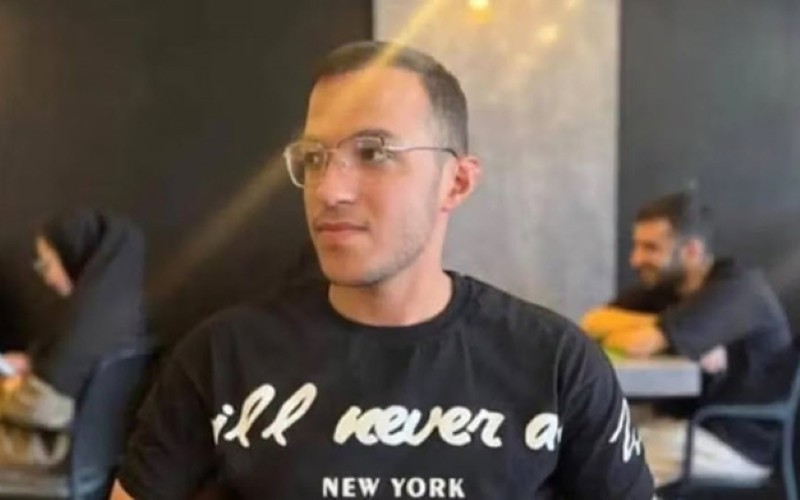

20-year-old student Ahmad Baladi dies after setting himself on fire to protest the unlawful destruction of his family’s kiosk by municipal and police forces in Ahvaz.
Ahmad Baladi, a 20-year-old student from Ahvaz, has died after suffering severe burns from self-immolation. The young man set himself on fire in protest after municipal agents, accompanied by police forces, demolished his family’s small kiosk without a court order. His death has sparked anger and protests among local residents, students, and activists, who demand justice and accountability from the regime authorities responsible.
Tragic Protest Against Injustice
According to local reports, the incident occurred when Ahvaz municipal agents arrived at Zeytoon Park to destroy the Baladi family’s small business — a kiosk that served as their only source of income. Despite having a valid permit allowing them to operate for two more years, the agents proceeded without judicial authorization.
Witnesses, including Ahmad’s father, Mojahid Baladi, said the young man pleaded with the officials to stop the demolition. When Ahmad threatened to set himself on fire if they continued, one of the agents mocked him, reportedly saying, “Burn yourself — let’s see how you burn.” Moments later, Ahmad doused himself in fuel and ignited.
He was rushed to Taleghani Hospital in Ahvaz with burns covering more than 70% of his body. Despite doctors’ efforts, he succumbed to his injuries days later.
The Father’s Testimony: “They Mocked My Son While He Burned”
In a deeply emotional interview, Mojahid Baladi recounted the brutality of the regime’s forces:
“My son begged them to wait. He said if they kept destroying our place, he would burn himself so they might stop. One of the officers told him to go ahead and burn. Then they broke the windows and attacked us. They even handcuffed my wife and ordered my arrest.”
Baladi’s words, later partially echoed even by regime-run outlets, paint a harrowing picture of state cruelty and contempt toward the poor.
Public Outcry and Protests
Following Ahmad’s death, dozens of citizens, students, and relatives gathered outside Taleghani Hospital, chanting slogans and demanding the dismissal of Ahvaz’s mayor and the prosecution of the municipal agents involved.
Videos shared online showed mourners condemning the authorities and holding photos of Ahmad. Witnesses reported a heavy security presence aimed at preventing the protests from spreading.
Regime Response: Threats Instead of Accountability
Rather than addressing public anger, Khuzestan’s judiciary issued a warning intended to intimidate those expressing outrage.
In a statement published by the regime-controlled Mizan News Agency on November 7, 2025, the prosecutor’s office warned:
“Any individual or group, of any tendency, who seeks to exploit this incident to incite ethnic tensions or disrupt public order, will face firm and uncompromising legal action.”
The threatening tone of the announcement revealed the regime’s deep fear of a broader uprising in Khuzestan — a province long plagued by poverty, discrimination, and environmental collapse, and known for its history of defiance against the central government.
A Symbol of Desperation and Injustice
Ahmad Baladi’s death has become a symbol of the despair gripping Iran’s marginalized youth — victims of state violence, economic hardship, and systemic inequality. His act of self-immolation echoes other tragedies in recent years, where citizens, faced with humiliation and repression, have turned their own bodies into protests against injustice.
As outrage spreads across social media, many Iranians see Ahmad’s story not as an isolated event but as part of a broader pattern of cruelty and impunity that defines the rule of the clerical regime.