


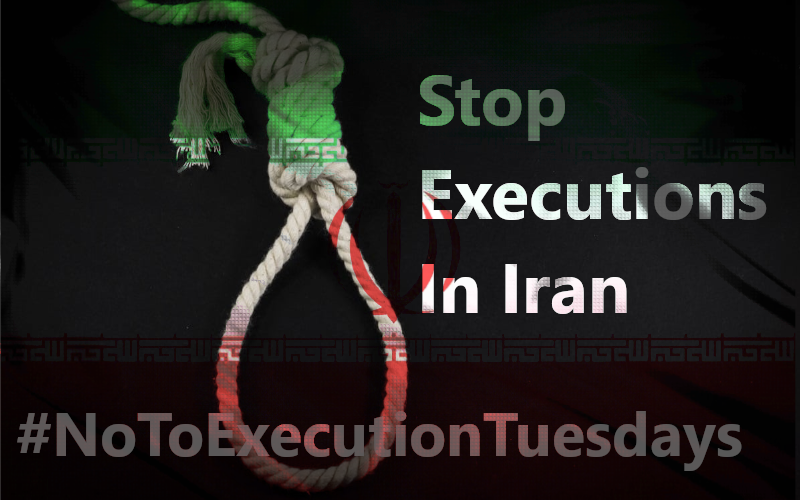

For decades, Iran has consistently held the grim distinction of being the second country in the world with the highest number of executions, surpassed only by China. In recent years, the rate of executions has surged to such an alarming extent that Antonio Guterres, the United Nations Secretary-General, publicly condemned the Iranian regime’s actions. He described the situation as an “alarming rate” of executions and issued a stern warning to the international community.
On August 20th, in a chilling display of brutality, the Iranian regime set a new record by executing 29 prisoners in a single day. Among those executed, a disproportionately high number belonged to the Baluch and Kurdish minorities. Amnesty International’s annual report revealed that in 2023 alone, the Iranian government executed at least 853 people, with 20% being Baluch citizens, despite the Baluch minority constituting only five percent of Iran’s population.
In the absence of a strong international call to halt these executions, the prisoners themselves have taken up the mantle of resistance, launching various protest campaigns within the prisons.
The Birth of ‘No to Execution’ Champaign
Women’s prisons, in particular, have become the vanguard of this resistance. The ‘No to Execution’ campaign, a protest against executions for any accusation, has not only garnered support within Iran but has also resonated beyond the country’s borders. This campaign was born in the wake of the 2022 protests, during which nine protestors were executed, and many others remain under the looming threat of the death penalty.
Resisting Execution: The Women of Evin Prison
Evin Women’s Prison has become a focal point of defiance. In response to the brutal crackdown on protesters and the subsequent executions, the women of Evin initiated sit-ins and protests that have since evolved into the ‘No to Execution’ campaign. These sit-ins, characterized by the chanting of slogans against executions, the singing of hymns, and impassioned speeches, have become a consistent and powerful form of protest.
The campaign began after the execution of Mohsen Shekari on December 8, 2022, the first protester to be hanged for participating in the 2022 protests. This event galvanized political prisoners, who joined the ‘No to Execution’ movement, forming large gatherings in the prison yard.
Following the execution of Majidreza Rahnavard, Mohammad Mehdi Najafi, Mohammad Hosseini, Saleh Mirhashemi, Saeed Yaqoubi, Majid Kazemi, Mohammad Ghobadlou, and Gholamreza Rasaei, the women of Evin Prison intensified their protests. They staged sit-ins in the prison corridors, chanting slogans from morning until night.
The third major protest campaign by these courageous women took place after the execution of Saleh Mirhashmi, Saeed Yaqoubi, and Majid Kazemi on May 18, 2023. The prisoners gathered in the yard of Evin Prison, where speeches were made, and a statement signed by several female prisoners was published.
On January 24, 2024, the women of Evin Prison went on strike following the execution of Milad Zohrevand and Mohammad Ghobadlou. The ‘No to Execution’ campaigns have been so effective that, on multiple occasions, when the threat of Mohammad Ghobadlou’s execution intensified, simultaneous protests by prisoners in Evin and Ghezel Hesar prisons, as well as public demonstrations outside the prison, managed to delay his execution.
In the days that followed, when the execution of four Kurdish political prisoners—Mohsen Mazloum, Mohammad Faramarzi, Wafa Azarbar, and Pejman Fatehi—was announced, the women of Evin once again took action. They issued letters and statements condemning these executions and emphasized their opposition to the death penalty in all forms, denouncing the regime’s inhumane behavior and cruelty towards both political and ordinary prisoners.
A United Front Against the Death Penalty
The issuance of a death sentence for Toomaj Salehi prompted a group of women prisoners to publish a collective statement against the death penalty. Similarly, after the death sentence was issued against Sharifeh Mohammadi on July 11, 2024, for the charge of ‘revolt,’ the women of Evin Prison went on a hunger strike. Male prisoners in Evin and Ghezel Hesar prisons joined them in solidarity.
The women prisoners also joined the Tuesday hunger strikes initiated by the prisoners of Ghezel Hesar Prison, protesting the death sentence. This movement spread to Rasht’s Lakan Prison and even to female prisoners in Tabriz Prison.
When a death sentence was issued for Pakhshan Azizi, a Kurdish civil activist, on the charge of ‘revolt’—the second such sentence in less than a month—the women of Evin held two night sit-ins, from 6:00 p.m. to 7:00 a.m. the next day, in various parts of the prison, including the yard, corridors, and workshops.
In the most recent and tragic case, after the news of Gholamreza Rasaei’s execution—one of the protesters arrested during the 2022 protests—the imprisoned women initiated an impromptu sit-in in the courtyard. They then moved towards the employees’ courtyard, where they were met with violence from prison guards, resulting in injuries to several female prisoners.
Despite this brutal crackdown, the women of Evin remain resolute in their commitment to continue their protest campaigns against executions every Tuesday.
A Call to Action
The women imprisoned in Evin have issued a clarion call through their letters and statements, urging all opponents of the death penalty—individuals and organizations alike, both inside and outside Iran—to support and join their campaign.
Their protest activities are not limited to these recent cases. On the anniversary of the mass executions of political prisoners in the summer of 1988, they issued a statement commemorating the victims of that dark chapter in Iran’s history.
Ghezel Hesar Prison and the ‘No To Execution Tuesdays’ Movement
Every Tuesday, with the morning call to prayer, death sentences are carried out in Ghezel Hesar Prison. In recent months, as the number of executions in Ghezel Hesar has increased, prisoners under death sentence have decided to go on hunger strike to protest the death penalty.
This movement, initially confined to Ghezel Hesar, has gradually spread. More than 19 prisons have now joined the Tuesday hunger strike against the death penalty, and this protest movement continues to grow.
For over 31 weeks, the prisoners in Ghezel Hesar have maintained their hunger strike every Tuesday, publishing statements opposing executions. In the most recent hunger strike, prisoners from Evin, Ghezel Hesar, Karaj Central Prison, Khorramabad, Shiraz Nezam Prison, Mashhad Prison, Lakan Prison, Qaem Shahr Prison, Tabriz Prison, Ardabil Prison, Urmia, Khoy, Naqadeh, Saqqez, Baneh, Marivan, Kamyaran, and Greater Tehran Central Penitentiary (Fashafouyeh) have all joined this powerful movement.
The Iranian regime’s relentless use of the death penalty as a tool of oppression has sparked a powerful and united resistance within the country’s prisons. The courage and determination of the prisoners, particularly the women of Evin, serve as a beacon of hope and a rallying cry for all who oppose the death penalty. Their voices, though silenced by prison walls, echo far beyond, calling for justice, humanity, and an end to the brutality of executions. The world must listen, and act, before more lives are lost to this cruel and inhumane practice.