


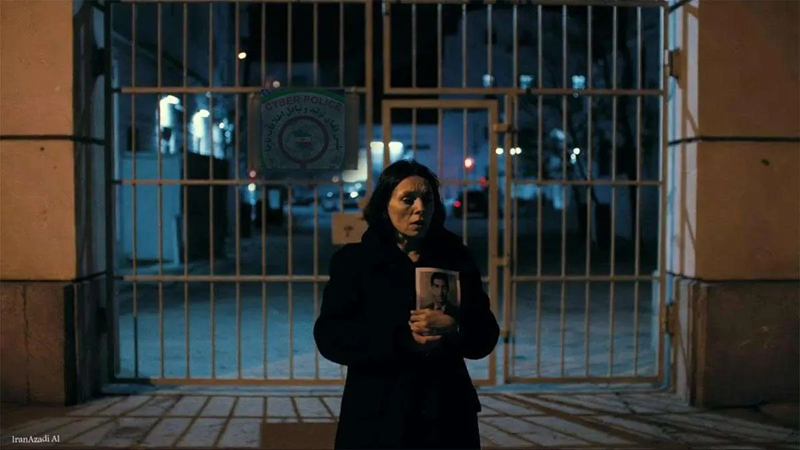

A decades-long pattern of enforced disappearances has evolved into one of the Iranian regime’s most powerful instruments of repression, targeting political prisoners, protesters, and their families while reinforcing a culture of impunity.
The practice of enforced disappearance has been a defining feature of the Iranian regime’s repression since the years following the 1979 revolution. Rather than isolated incidents, these disappearances reveal a consistent strategy aimed at silencing political dissent, intimidating society, and shielding perpetrators from accountability.
According to reports released for the International Day of the Victims of Enforced Disappearances, the history of this crime in Iran stretches from the 1988 massacre of political prisoners to the nationwide protests that erupted in late 2025 and continued into 2026. Throughout this period, victims have been secretly detained, executed, or disappeared while authorities systematically concealed their fate and whereabouts.
The 1988 Massacre: The Foundation of Systematic Disappearances
The most notorious example remains the mass execution of thousands of political prisoners during the summer of 1988. Victims were executed extrajudicially, buried in secret mass graves, and their families were never informed of the burial locations.
For decades, authorities have continued to deny information regarding the victims’ fate while destroying suspected mass grave sites and intimidating survivors and relatives seeking the truth. This has transformed the original crime into an ongoing enforced disappearance under international law.
The absence of accountability has been equally significant. Officials allegedly involved in the 1988 massacre have remained within the judiciary and state institutions, reinforcing what human rights organizations describe as a culture of institutional impunity.
International experts have repeatedly characterized the 1988 massacre as a potential crime against humanity and have called for an independent international investigation. Yet the regime’s refusal to cooperate has allowed the pattern of abuse to persist.
Disappearances as a Routine Instrument Before the 2026 Protests
Long before the nationwide protests of late 2025, enforced disappearances had become embedded in the regime’s security apparatus.
Political prisoners and prisoners of conscience were frequently arrested without notice, held incommunicado for weeks or months, subjected to torture, and denied contact with lawyers or family members. Authorities routinely refused to acknowledge their detention, creating prolonged uncertainty for relatives.
Human rights organizations have also documented cases involving members of Iran’s ethnic minorities who were secretly executed, with authorities withholding information about their burial sites. Such practices extended the suffering beyond the victims themselves, leaving families trapped in a state of perpetual uncertainty.
This systematic denial of information has been widely criticized as evidence that the judicial system functions not as an institution of justice but as an instrument of political repression.
The 2026 Nationwide Protests and a New Wave of Enforced Disappearances
Following the nationwide protests that began on December 28, 2025, and intensified during the deadly crackdown of January 8 and 9, 2026, reports indicate that enforced disappearances expanded dramatically.
According to the Human Rights Activists News Agency (HRANA), more than 53,000 people had been arrested by February 2026. Many detainees were reportedly transferred to undisclosed detention facilities where families received no information regarding their location or condition.
In February 2026, Human Rights Watch described the situation as a “tsunami of arbitrary arrests and enforced disappearances,” warning that thousands of detainees had effectively vanished into the regime’s detention network. Human Rights Watch
The crackdown reportedly involved coordinated operations by the IRGC, intelligence agencies, and security forces. Reports documented widespread torture, severe beatings, sexual violence, prolonged solitary confinement, and forced televised confessions—including cases involving minors.
Both Human Rights Watch and Amnesty International warned of the growing risk of secret and expedited executions, citing reports of mock executions, coerced confessions, and death threats used during interrogations.
Another major concern has been the denial of independent legal representation. Under Iran’s restrictive legal framework, many political detainees are permitted to choose only from government-approved lawyers, severely limiting due process and independent oversight during interrogations.
Meanwhile, families gathering outside prisons have frequently encountered official denials that their relatives were even being held in custody.
International Calls for Accountability
International concern intensified as reports of disappearances multiplied.
On February 20, 2026, United Nations human rights experts called on the Iranian regime to disclose the fate and whereabouts of disappeared protesters, halt executions, and ensure transparency regarding detainees. They emphasized that concealing the location or fate of detainees constitutes a continuing violation of international human rights law.
Despite these appeals, reports indicate that enforced disappearances continued even after large-scale street protests subsided, with night-time raids and secret detention centers allegedly remaining part of the security apparatus. This suggests that enforced disappearance has evolved beyond an emergency response into a long-term mechanism of political control.
The Lasting Impact on Families and Society
The consequences of enforced disappearances extend far beyond the victims themselves.
Families endure prolonged psychological trauma as they struggle with the uncertainty of whether loved ones are alive, injured, imprisoned, or dead. Human rights organizations describe this uncertainty as a form of ongoing psychological torture that continues as long as authorities withhold information.
The impact is also economic. Many disappeared individuals are primary wage earners, and without official confirmation of death or detention, families often face significant legal and financial obstacles in accessing property, benefits, or inheritance.
Recent reports indicate that families of those detained during the 2026 protests continue to visit prisons, detention centers, and judicial offices seeking answers, only to encounter silence or outright denial. This persistent refusal to provide information compounds their suffering.
Beyond individual families, enforced disappearances have a broader societal impact. They foster fear throughout society, discourage political participation, and reinforce state narratives portraying protesters as security threats through forced confessions broadcast on state media.
A Continuing Crime Demanding International Action
The history of enforced disappearances in Iran demonstrates a consistent pattern stretching from the 1988 massacre to the suppression of the 2026 nationwide protests. Far from being isolated violations, these disappearances represent a deliberate strategy designed to eliminate dissent, intimidate society, and protect perpetrators through systemic impunity.
As long as authorities continue to conceal the fate of victims, deny families the truth, and shield those responsible from accountability, enforced disappearances remain an ongoing crime. International human rights organizations and UN experts have repeatedly argued that meaningful accountability and independent investigations are essential if this decades-long cycle of repression is to be broken.