


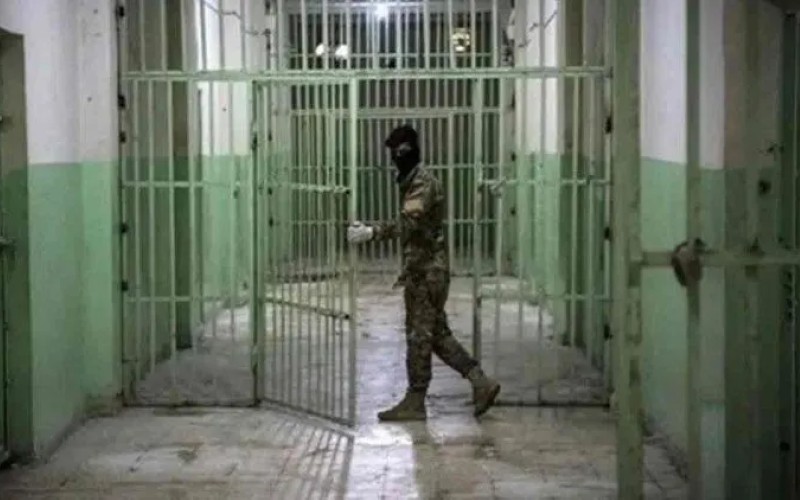

From torture and medical neglect to executions, the prison system functions as a core pillar of repression under the Iranian regime
The Iranian regime does not treat political prisoners as dissenters within any legal or judicial framework. Instead, it treats them as hostages in a full-scale war against Iranian society.
From Evin and Qezel Hesar to Fashafuyeh and Lakan Prison in Rasht, prisons have been transformed into laboratories of repression where methods of physical and psychological destruction are systematically tested—not only to break prisoners, but to terrorize their families and the wider public.
In this system, prisons are not merely punitive institutions. They are integral components of state power and key instruments for maintaining political fear. Detention facilities function as extensions of the regime’s security apparatus, designed to enforce silence, deter protest, and crush organized resistance.
Conditions inside many Iranian regime prisons have deteriorated into what can only be described as structural torture. Prisoners are held in cramped solitary cells without beds or toilets. Overcrowded wards reach suffocating levels.
Access to clean drinking water, adequate food, and fresh air is deliberately restricted. These conditions are accompanied by violent interrogations, beatings, and systematic verbal abuse—including religious and sexual humiliation—aimed at destroying human dignity and forcing prisoners into false confessions or public renunciation of resistance.
What is taking place is not the result of isolated abuses by individual perpetrators. It is a coordinated system designed to break individuals physically and psychologically, operating with full institutional intent.
One of the most brutal tools employed by the Iranian regime is the deliberate denial of medical care as a form of slow torture.
Numerous political prisoners suffering from serious heart, respiratory, or chronic illnesses are intentionally deprived of medication and hospital treatment.
Repeated medical requests are ignored, mocked, or met with increased pressure and threats. In practice, this policy amounts to issuing death sentences behind prison walls—executions carried out gradually, without court rulings or gallows.
Women political prisoners face an added layer of repression. Beyond physical and psychological torture, they are subjected to systematic gender-based humiliation and constant blackmail through threats against their children and families.
The forced exile of women prisoners to distant prisons, far from their homes, is routinely used as a punitive weapon to sever family contact and deepen isolation. Testimonies describe years of imprisonment without a single day of furlough, prolonged solitary confinement, and repeated nighttime interrogations—all aimed at coercing submission or collaboration with the repression apparatus.
In prisons such as Fashafuyeh, Lakan Rasht, and Khurin, the raw face of the Iranian regime is even more visible. Severe hygiene deficiencies have led to the spread of gastrointestinal and skin diseases.
Prisoners are forced into compulsory labor. Political detainees are deliberately mixed with violent criminals to increase intimidation and risk.
Former prisoners and families describe these facilities as places where law, oversight, and hope no longer exist—marked by collective beatings, nighttime torture sessions, and exposure to extreme cold or suffocating heat as forms of collective punishment.
This prison policy is inseparably linked to the Iranian regime’s extensive use of executions outside prison walls. Iran remains one of the world’s leading executioners, with execution waves often following nationwide protests as tools of mass intimidation.
Many of those sentenced to death are young protesters or individuals accused of supporting organized opposition movements and popular uprisings. In this way, prisons and gallows operate simultaneously as mechanisms of governance—designed to extinguish dissent and dismantle any organized challenge to the regime.
From the perspective of the Iranian Resistance, these crimes must not be treated as isolated violations. They constitute a systematic policy rising to the level of crimes against humanity.
The regime’s prison system and its widespread human rights abuses must be referred to the United Nations Security Council, and an independent international investigative mission must be established with unrestricted access to prisons, detainees, and victims’ families.
Yet experience shows that this cycle of repression will not end while the perpetrators remain in power.
For this reason, the Iranian Resistance advances its “third option”: neither war nor appeasement, but the overthrow of the ruling clerical regime by the Iranian people and their organized resistance—followed by the prosecution of all officials responsible for torture, executions, and systematic crimes, from the highest levels of power to those who carried out the orders inside Iran’s prisons.