


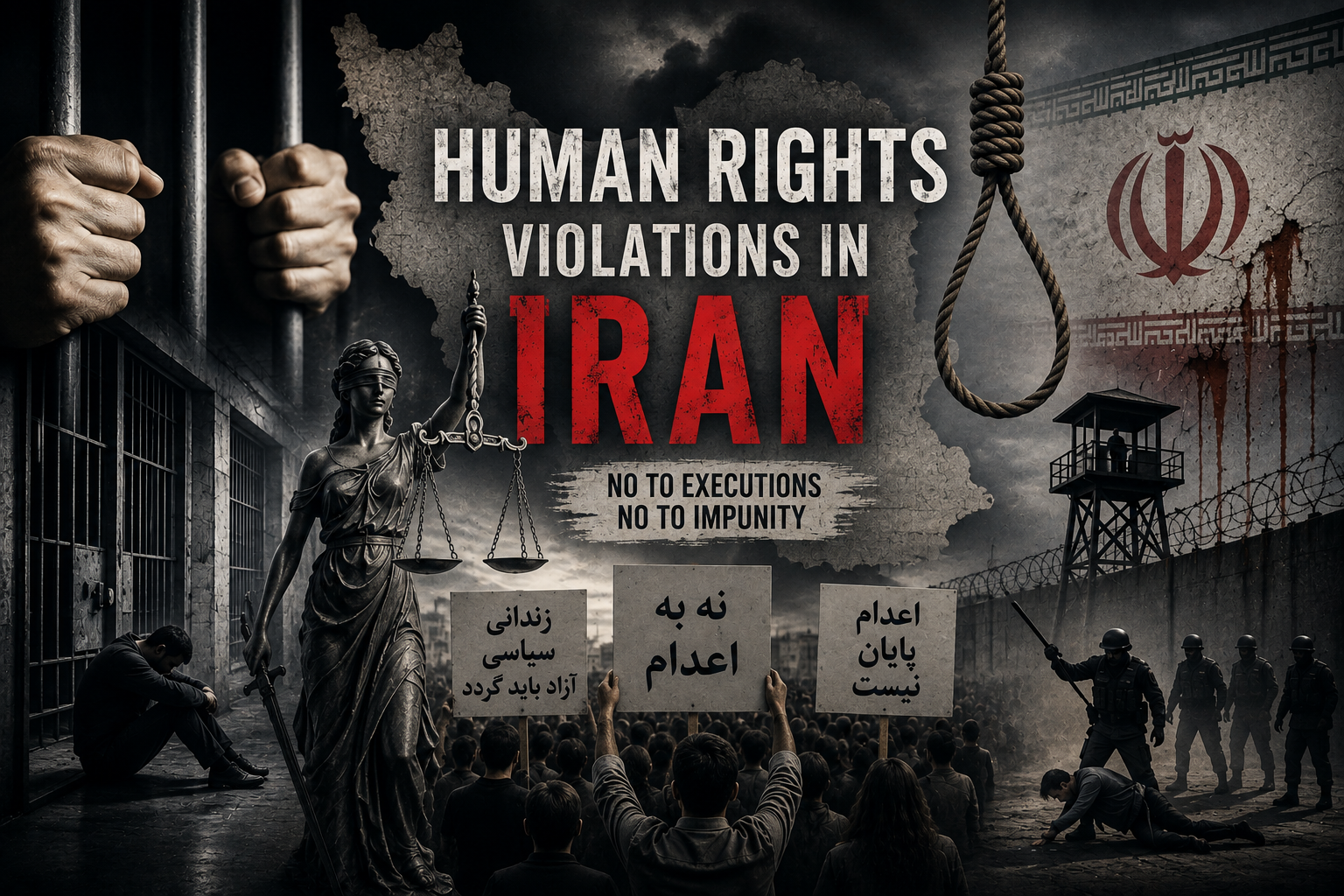

The execution of seven political prisoners, mass arrests, and deadly shootings by security forces marked another month of severe human rights violations across Iran.
The Iranian regime continued its sweeping crackdown on dissent throughout July 2026, carrying out at least 77 executions, arresting 160 people, and leaving 19 civilians dead in shootings by security forces, according to documented human rights reports.
The month’s figures illustrate the continued use of executions, arbitrary detention, and lethal force as central instruments of repression. Particularly alarming was the execution of seven political prisoners, many of whom had been arrested during recent nationwide protests.
At Least 77 Executions in One Month
Human rights monitors documented 77 executions in prisons across Iran during July. Those executed included:
- 7 political prisoners (five executed in prison and two publicly)
- 3 women
- 2 juvenile offenders
- 65 male prisoners
- 4 Baluch citizens
- 10 Kurdish citizens
- 5 Afghan nationals
The figures reflect the continued expansion of the regime’s use of capital punishment, including against ethnic minorities and vulnerable groups.
Political Prisoners Targeted in Escalating Crackdown
The execution of political prisoners represented the most significant human rights development of the month. The seven prisoners had been convicted on charges such as “enmity against God” (moharebeh), “corruption on earth” (efsad-e fel-arz), “armed rebellion” (baghi), or for allegedly killing members of the Basij militia.
Most had been arrested in connection with nationwide protests over the past several years.
Five Political Prisoners Executed Inside Prisons
On July 15, authorities executed Mohammad Amini Dehaghani in Isfahan Central Prison after convicting him of moharebeh and corruption on earth. He had been arrested during the January 2026 nationwide uprising and was accused of setting fire to a government building and damaging a local police station.
On the same day, Aref Khoshkam, 28, was executed in Qezel Hesar Prison. He had been arrested during the 2022 nationwide protests and sentenced to death over the killing of a Basij member.
On July 19, two more protesters arrested during the January 2026 uprising—Erfan Esfandiari, 18, and Gol Mohammad Mohammadi, a 23-year-old Afghan national—were executed in Isfahan Central Prison after being convicted of moharebeh.
The final political execution inside prison occurred on July 22, when Mehdi Khanaki, 26, was hanged in Qezel Hesar Prison. Convicted of baghi and alleged membership in the PMOI, Khanaki had been arrested at his home in Karaj in February 2026 following the January uprising.
Public Executions in Isfahan
On July 28, authorities publicly executed Abolfazl Sepahi Badjani, 24, and Amirhossein Safari Hosseinabadi, 28, in Isfahan.
Both men had been detained during the January 2026 protests and were convicted of moharebeh after being accused of involvement in the deaths of Basij members.
The public executions drew renewed criticism from human rights advocates, who have long condemned the practice as a tool of intimidation.
Women and Juvenile Offenders Among Those Executed
The regime also carried out executions against women and juvenile offenders during the month.
The three women executed were:
- Setayesh Mohammadpour, 52, executed in Shiraz Central Prison on drug-related charges.
- Parvin Chardouli, 39, executed in Qezel Hesar Prison after a murder conviction.
- Azam Gerami, 58, executed in Yasuj Central Prison following a murder conviction.
Two individuals sentenced for crimes committed as minors were also executed.
Meysam Irandegani, who was only 14 years old at the time of his arrest, was executed in Jiroft Prison shortly after turning 18.
Later in the month, Farzad Sobhani, 21, was executed in Urmia Central Prison after having been convicted for an offense committed while under the age of 18.
The continued execution of juvenile offenders remains a serious violation of international human rights standards.
At Least 160 Arrests Across Iran
Human rights reports documented at least 160 arrests during July.
Those detained included:
- Individuals arrested in connection with the January 2026 uprising
- Relatives of political prisoners
- Political and civil society activists
- Labor activists
- Environmental campaigners
- Artists
- Baluch and Kurdish citizens
- Individuals accused of espionage
- Citizens detained without publicly disclosed charges
The arrests spanned multiple provinces and reflected the regime’s continued effort to suppress political activism and independent civil society.
Nineteen Civilians Killed by Security Forces
At least 19 civilians were killed after being shot by Iranian security forces during July.
Among the victims were:
- 5 border couriers (kolbars)
- 14 other civilians who were reportedly shot in cities or on roads across the country.
Human rights organizations have repeatedly criticized the routine use of lethal force by security personnel against civilians, particularly against border couriers and members of marginalized communities.
A Pattern of Systematic Repression
The documented violations recorded throughout July 2026 point to the Iranian regime’s continued reliance on executions, arbitrary detention, and deadly force to suppress dissent.
The execution of seven political prisoners—many linked to recent nationwide protests—alongside the execution of women and juvenile offenders, widespread arrests, and fatal shootings by security forces underscores the persistence of serious human rights violations across the country.
Taken together, these developments reinforce concerns raised by international human rights organizations that the death penalty and state violence continue to serve as key instruments of political repression in Iran.