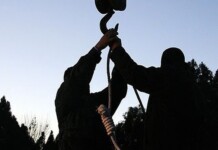
With at least 30 women executed in 2025 alone and nearly 300 since 2007, Iran remains the world’s leading executioner of women, using the death penalty as a tool of oppression.
A Rising Wave of Executions
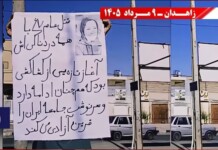
The Iranian regime continues to expand its use of executions, particularly against women, reaching unprecedented levels in recent years. On August 26, 2025, regime authorities executed 34-year-old Maliheh Haghi in Tabriz Prison. Arrested six years earlier on charges of murder, she was sentenced to death by the judiciary and executed this week.
Her death marks the 30th execution of a woman in 2025. In less than a month, at least six women have been executed across Iran.
Long-Term Escalation
According to data compiled by the Women’s Committee of the National Council of Resistance of Iran (NCRI), at least 293 women have been executed since 2007. The committee emphasizes that most of these women were themselves victims of domestic violence and abuse, many of whom acted in self-defense. Iran’s discriminatory family laws, which deny women basic rights such as divorce, play a critical role in this cycle of violence.
The trend has sharply escalated in recent years:
- 2023: At least 38 women executed, a 90% increase from the previous year.
- 2024: At least 34 women executed, 23 after Masoud Pezeshkian took office as the regime’s president. This marked the highest annual figure in nearly two decades. Overall, more than 1,000 executions were carried out by the regime.
Since Pezeshkian’s took the office, the number of executions across Iran has already surpassed 1,600—far exceeding the previous year’s total. These figures prove that a change in the presidency has brought no shift in policy, as executions remain a cornerstone of state repression.
Hidden Executions and Human Cost
The NCRI Women’s Committee has compiled a detailed list of executed women, though it stresses that the real numbers are much higher, given the regime’s practice of secret executions without public notice or media coverage. These statistics do not include the thousands of women executed on political grounds in previous decades.
Political prisoner Golrokh Ebrahimi Iraee highlighted this reality in a 2019 letter, writing that many women sentenced to death had endured years of beatings, humiliation, and abuse. Without the possibility of divorce, many saw no escape from their suffering except through fatal confrontations that led to their execution.
A Humanitarian Catastrophe in the Making
Dozens of women currently await execution, with many held in Qarchak Prison, some of them mothers with multiple children. Their plight illustrates the devastating human toll of the regime’s execution policy, which has turned into a grave humanitarian disaster.
The NCRI has stressed that the execution of women in Iran is not about justice but about intimidation, part of a broader machinery of repression. With Iran already the world’s leading executioner of women, the continued rise in numbers underscores the urgency of global action.