



Shocking Statement Reveals Systematic Killings and Security Control Over Hospitals and Burials
A stunning admission by an Iranian official has exposed what human rights observers have long warned: the killings during recent protests were not accidental, chaotic, or defensive acts—they were systematic.
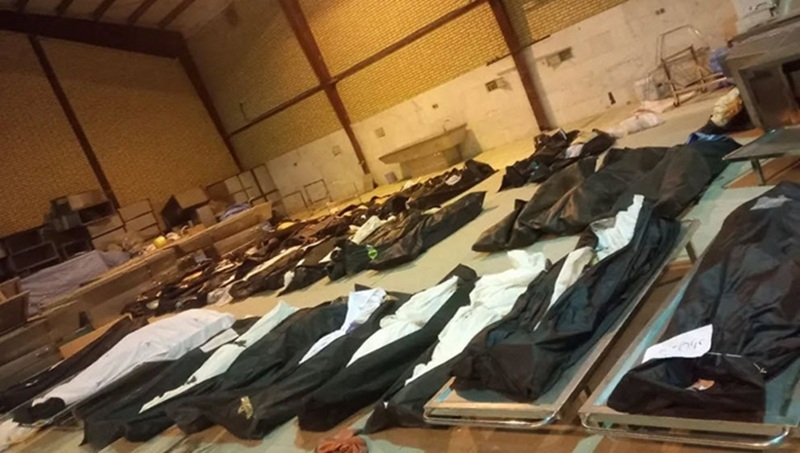
On February 18, 2026, Javad Tajik, CEO of Tehran’s Behesht-e Zahra cemetery organization, publicly acknowledged that more than 70 percent of the bodies received the Coup de grâce.
This statement is not merely controversial—it is potentially incriminating.
Over 70% Shot With Coup de grâce
The admission that more than 70 percent of the deceased were deliberately given a “final shot” fundamentally undermines the regime’s long-standing narrative that security forces fired warning shots or acted in chaotic self-defense.
In military doctrine, Coup de grâce is not accidental crossfire. It is an operational decision—deliberate and controlled.
When victims such as Sam Afshari or 13-year-old Abolfazl Vahidi were reportedly found with catastrophic facial injuries and evidence of a second bullet wound, the pattern no longer resembles crowd control. It points to what critics describe as a structured elimination protocol.
This raises a chilling question: were wounded protesters deliberately finished off to prevent survival—and testimony?
A Message of Absolute Deterrence
Security analysts argue that such tactics carry a psychological purpose. By ensuring that wounded protesters do not survive, the regime appears to be sending a message: participation in protests carries the ultimate cost.
The strategy is designed to raise the “price” of dissent to existential levels.
Regime officials have previously invoked the presence of “terrorists” to justify lethal force. However, this justification collapses under scrutiny. There is no plausible security rationale that would allow infiltrators to systematically access wounded individuals inside ambulances or hospital resuscitation rooms.
Killings Reportedly Extended Into Hospitals
Independent reports indicate that in numerous cases the Coup de grâce did not occur on the streets, but during transfer or even inside medical facilities.
If confirmed, this would represent a dramatic escalation: the transformation of hospitals—traditionally neutral spaces of care—into controlled environments for completing lethal operations.
Medical personnel have previously reported the presence of plainclothes security agents in operating rooms and emergency wards. Allegations included pressure to withhold treatment or intervene in cases involving injured protesters.
If wounded individuals were shot while under medical care, this would signal not only state violence, but the collapse of medical neutrality under security domination.
Burial Under Security Control
Tajik also attempted to normalize the burial of 1,124 bodies, while acknowledging that roughly half were transferred to other cities under security measures.
This logistical detail is politically significant. Behesht-e Zahra, Tehran’s largest cemetery, has historically become a focal point for collective mourning and political mobilization.
By dispersing bodies geographically, regime authorities appear to be engaging in what observers describe as a strategy of “distributed grief”—preventing large gatherings that could turn cemeteries into centers of renewed protest.
The fear is not only of unrest in the streets—but of funerals becoming catalysts for further resistance.
Denial of Extortion vs. Families’ Accounts
In his remarks, Tajik denied that the regime authorities demand payment for bullets used to kill protesters—an allegation frequently raised by victims’ families over decades.
Yet numerous first-hand testimonies from previous uprisings and past crackdowns describe financial pressure, security threats, and forced burial conditions imposed on grieving relatives.
The contradiction between official denial and families’ experiences deepens mistrust and reinforces perceptions of systemic abuse.
A Statistical Indicator of Mass Lethality
The figure itself—70 percent—is staggering. This is not an incidental ratio. It suggests a pattern.
Observers argue that such a proportion cannot emerge from random clashes. It reflects operational intent. A policy choice.
More disturbing still is the implied logic: wounded survivors can become eyewitnesses. Eyewitnesses become symbols. Symbols sustain resistance.
From this perspective, the Coup de grâce becomes not merely an act of violence, but an attempt to erase testimony before it can exist.
A Regime Exposed by Its Own Words
Tajik’s statement may have been intended to deflect accusations and normalize procedures. Instead, it functions as an inadvertent indictment.
The admission that a supermajority of victims received deliberate final shots challenges the regime’s narrative at its core. It shifts the debate from excessive force to possible systematic execution.
For many Iranians, the issue is no longer whether lethal force was used—but whether a structured policy of elimination was implemented.
Cemeteries, once silent spaces of mourning, now stand as evidence. And according to critics, the bodies buried there speak more forcefully than any official denial.