



From Inflation and Currency Collapse to Mourning Turned Political, Regime Newspapers Warn of Deeper Structural Crisis
In an unusual display of candor, several Iranian state-affiliated newspapers have published analyses that collectively paint a stark picture: the aftershocks of the January protests are far from over, and the structural crises driving public anger remain unresolved.
From inflation nearing 60 percent to warnings about renewed unrest during memorial ceremonies for slain protesters, the regime’s own media outlets are acknowledging what officials have largely avoided—public trust is deteriorating, economic pressure is intensifying, and social stability is fragile.
Fear of Renewed Protests
The state-run daily Arman Melli warned that unless meaningful reforms are implemented, “the possibility of renewed protests remains.” It emphasized that if demonstrations resume, containing violence could prove far more difficult than before.
The paper noted that no substantive economic relief has followed the January unrest. Inflation, rising prices, and deteriorating living conditions persist. It suggested measures such as releasing detainees and even declaring a general amnesty to prevent escalation—an extraordinary proposal reflecting concern within establishment circles.
Similarly, Arman Emrooz framed the protests as the result of accumulated systemic tensions. It argued that the state’s “social defense layer” had failed—meaning authorities were unable to absorb public dissatisfaction or secure basic livelihoods. The paper warned that ignoring early indicators such as rising prices, declining public trust, suicides, and social harm had pushed the country toward deeper crisis.
Poverty, Inequality, and the Shrinking Table
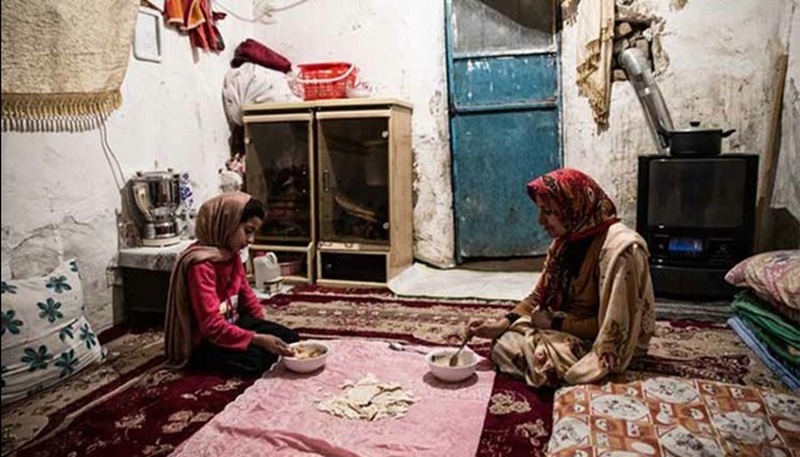
Economic outlets such as Jahan-e Sanat focused on what they described as a “collection of shocks” steadily eroding household welfare. Heavy inflation, declining purchasing power, business uncertainty, and widening inequality have reduced life from “living with quality” to mere survival.
One striking statistic cited: national income has reportedly fallen by more than 40 percent in recent years. Youth unemployment remains severe, with many young Iranians reaching working age without access to sustainable income despite qualifications and skills.
The daily Shargh, in an article titled “Bread’s Sorrow,” provided a stark illustration of wage erosion. In 2018, the base salary of Iranian workers had a dollar value of roughly $221 per month. By 2019, that figure had dropped to about $112. The collapse in the rial’s value has dramatically undercut real wages, while economic growth in the first half of 2025 was reported negative across nearly all sectors.
Currency Collapse and Policy Failures
The newspaper Kayhan, aligned with the regime supreme leader’s positions, delivered unusually sharp criticism of economic management. It reported point-to-point inflation in January reaching 60 percent, with food inflation near 90 percent.
According to the paper, the removal of the 28,500-toman preferential exchange rate—officially justified as reform—had the opposite effect, triggering price surges rather than stabilization. It criticized policymakers advocating “shock therapy,” accusing them of pursuing abrupt currency liberalization at immense social cost.
The paper even referenced comparisons made by some policy advocates to historical episodes such as Tiananmen Square, implying that certain advisers viewed casualties as an unavoidable cost of economic restructuring—an allegation that underscores internal disputes over governance strategy.
Budget Under Constraint
Coverage of the 1405 (2026–2027) national budget described it not as a recovery plan but as a “document of adaptation to limitations.” Oil revenues are no longer portrayed as a reliable engine of state financing. Instead, taxation has increased in weight, the National Development Fund plays a larger role, and multiple exchange rates persist despite promises of unification.
The narrative emerging from economic reporting is clear: the government is managing scarcity, not overcoming it. The budget reflects balancing reduced revenues, rising fiscal pressure, and cost containment—without offering a path to structural relief.
Social Trust and Psychological Erosion
Beyond economics, several outlets pointed to a deeper sociological crisis.
Arman Melli wrote of widening gaps between state and society, warning that as this distance grows, distrust intensifies. It cautioned that the future must not be defined by anxiety and ambiguity for citizens.
In a more philosophical tone, Shargh argued that Iran’s crisis cannot be reduced solely to poverty or political blockage. Rather, it described a collapse in the ability to imagine a stable future. This condition, it suggested, creates a state of “persistent anomie”—a breakdown of shared norms and social cohesion.
Mourning as Political Energy
A particularly sensitive issue involves the memorial ceremonies marking the 40th day after those killed in protests—a tradition deeply embedded in Iranian culture and historically associated with political mobilization.
Sociologists quoted in Jahan-e Sanat, including Saeed Moidfar and Mostafa Abroushan, warned that restricting families from holding independent mourning ceremonies could intensify resentment. Interference in grieving rituals, they argued, risks transforming private sorrow into collective protest.
If people perceive deaths as the result of injustice or mismanagement, mourning can evolve into political action. In societies where legal protest avenues are restricted, public gatherings—even funerals—take on layered meanings. Grief can convert into organized dissent.
A System Under Pressure
Across ideological lines—from reformist to conservative—the underlying message in these state media reports converges: economic hardship, currency collapse, widening inequality, and eroding trust are converging with unresolved political grievances.
The January protests may have subsided in the streets, but the drivers behind them remain intact. With memorial ceremonies approaching and inflation continuing to bite, even regime-aligned outlets acknowledge that preventing renewed unrest requires more than rhetoric.
What emerges from these pages is not a portrait of stabilization—but of a system bracing for further strain.