



A surge in death sentences, deteriorating prison conditions, and life-threatening treatment of vulnerable detainees signal a new phase of brutality by the Iranian regime.
Iran is entering one of its darkest periods of state repression in recent years, marked by an alarming escalation in executions, the imminent threat to the life of political prisoner Mohammad Javad Vafaei, mass hangings across the country, and the life-threatening neglect of female political prisoners in Evin Prison. Human rights defenders warn that the clerical regime is intensifying lethal force to quell dissent and reinforce its authority amid growing domestic instability.
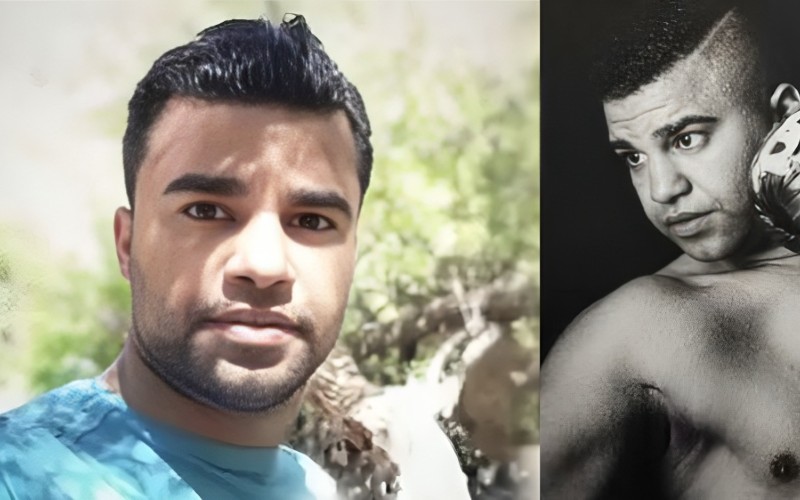
Political Prisoner Mohammad Javad Vafaei at Imminent Risk of Execution
On Saturday, December 6, 2025, the judiciary of the clerical regime transferred political prisoner Mohammad Javad Vafaei Thani to solitary confinement in Vakilabad Prison in Mashhad, cutting off all communication with the outside world. The move signals that his execution could be carried out at any moment.
Vafaei, 30, a boxing champion and coach, was arrested in January 2020. He has been subjected to severe torture and has remained in detention ever since. His death sentence—issued for alleged support of the People’s Mojahedin Organization of Iran (PMOI/MEK)—has been upheld three times by the regime’s judiciary.
In recent months, a wide coalition of international human rights organizations, public figures, and athletes have urged Tehran to halt the execution. The Iranian Resistance is calling on the United Nations, the European Union, and all governments committed to human rights to take urgent measures to prevent his killing.
161 Prisoners Executed in Two Weeks, Including Four Women
Alongside the threat to Vafaei’s life, the regime has carried out a wave of mass executions unprecedented in scale and speed. Over the past two weeks alone, 161 prisoners, among them four women, have been executed. Two victims were hanged publicly in Semnan in displays reminiscent of medieval punishment.
On December 2 and 3, regime agents executed 53 prisoners in just 48 hours. Those killed on Wednesday, December 3, included:
- Karamkhoda Sepehri (Bojnurd)
- Amin Mahdavi (Mahshahr)
- Mehran Chaboksavar (Neyshabur)
- Siavash Khosravi (Kashan)
- Majid Namjoo (Bushehr)
- Saber Zahedi (Shahr-e Kord)
- Manouchehr Ahmadi (Borazjan)
- Azad Changeh (Naqadeh)
- Rana Farajoghli (Tabriz)
- Artam Ghafouri (Mahabad)
- Safa Jozipour (Gonabad)
On Tuesday, December 2, additional victims included:
- Malek Gerayi (Ilam)
- Aziz Sheikhi (Ferdows)
- Hamed Kazazi and another unnamed prisoner (Shiraz)
- Amirreza Shahmohammadi (Zanjan)
- Farshid Karami (Damghan)
- Esfandiar Zakipour (Quchan)
- Fariborz Niazi (Malayer)
- Mohammad Javad Aminpour (Ardabil)
On Thursday, December 4, more executions followed, including two newly identified victims: Hosseinali Yeganeh in Birjand and Rahim Mansouri in Kashmar.
The Iranian Resistance condemns the killings as part of the regime’s systematic campaign of fear and repression. It urges the UN, EU, and international community to isolate Tehran diplomatically and support efforts to save prisoners currently on death row.
Torture Conditions for Female Prisoners After Transfer Back to Evin
While executions surge, female political prisoners face life-threatening conditions in Evin Prison following their recent return from Qarchak Prison. After a bombing in Evin in July, female detainees were transferred to Qarchak—a facility notorious for inhumane conditions. In recent weeks, they were moved back to Evin, only to be placed in a basement ward approximately 40 steps below ground, described as damp, filthy, and infested with rodents and insects.
Human rights advocates describe these conditions as psychological and physical torture, particularly dangerous for prisoners with serious medical conditions.
The Case of Fatemeh Ziaei
Among the ailing prisoners is Fatemeh Ziaei, 68, a long-time political prisoner first detained in the 1980s. She has been arrested seven times and has spent a total of 13 years behind bars. Ziaei suffers from advanced Multiple Sclerosis (MS), tuberculosis, and a severe internal infection.
In January 2025, after a medical examiner confirmed she could not survive imprisonment due to her deteriorating health, she was released on bail of 300 million tomans. However, she was re-arrested in August 2025 and brought before Tehran’s Revolutionary Court in October to face new charges.
Her condition has become critical, and the lack of medical access poses an immediate threat to her life.
The Case of Shiva Esmaeili
Another political prisoner, Shiva Esmaeili, who is serving a 10-year sentence, suffers from chronic and severe lower back pain. Despite the progression of her condition, authorities continue to deny her access to specialized medical treatment, putting her health at serious risk.
International Community Urged to Act
The Iranian Resistance warns that the regime’s escalating brutality—marked by imminent executions, mass hangings, and the torture of vulnerable detainees—reflects the desperation of a system that relies on repression to maintain power.
It calls on:
- The UN High Commissioner for Human Rights
- The UN Special Rapporteur on Iran
- The European Union and its member states
- International human rights organizations
to take immediate and decisive action to prevent executions, investigate prison abuses, and secure the release of prisoners whose lives are in danger.
Without international intervention, the death toll is likely to rise, and the regime’s campaign of violence against political prisoners—women, young activists, and ordinary inmates alike—will continue unchecked.