


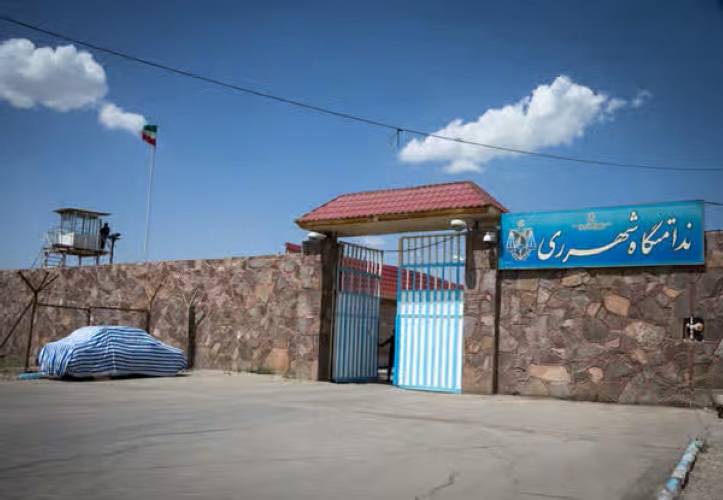

Systematic denial of medical care amounts to “slow execution” policy targeting dissidents
Systematic Denial of Medical Care: A Weapon Against Political Prisoners
Despite repeated warnings from human rights organizations, new reports from inside Iran reveal an alarming deterioration in the health of several political prisoners. These cases expose what activists describe as a deliberate and systematic policy by the Iranian regime to pressure, torture, and slowly kill political opponents through medical neglect.
Mohammad Ali Akbari Monfared: Chained to a Hospital Bed
Mohammad Ali Akbari Monfared, a 58-year-old political prisoner in Fashafouyeh Prison, is paralyzed in both legs and suffers from advanced diabetes, heart disease, brain complications, and prostate problems. Recently, due to a severe blood clot and infection, he underwent surgery, and doctors warned that his leg must be amputated to prevent the infection from spreading.
Instead of receiving appropriate medical care or conditional release, prison authorities chained him to his hospital bed. Despite medical advice that continued imprisonment endangers his life, the regime’s intelligence officials have blocked his release and ignored all legal provisions for parole.
Hoda Mehreganfar: A Robotics Engineer Facing Slow Death
Hoda Mehrganfar, 35, a robotics engineer and political prisoner in Adelabad Prison of Shiraz, suffers from severe endometrioma cysts. Since her arrest on October 22, 2024, she has remained in limbo without trial. Mehreganfar’s condition has worsened dramatically, with high fever and intense abdominal pain indicating an imminent rupture and internal infection.
Although the prison doctor ordered her immediate transfer to a hospital, security officials refused to allow her medical evacuation, leaving her in agony. Rights groups say her suffering represents the regime’s use of physical torture and targeted cruelty, particularly against women prisoners who have defied the dictatorship.
Shiva Esmaeili: Victim of Systematic Discrimination
Political activist Shiva Esmaeili, sentenced to ten years in Evin Prison for “assembly and collusion against the regime,” has been denied access to medical treatment for chronic back pain. After weeks of requests, she was finally approved for hospital transfer—only to be sent back when guards claimed there were no funds in her prison account. They also blocked her from calling her family to cover the cost.
This act of humiliation and psychological torment is a hallmark of the Iranian regime’s gender-based repression and mental torture against women political prisoners.
Mehdi Vafaee: From Evin Fire to Solitary Confinement
Thirty-seven-year-old Mehdi Vafaee, the son of Shiva Esmaeili, was wounded during the Evin Prison fire in October 2022 when guards opened fire on inmates. Although sentenced to 11 years for alleged ties to the People’s Mojahedin Organization of Iran (PMOI/MEK), his ordeal continues.
On September 30, 2025, he was summoned under the pretext of a family visit but was instead transferred to solitary confinement at the Qom Intelligence Detention Center. Suffering from gastrointestinal illness, he has been deprived of necessary medication—a calculated attempt to break his resistance. His cousin, Mohammad Javad Vafaee, remains on death row in Mashhad’s Vakilabad Prison on similar charges.
Fatemeh Ziaei: An Elderly Survivor of the 1980s Repression
Sixty-eight-year-old Fatemeh Ziaei, a survivor of the 1980s political massacres, has spent over 13 years in Iran’s prisons. Now battling advanced multiple sclerosis, she is being denied hospital care in Evin Prison despite her critical condition.
Ziaei symbolizes a generation of Iranian women who have endured decades of oppression and torture yet continue to resist. Her current suffering highlights the regime’s systematic cruelty toward elderly and ill political prisoners.
“Slow Execution” as State Policy
Reports from across Iran’s prisons show that medical deprivation is not an accident but a state policy designed to eliminate political opponents under the guise of natural death. Practices such as chaining patients to hospital beds, withholding medicine, and delaying transfers to hospitals constitute torture under international law and violate even Iran’s own prison regulations.
The National Council of Resistance of Iran (NCRI) has condemned these abuses, urging the UN High Commissioner for Human Rights, the UN Special Rapporteur on Iran, and organizations such as UNESCO and UNICEF to take urgent action. The NCRI calls for an independent fact-finding mission to visit Iran’s prisons and for the immediate release of sick and elderly political prisoners.
The continued silence of the international community, the NCRI warns, only emboldens a regime that uses illness as an instrument of repression and turns hospitals into extensions of its torture chambers.