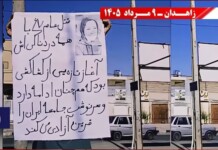
After enduring 15 years of imprisonment without a single day of furlough, Maryam Akbari Monfared, one of Iran’s longest-serving female political prisoners, has been transferred from Semnan Prison to the notorious Qarchak Prison in Varamin. The move is seen as part of an ongoing campaign of harassment and abuse by the Iranian regime to further isolate and punish her.
Monfared, who should have been released in 2019 after serving a 10-year sentence, continues to face persecution through the regime’s fabricated legal cases. Rather than being freed after completing her sentence, the judiciary extended her imprisonment by an additional five years. Recently, they added another two years, citing charges rooted in trumped-up accusations.
A Life of Political Repression
Maryam’s ordeal began not with her own actions but through her family’s legacy of opposition to the regime. Her brothers and sister were among the many political prisoners executed during the 1980s, including the infamous 1988 massacre. Alireza Akbari was tortured to death in 1981, Gholamreza Akbari was executed in 1985, and her siblings Roghayeh and Abdolreza Akbari were killed during the 1988 mass executions of political prisoners.
Seeking justice for her family, Maryam Akbari Monfared filed an official complaint in 2016 from within prison, asking for an investigation into the executions of her siblings. This act of courage only intensified the regime’s repression against her. In response, she faced even harsher treatment, including the denial of visitations and exile to Semnan Prison, far from her family and children.
Fabricated Charges to Suppress Justice
The Iranian judiciary has repeatedly used fabricated charges to prolong Maryam’s suffering. Recently, she was convicted of “propaganda against the system” and “insulting the leadership” in show trials orchestrated by the Ministry of Intelligence in Semnan and Evin prisons. These charges are part of the regime’s broader tactic to silence dissent and prevent figures like Maryam from seeking justice for the regime’s atrocities.
The additional charges against her — ranging from “assembly and collusion” to “spreading lies and disturbing public opinion” — underscore the regime’s determination to punish her for her refusal to be silenced. Her principal “crime,” however, remains her unwavering pursuit of justice for her slain siblings.
Property Seizure as a Form of Retaliation
In July 2024, the regime took its persecution a step further by ordering the confiscation of property belonging to Maryam and her relatives. This retaliatory move came in response to her relentless calls for accountability for the deaths of her siblings during the 1980s political purges. This predatory action exemplifies the lengths the regime is willing to go to suppress any attempt to challenge its narrative and seek justice.
International Recognition of Injustice
Maryam’s case has garnered attention on the international stage. Javaid Rehman, the United Nations Special Rapporteur on human rights in Iran, highlighted her plight in his 2023 report on the country’s atrocities. Rehman emphasized how Monfared’s pursuit of accountability for her siblings’ executions led to her intensified persecution, including the denial of basic rights and her forced exile.
Rehman’s report underscores the systemic nature of the regime’s approach to political prisoners like Maryam. He described her as a “poignant example” of how the Iranian authorities use prolonged detention, fabricated charges, and harassment to pressure political dissidents into submission. Despite serving her original 15-year sentence, Monfared’s refusal to abandon her pursuit of justice has resulted in a further two-year extension of her imprisonment.
Conclusion
Maryam Akbari Monfared’s case is emblematic of the Iranian regime’s broader campaign against dissent, human rights, and political justice. Her story highlights the regime’s ruthless determination to silence voices of opposition, even at the cost of violating its own laws and international human rights standards. As the regime continues its efforts to crush resistance, Maryam’s bravery in seeking justice for her family stands as a powerful symbol of resilience in the face of brutal repression.