


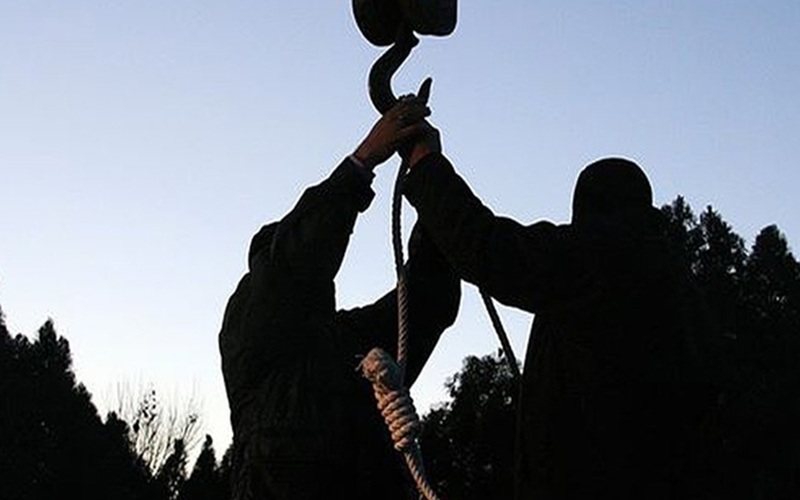

The public hanging of two young protesters in Isfahan reflects not a display of confidence but a regime increasingly dependent on terror as it confronts mounting domestic unrest and a growing legitimacy crisis.
When governments resort to public executions, they intend to send a message of strength. More often, however, they reveal something entirely different: fear.
The Iranian regime’s public execution of two young protesters, Amirhossein Safari and Abolfazl Sepahi, in Isfahan on July 28 marks another grim chapter in Tehran’s escalating campaign of political repression. Rather than demonstrating confidence, the executions expose a leadership increasingly convinced that only terror can preserve its grip on power.
Far from restoring authority, these spectacles of violence reveal a regime confronting a society it no longer knows how to govern except through intimidation.
Criminalizing Resistance
The judiciary justified the executions by accusing the two young men of involvement in the deaths of four security personnel during the nationwide uprising of January 2026. Authorities also highlighted allegations that they possessed firearms, Molotov cocktails, and other weapons and participated in attacks on police facilities.
Whether viewed through the regime’s legal narrative or by its critics as politically motivated prosecutions, one fact is unmistakable: the authorities are intent on portraying organized resistance as an existential security threat.
The so-called Alikhani Square case, in which at least twelve defendants reportedly received death sentences, illustrates the scale of the crackdown. The executions of Safari and Sepahi followed the earlier executions of Erfan Esfandiari and Gol Mohammad Mohammadi, signaling that the regime intends to continue using capital punishment against those linked to the January protests.
This pattern suggests that executions have become not merely judicial punishments but instruments of political deterrence.
Fear No Longer Produces Silence
Public executions are designed to instill fear.
Yet the events surrounding the hangings in Isfahan suggest that this strategy is producing diminishing returns.
Videos circulating from Alikhani Square showed citizens confronting security forces, shouting slogans against officials, and openly expressing outrage despite the heavy security presence. Instead of quietly dispersing, many witnesses reacted with visible anger toward the authorities carrying out the executions.
Whether these reactions represent a broader shift in public sentiment or isolated incidents, they illustrate an increasingly difficult reality for the regime: public displays of repression no longer guarantee public submission.
This is a dangerous development for any authoritarian government whose legitimacy increasingly rests on coercion rather than consent.
Executions as a Tool of Political Survival
The timing of these executions is unlikely to be coincidental.
Iran faces overlapping crises that extend far beyond political dissent. Persistent inflation, declining purchasing power, unemployment, currency instability, international isolation, and growing social frustration have combined to create one of the most challenging periods the regime has confronted in decades.
Under such circumstances, political executions serve a purpose that extends beyond criminal justice.
They function as instruments of psychological control, intended to demonstrate that the state retains the capacity—and the willingness—to use unlimited force against perceived opponents. Public executions amplify that message by transforming punishment into political theater.
History, however, suggests that governments relying primarily on fear often resort to increasingly severe repression precisely when other instruments of authority are weakening.
Repression Cannot Resolve Structural Crises
The Iranian leadership appears to believe that harsher punishment can discourage future protests.
Yet the country’s underlying problems remain unchanged.
Economic deterioration continues to erode living standards. Public confidence in state institutions has declined after repeated waves of unrest. The continued use of executions against protesters has drawn growing criticism from international human rights organizations while doing little to address the grievances that fuel domestic discontent.
Repression can delay political change.
It cannot eliminate the conditions that produce it.
A Measure of Weakness, Not Strength
Authoritarian governments often present executions as demonstrations of decisive leadership.
In reality, they frequently reveal insecurity.
When a government believes that public hangings are necessary to preserve order, it implicitly acknowledges that its authority is no longer sustained by legitimacy alone. The reliance on fear becomes evidence of political vulnerability rather than confidence.
The executions in Isfahan should therefore be understood not simply as another episode in Iran’s long record of repression, but as a reflection of a regime confronting deep structural challenges on multiple fronts.
If recent events have demonstrated anything, it is that public anger cannot be permanently extinguished by the gallows. While executions may silence individuals, they cannot erase the economic hardship, political frustration, and demands for accountability that continue to shape Iran’s increasingly volatile political landscape.