



Following the Iran-Israel ceasefire, the Iranian regime escalates arrests, surveillance, and censorship, using wartime conditions to justify sweeping crackdowns on civil liberties.
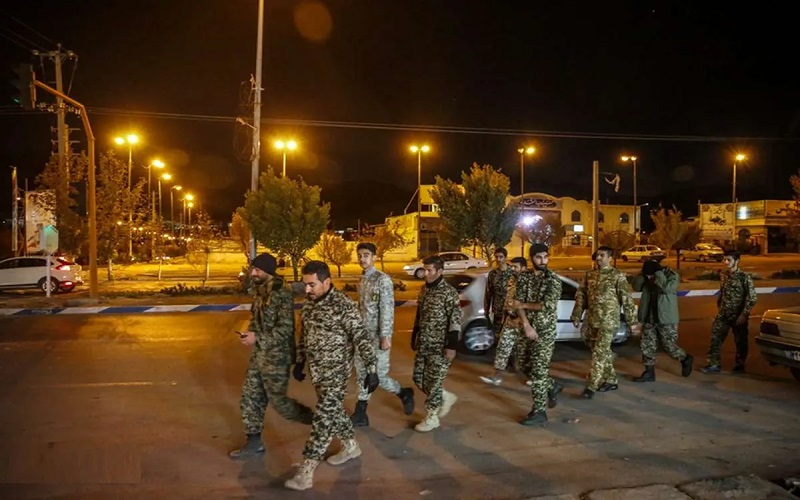
Three weeks after the end of the Iran-Israel war, the Iranian regime has significantly expanded its internal security measures. According to a spokesperson for FARAJA, the regime’s Police Command, patrols and police presence have increased across cities under the pretext of “ensuring maximum security.” In practice, however, this new wave of crackdowns has led to hundreds of arrests across various provinces, often on vague charges of “collaboration with Israel.”
The regime’s parliament wasted no time in passing a bill titled “Intensification of Punishment for Espionage and Cooperation with Israel and Hostile States.” Civil and political activists argue that this resolution not only curtails individual freedoms but also provides the regime with a legal framework to target dissent and suppress critics.
Manufactured Consent and the Illusion of Public Support
The regime’s official broadcaster, IRIB, has launched a coordinated media campaign to portray public support for the increased police presence. News segments, hidden-camera footage, and staged interviews all attempt to show that citizens are “highly satisfied” with the security patrols.
Yet, on social media, a different narrative is emerging. Users report random stop-and-search operations, including the inspection of personal phones by security, Basij, and police forces. These forces reportedly review private messages and photo galleries under the pretense of “security,” searching for any excuse to detain citizens—essentially acting with a blank check under martial law conditions.
In a striking example of the regime’s aggressive tactics, Fars News Agency reported that two citizens in Hamadan were shot and killed on suspicion of possessing micro-drones. The lack of judicial process or evidence in such incidents points to a broader climate of fear and impunity.
War as a Pretext for Censorship
Despite the ceasefire, Iran’s digital and media landscape remains heavily restricted. Internet access is sporadic, and many websites remain blocked. Communication infrastructure has not fully recovered, keeping citizens in a state of informational isolation.
In line with a directive issued by the regime’s Ministry of Intelligence, content predicting the war’s outcome, discussing possible collapse or compromise, referencing nuclear threats or economic fallout, or even posting images of explosions and accidents is strictly prohibited. Legal consequences for such actions have been explicitly threatened.
On June 23, the judiciary blocked the state-run Entekhab news site for allegedly endangering “psychological security” by raising public concerns. Mizan News Agency, which is affiliated with the regime’s judiciary, described the post-war climate as “sensitive and warlike,” further justifying the suppression of critical reporting.
Internal Divisions and Propaganda Wars
Tensions have spilled over into the regime’s own media circles. On June 30, Ham Mihan newspaper was compelled to re-publish its front pages from the 12-day war in response to accusations from hardline outlets like Kayhan and Rajanews. The latter had accused Ham Mihan of featuring Israeli attacks too prominently, instead of showcasing Iranian missile strikes against Israel.
A review of Telegram channels such as “Important News” reveals that many outlets operated under direct orders from the Ministry of Intelligence during the war. The majority of coverage focused on Iranian missile damage, often claiming exaggerated success such as reducing Israeli cities to “hills of dust.” Domestic concerns were almost entirely ignored.
A Legal Framework for Repression
The post-war crackdown has been legally codified through new legislation that broadly defines espionage. Under the new law passed by the regime’s parliament on June 23, anyone who conducts “security, military, economic, financial, or technological actions”—directly or indirectly supporting Israel—can face the maximum sentence: corruption on earth, a charge often leading to execution.
Additionally, the law criminalizes a broad range of activities, including:
- Political, cultural, media, or propaganda acts that “spread fear” or “harm national unity.”
- Publishing exaggerated casualty figures or so-called “false news.”
- Sending videos and images to foreign media or networks deemed hostile.
- Participating in “illegal gatherings” during wartime.
These provisions give the regime sweeping power to arrest and prosecute ordinary citizens for actions as trivial as filming a missile or posting on social media.
Executions and Forced Confessions
The consequences have already been deadly. During the 12-day conflict, three individuals were executed on charges of espionage. In several cases, the regime aired televised confessions from suspects accused of spying, often using vague “evidence” like photographs of power pylons or videos of missiles.
Such confessions bear the hallmarks of coercion, a pattern that has long been associated with the regime’s intelligence apparatus. Detainees frequently report that their “confessions” were extracted under torture and severe psychological pressure.
ISNA, one of the regime’s official news agencies, ominously described the current period as a “season of traitorous killings.”
Targeting the Wrong People
Many political activists note that those arrested or executed are not individuals with access to classified information or positions of power. Instead, the targets are often everyday citizens—or Afghan refugees—who are vulnerable and powerless to defend themselves. Critics argue that the regime is using war conditions as a pretext to consolidate power and crush dissent while ignoring actual internal security risks.
Civil Liberties Under Siege
The Iranian regime’s strategy is consistent with authoritarian playbooks worldwide: use external conflict to justify internal repression. While many regimes curtail civil liberties during wartime, the Iranian regime has taken this opportunity to implement permanent, sweeping changes—targeting not just information access but public expression, privacy, and even movement.
From legal changes that redefine espionage to extrajudicial killings and enforced disappearances, the regime is transforming wartime emergency measures into long-term instruments of control. The war with Israel may have officially ended, but for the people of Iran, a new kind of battle—against authoritarianism and repression—is only intensifying.