


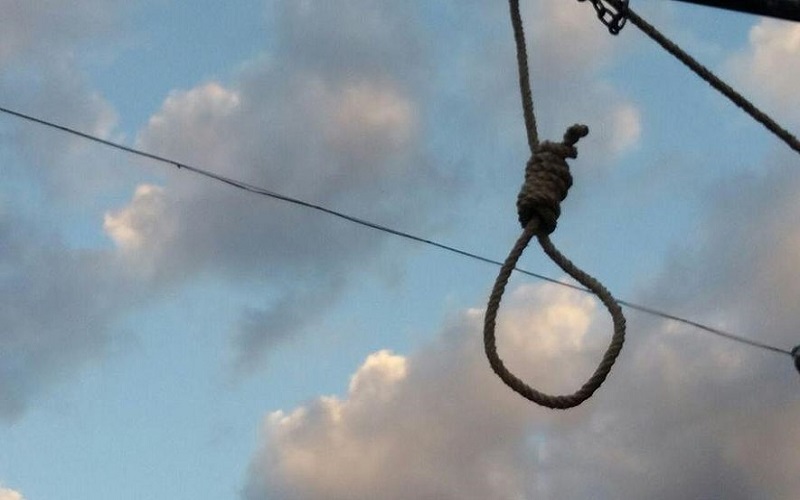

Overview of Imminent Executions
Iran’s judiciary has transferred six men to pre-execution solitary cells in Shiraz Central Prison, indicating that their executions are imminent. Among the convicts is Aref Rasouli, who was only 17 when he allegedly committed the murder.
Three of the other detainees have also been charged with murder, while the remaining two face charges related to drug offenses. It is important to note that death sentences in Iran often follow trials that lack due process and basic rights for the accused.
Case of Arvin Nathaniel Ghahremani
This development comes shortly after Iran postponed the execution of Arvin Nathaniel Ghahremani, a 20-year-old Jewish man.
Charged with murder two years ago, Ghahremani claimed that the killing was in self-defense, a defense the Iranian courts dismissed.
Ghahremani’s relatives have alleged that his court-appointed lawyer failed to defend him effectively, resulting in an inadequate presentation of his self-defense claim. His execution is now expected to take place next month.
Context of Iran’s Execution Practices
Iran’s frequent executions are not solely a reflection of its harsh interpretation of justice but also serve as a method of intimidation to enforce compliance among its populace. The regime uses executions as a tool to maintain power and control, instilling fear to suppress dissent.
International Reactions and Recommendations
The surge in executions highlights the need for international attention and action. The State Department and UN’s recent condolences for the death of former regime President Ebrahim Raisi, known as the ‘butcher of Tehran’ for his execution orders, are seen by some as overly conciliatory.
Instead of appeasing the Iranian regime, the US government is urged to condemn the regime’s atrocities unequivocally.
Additionally, world powers should consider designating the judges presiding over these cases to ensure accountability for human rights violations and to demonstrate a firm commitment to justice and human rights to the Iranian people.
Execution Statistics and Trends
Iran has executed 237 people, including 10 women, so far in 2024. This follows 834 executions in 2023, 582 in 2022, and 333 in 2021.
These figures do not account for the hundreds of protestors killed by Iranian security forces since nationwide demonstrations began in September 2022. Globally, Iran consistently ranks second only to China in the total number of executions it conducts each year.
The Role of Executions in Iran’s Political Strategy
The high number of executions in Iran reflects the regime’s strategy to quell dissent and intimidate its population. Despite the severe risks, Iranians continue to protest in the streets, demonstrating their resilience and opposition to the government’s oppressive tactics.