In a shocking escalation of state-sanctioned violence, the Iranian regime executed 18 prisoners within a mere four days, including seven individuals on Tuesday, July 23. Among those executed were three women, highlighting a disturbing trend in the country’s human rights abuses.
On July 22, a prisoner named Hassan Falahi was hanged at Qom Central Prison. The day before, on July 21, six prisoners faced execution at Ghazalhasar and Dieselabad prisons in Kermanshah. The grim wave of executions began on July 20, when four prisoners were executed at Adel Abad prison in Shiraz, including one female prisoner.
Notably, on July 21, a prisoner named Daniyal Kazeminejad was executed in Dieselabad prison, reportedly in retaliation for the killing of Sajjad Amiri, a regime operative involved in violent acts in Iraq and Syria.
In a further alarming development, a Kurdish female political prisoner was sentenced to death by Branch 26 of the Tehran Revolutionary Court, presided over by Iman Afshari, on charges of rebellion. Following this announcement, female political prisoners at Evin Women’s Prison organized protests against the ruling.
On the same day, July 23, at least ten prisoners were transferred to solitary confinement in Birjand, Sanandaj, and Urmia, indicating preparations for more executions.
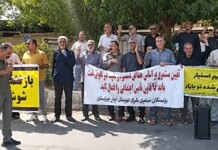
Amidst these horrific events, prisoners across 16 facilities, including Evin, Ghazalhasar, and Tabriz, participated in a hunger strike as part of the “Tuesdays Not to Execution” campaign. They issued a statement condemning the government’s actions, asserting, “While the government is unable to address the rightful demands of the people, it seeks to instill fear through executions to suppress future protests.”
The Iranian regime has been criticized for its disproportionate number of executions, particularly of women and minors, who were often underage at the time of their alleged offenses. The recent surge in executions following the presidential election underscores Supreme Leader Ali Khamenei’s deep-seated fear of popular uprisings and societal unrest.
This alarming trend highlights the regime’s reliance on repression and violence to maintain control, revealing its inability to sustain its authority without resorting to extreme measures.