UN Special Rapporteur Mai Sato says Iran’s regime has entered a new phase of systematic repression marked by mass executions, arbitrary detentions, torture, and discrimination — urging immediate international attention.
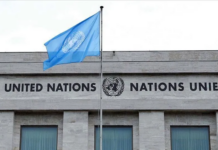
At a session of the UN General Assembly’s Third Committee in New York on October 30, Mai Sato, the UN Special Rapporteur on the situation of human rights in Iran, warned that the country is witnessing an unprecedented deterioration in human rights. She said the Iranian people have become victims on two fronts — suffering from the consequences of recent military attacks and, more severely, from an intensified domestic crackdown imposed by their own government.
Sato emphasized that the regime has responded to the events of June 2025 not by protecting its citizens but by escalating executions, arrests, and surveillance, steering toward what she described as a pattern of crimes against humanity.
According to her presentation, the human rights situation in Iran has reached its worst point in decades. Sato noted that although the external attacks in June 2025 inflicted devastating damage and loss of life, they cannot be used as justification for the regime’s internal oppression.
Citing official figures from Iranian sources, Sato said about 1,100 people, including women and children, were killed, and more than 5,600 others were injured during those events. Hospitals, schools, and other civilian infrastructure were struck, and even Evin Prison was hit while families were visiting detainees. She said that while the war itself has ended, the suffering of the Iranian people continues, as millions have been displaced, pregnant women are deprived of medical services, and sexual and gender minorities face greater discrimination and danger.
Sato’s report condemns the regime’s reaction to the crisis — instead of ensuring citizens’ safety, the authorities launched mass arrests and intensified repression. Over 21,000 people have reportedly been detained in recent months, including journalists, activists, social media users, and members of ethnic and religious minorities.
The Special Rapporteur raised alarm over a new espionage law, which she said expands the definition of crimes that could result in the death penalty. The law, she noted, criminalizes activities such as maintaining contact with foreign media or sharing information on social networks, giving authorities sweeping powers to target dissent.
According to Sato’s findings, more than 1,200 executions were carried out in Iran during the first ten months of 2025 — an average of four per day. Only about eight percent of these executions are publicly announced, indicating that the real figure may be far higher. She stated that there is no evidence since 2015 to suggest that the death penalty has any deterrent effect, concluding that it is used primarily as a means of control and intimidation.
The report also details continued torture, corporal punishment, and deaths in custody. It documents practices such as flogging, amputation by guillotine, and coerced confessions extracted under torture, along with numerous suspicious deaths in detention facilities — many linked to denial of medical care. Families are often forced to remain silent or to accept official explanations that contradict the facts in order to retrieve their relatives’ bodies.
Sato also expressed concern over the regime’s sustained persecution of journalists, particularly those working with Persian-language outlets abroad. Reporters, along with their families inside Iran, have faced systematic threats, harassment, and pressure.
The report highlights the continued harassment of the families of victims of the downed Ukrainian passenger plane, noting that they too remain under intimidation and surveillance.
Sato drew attention to the regime’s recent withdrawal of the anti-violence bill against women, which she described as a serious setback for women’s rights. She said this reversal marks a deliberate step backward in protecting women from abuse. Despite reports of reduced enforcement of the compulsory hijab in some areas, she noted that the law remains in force, and under Article 638 of the Islamic Penal Code, women who appear in public without a headscarf face the risk of imprisonment or heavy fines.
Her report portrays a regime using every instrument of fear and control to suppress its population. Sato underlined that while international sanctions have placed economic pressure on Iran, the repression of fundamental freedoms results from the regime’s domestic policies, not from external restrictions.
In her concluding remarks, Sato urged the Iranian regime authorities to immediately suspend all executions, repeal discriminatory laws against women, and guarantee basic civil and political rights. She also called for unrestricted access for UN observers to monitor the human rights situation within the country.
She appealed to the international community not to overlook the suffering of the Iranian people, emphasizing that the end of war should be an opportunity for reconciliation and reform — not a pretext for continued executions and repression.
Sato concluded that the people of Iran deserve peace, dignity, and justice, and urged governments around the world to stand in solidarity with them as they face a regime that continues to deepen its repressive policies and disregard for human life.