



February 2026 reports reveal mass executions, widespread arrests, and continued abuses amid conflict and nationwide unrest
The opening months of 2026 have marked one of the most turbulent periods in Iran’s contemporary history. What distinguishes this moment is the emergence of a nationwide uprising—an explosive expression of public anger against an authoritarian system that has ruled the country for decades. As unprecedented as the uprising itself has been, the scale of human rights violations carried out against the Iranian people in response has been equally extraordinary.
Images emerging from inside the country have captured scenes that many Iranians once believed impossible. Photographs and reports describing warehouses and morgues overflowing with the bodies of those killed during the uprising have left a painful but unmistakable record in the nation’s historical memory. What occurred was not an isolated incident in one corner of the country; rather, the violence appeared coordinated and widespread, affecting cities across Iran.
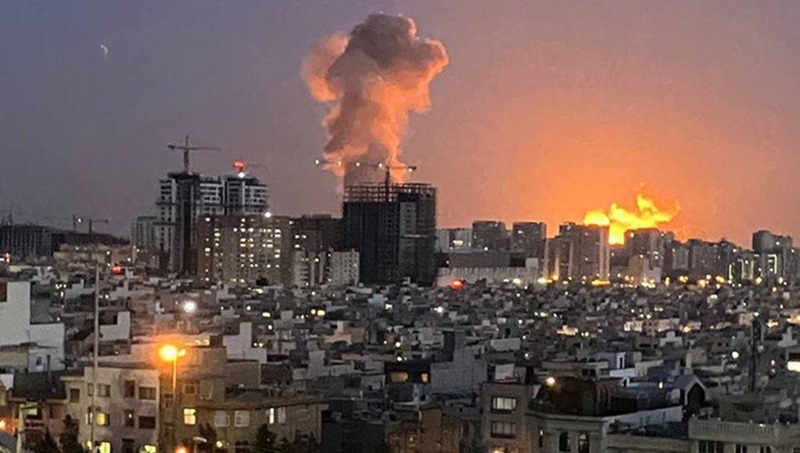
Before the shock of these events could fully register, the Iranian people found themselves facing another crisis: the outbreak of war. The conflict has opened yet another arena for human rights abuses—both by the ruling authorities and by external actors involved in the hostilities. The speed and intensity of developments have meant that this dimension of the crisis has often received less attention than it deserves.
Yet even amid the fog of war, evidence continues to emerge about the broader state of human rights inside the country.
Executions
Reports from human rights monitoring groups indicate that at least 295 people were executed in Iranian prisons during February 2026 alone. Among those executed were three Baluch individuals, twelve Kurds, and three Afghan nationals.
The gender breakdown of the executions illustrates the scale of the crackdown:
291 men were executed in prisons across the country, along with four women.
The execution of women, though fewer in number, highlights the regime’s continued use of capital punishment across all segments of society.
Women Executed in February
Several of the women executed during the month have been identified.
Shahla Dolatabadi was executed on February 9, 2026, in Kerman Central Prison on murder-related charges.
Esmat Najafi was executed on February 15, 2026, in Qom Central Prison, also accused of murder.
Mina Nasirpour, a 40-year-old woman, was executed on February 16, 2026, in Tabriz Central Prison on drug-related charges. Her husband had previously been executed in December 2025.
Sohila Asadi was executed on February 23, 2026, in Isfahan Central Prison on murder charges.
These cases reflect the continued reliance of the Iranian judicial system on capital punishment, often following judicial procedures widely criticized by international human rights organizations for lacking transparency and due process.
Arrests
Following the January 2026 uprising, waves of arrests have continued across the country. Precise figures remain difficult to verify due to strict information control and limited access to detention facilities.
However, available reports indicate that at least 244 individuals whose identities have been made public were arrested during February. Observers believe the actual number is likely far higher, as many detentions occur without formal announcements or public records.
There were also reports of at least one arbitrary arrest and two arrests related to individuals belonging to religious minorities.
Arbitrary Killings and Torture
Reliable statistics regarding extrajudicial killings and torture inside detention centers have not yet been fully documented in the aftermath of the January uprising. Nevertheless, testimonies, leaked information, and indirect reports strongly suggest that such abuses have continued.
Human rights observers warn that torture, mistreatment of detainees, and deaths in custody remain persistent risks within Iran’s prison system—particularly during periods of political unrest.
A Widening Human Rights Crisis
Taken together, the developments of early 2026 point to a deepening human rights crisis in Iran. The combination of domestic repression, mass arrests, executions, and the destabilizing effects of war has created an environment in which the fundamental rights of Iranian citizens are increasingly under threat.
For many observers, the events unfolding today represent not merely a political confrontation but a profound struggle over the future of human rights, justice, and accountability in Iran.