In the midst of political crisis and regional tension, Iran’s future depends on national vigilance, organized resistance, and a commitment to democratic change.
Iran today stands at one of the most decisive junctures in its modern history. The country continues to grapple with the harsh realities of a system widely described by its critics as religious authoritarianism—a ruling structure that, in their view, has inflicted deep damage not only on Iran’s economy and infrastructure but also on its social fabric and moral foundations.
At the same time, rising tensions surrounding the regime’s nuclear and missile programs have cast a shadow of potential conflict over the country. For decades, Iran’s organized opposition has argued that these programs serve political and ideological ambitions rather than the national interest. Against this backdrop, the present moment demands a renewed examination of two essential concepts: social responsibility and national will.
The Ethics of Care in a Time of Crisis
Periods of political and military turmoil often place the greatest burden on society’s most vulnerable groups. Civilians, children, and the elderly are typically the first to suffer when instability intensifies.
Maryam Rajavi, the President-elect of the National Council of Resistance of Iran, has emphasized that in times of crisis, humanitarian responsibility must become a collective priority. She has argued that the concept of an “ethics of care” should be understood not merely as a moral obligation but as a political act rooted in solidarity.
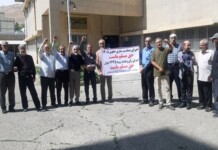
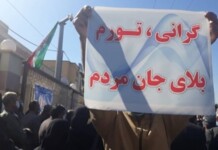
In this context, activists and grassroots networks inside Iran are encouraged to view the protection of civilians and vulnerable communities as an essential duty. Such actions, supporters argue, help preserve social cohesion and lay the groundwork for a society capable of rebuilding itself once authoritarian rule ends.
The strength of a movement for change, they contend, lies not in isolated individuals but in the bonds that connect reform-minded citizens with the broader population.
The Need for National Vigilance
Modern Iranian history offers a clear lesson: genuine freedom cannot emerge from replacing one form of authoritarian rule with another. The country’s democratic aspirations today face what many observers describe as a dual challenge.
On one side stands the current theocratic system, which critics accuse of suppressing political freedoms and maintaining power through repression. On the other side are attempts by some figures associated with Iran’s former monarchy to revive past political structures.
For many advocates of democratic change, both models represent forms of authoritarian governance that the Iranian people have already experienced. They argue that the future must be defined by a different principle: a political system in which sovereignty belongs exclusively to the people.
In this vision, legitimacy is derived neither from divine authority nor hereditary rule, but from the freely expressed will of citizens.
Organized Transition and the Role of a Transitional Government
Fundamental political change in Iran, proponents argue, cannot arise from chaos or spontaneous upheaval alone. Rather, it requires a deliberate and organized process.
Within this framework, the proposal for a transitional government put forward by the National Council of Resistance of Iran is presented as a mechanism for managing a peaceful transfer of power. The plan—linked to the Ten-Point democratic roadmap introduced by Maryam Rajavi—seeks to address the possibility of a political vacuum during a period of transformation.
The concept of a temporary administration, originally discussed within the resistance movement decades ago, envisions a limited transitional authority responsible for organizing free elections and preparing the country for the establishment of a democratic republic.
Supporters of this proposal emphasize that the ultimate goal is not the concentration of power in the hands of a particular political group but the restoration of national sovereignty through democratic institutions.
Rajavi has also called for members of Iran’s armed forces to stand with the Iranian people during any period of political transition. In parallel, proposals have been raised regarding the disarmament of paramilitary forces associated with the ruling establishment, a step supporters argue could help prevent further violence and protect national infrastructure during a transition.
For advocates of this approach, it is equally important that the international community recognize a crucial distinction: Iran is not synonymous with the regime that governs it. Political legitimacy, they maintain, must ultimately come from free elections and the will of the people.
External solutions or foreign interventions, they argue, cannot replace the agency of Iran’s own citizens or the organized networks of resistance that have emerged within the country.
The Price of Freedom
Iran has endured numerous historical upheavals, and the current crisis represents yet another test of the nation’s resilience. Moving through this difficult period will require difficult choices—between resignation and resistance, fragmentation and unity.
The pursuit of a democratic republic, supporters argue, carries a cost. That cost is not measured solely in political struggle but in the willingness of citizens to stand together in defense of their shared future.
Ultimately, the vision articulated by advocates of democratic change is of an Iran defined not by military confrontation or international isolation but by respect for human dignity, justice, and the rule of law.
The future, they believe, will belong to those who choose solidarity today and who are willing to protect the common home they share: a free and democratic Iran.